Featured Pure Sine Wave Inverters & Precision DC-DC Modules
Engineered to comply with stringent CE, RoHS, and FCC directives. Designed for telecom basestations, mission-critical vehicular telemetry, solar energy storage, and industrial automation.

YUCOO 12v to 5v Converter Buck Module Usb Output Adapter Dc Car Power Converter
- Input Voltage8V – 22V DC
- Output Power5V USB / 3A Regulated
- EfficiencyUp to 96% Synchronous
- EncapsulationIP67 Thermal Epoxy
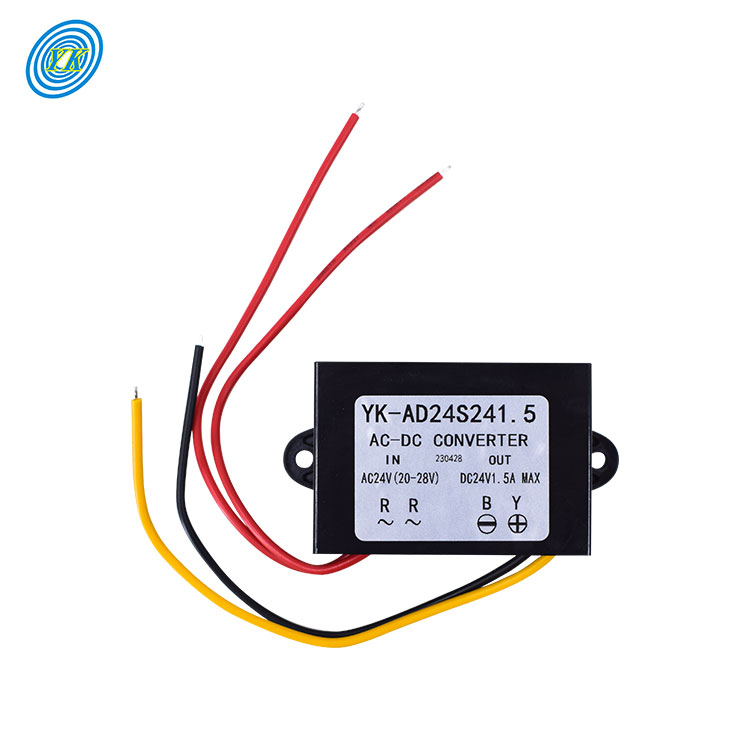
AC 24V to DC 5V 3A Buck Converter Voltage Regulator Power Supply Waterproof Module for Car
- AC Input Range16V – 28V AC
- DC Output5V DC @ 3A (15W Max)
- ProtectionOver-Current / Thermal
- ApplicationFleet CCTV / Telematics

600W 1000W 1500W 2000W 3000W 4000W 5000W Hot Sale Dc to Ac Power Inverter
- Continuous Power600W – 5000W Scalable
- DC Input Options12V / 24V / 48V / 96V
- Waveform THDPure Sine (<2.8%)
- Peak Surge200% Surge for 200ms
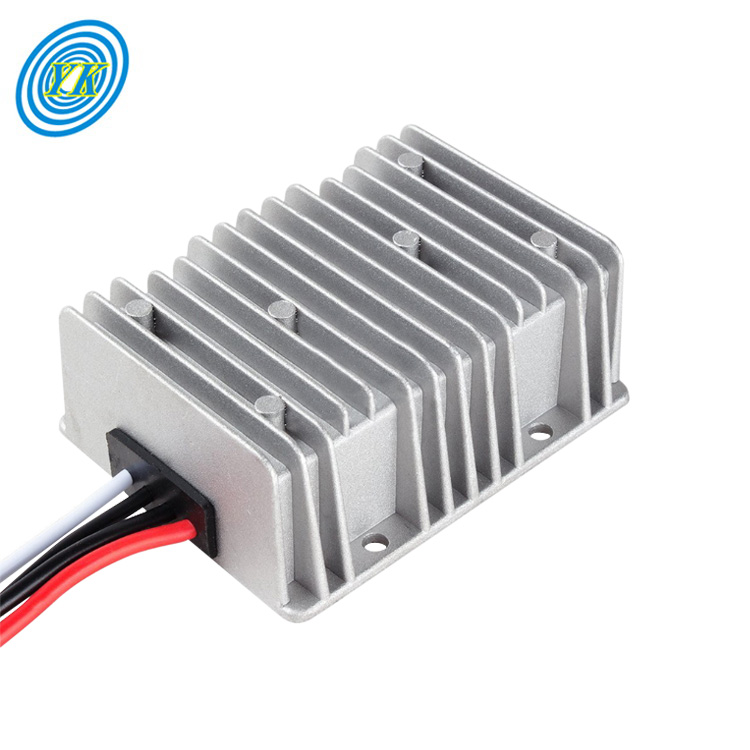
Buck boost Power Converter 8V-40V to 13.8V 15A Dc Voltage Regulator
- Input Dynamic Range8V – 40V Ultra-Wide
- Nominal Output13.8V DC Stable Float
- Max Output Amp15A Continuous (207W)
- Chassis TypeDie-Cast Aluminum Fins

YUCOO Boost Buck Converter 9-34V 12V to 12V 35A 40A DC Voltage Regulator DC DC Converter Module
- Input Voltage Range9V – 34V DC Wide Range
- Current Output35A / 40A Heavy Duty
- Thermal Derating100% Load @ 45°C Amb
- MTBF Expectancy>100,000 Operating Hrs
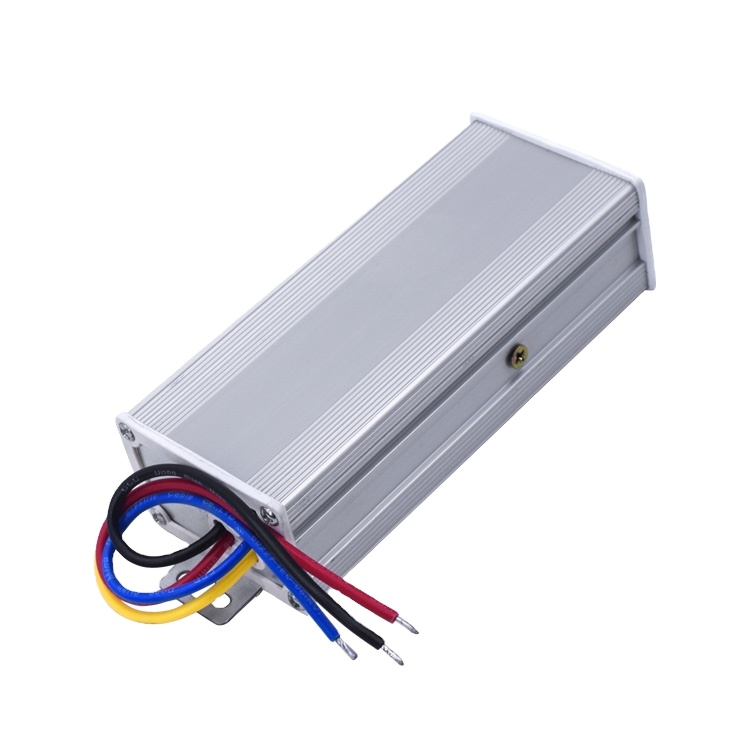
Isolated DC DC 48/60/72/84/96V Input 24V 2.5A Output Converter for Truck
- High DC Bus Input48V / 60V / 72V / 84V / 96V
- Isolated Output24V DC @ 2.5A Fixed
- Dielectric Strength1500V DC Primary-Secondary
- Vehicle RatingHeavy Commercial Truck/EV
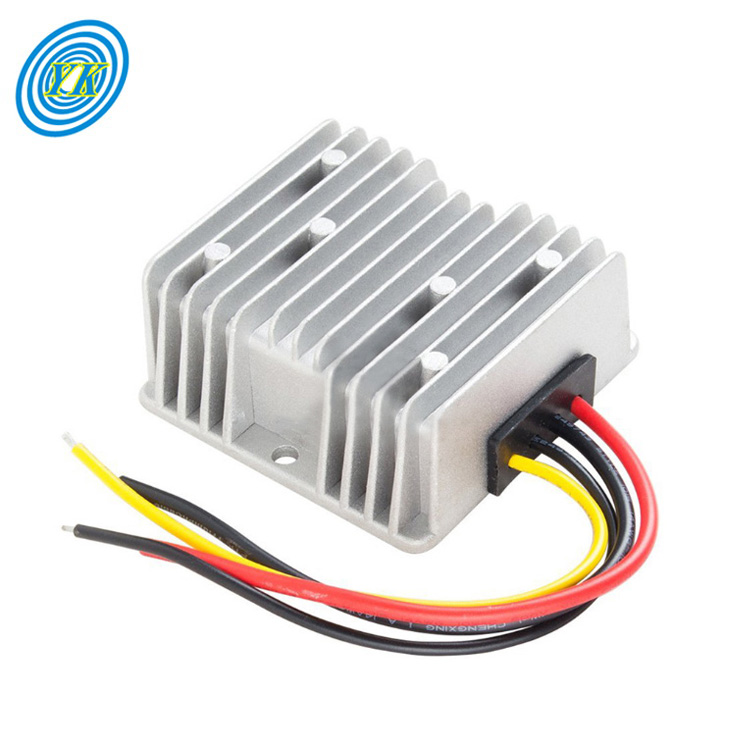
DC-DC Voltage Converter Made in China 9-32VDC to 12VDC 12A 144W Step up Down Converter
- Nominal Input9V – 32V Auto Battery
- Output Delivery12V DC Regulated (144W)
- Ripple & Noise<40mVp-p Low Emission
- EMC ComplianceCISPR 25 Class 3 Rated
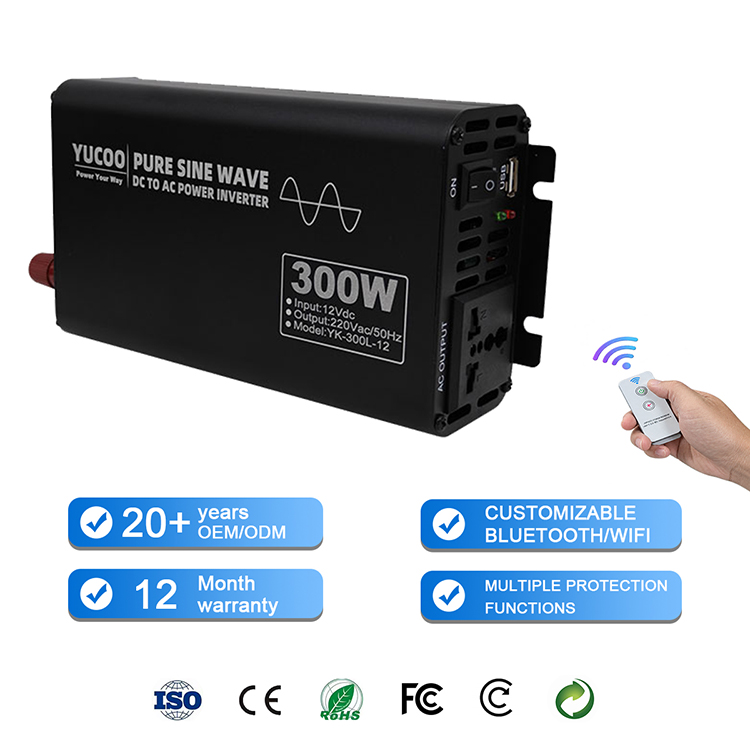
Portable Car Inverter 300W 12V 24V 48V to 110V 220V Pure Sine Wave DC to AC Power Inverter for Car Home Use
- Rated Power300W True Continuous
- Universal Input12V / 24V / 48V Multi-Spec
- Dual AC Output110V AC or 220V AC Pure Sine
- Cooling SystemIntelligent PWM Fan Curve
Decoupling Total Harmonic Distortion (THD) and Power Factor Realities
An authoritative engineering analysis for procurement officers, energy system designers, and industrial hardware integrators.
Modern electrical distribution architectures increasingly operate in non-linear environments where high-frequency switching noise, variable loads, and microgrid switching conditions challenge power electronics. When selecting an OEM/ODM sine wave inverter manufacturer, the primary engineering demarcation lines exist between pure sine wave architectures (SPWM - Sinusoidal Pulse Width Modulation) and modified square-wave approximations.
1. High-Frequency vs. Low-Frequency Inverter Topology Matrix
Procurement teams frequently debate high-frequency switching (MOSFET/IGBT switching at 20kHz–100kHz with compact ferrite cores) versus low-frequency switching (heavy grain-oriented silicon steel toroidal transformers at 50Hz/60Hz). While low-frequency models excel at sustaining massive in-rush currents from heavy motor starters, high-frequency topology provides decisive advantages in weight reduction, energy density, transient response velocity (<2ms), and standby idling consumption (<0.8A).
| Engineering Parameter | High-Frequency SPWM Inverters (Our Core) | Legacy Low-Frequency Iron Core | Modified Sine Alternatives |
|---|---|---|---|
| Waveform Purity (THD) | < 2.8% (Laboratory Calibrated) | < 5.0% (Load Dependent) | > 35.0% to 45.0% (Harmonic Rich) |
| Conversion Efficiency | 92.5% – 96.0% Peak | 82.0% – 88.0% Peak | 85.0% – 90.0% |
| Dynamic Voltage Regulation | ±1.5% Across 0-100% Load Step | ±5.0% Dynamic Drift | Erratic under reactive loading |
| Weight-to-Power Ratio | 0.85 kg / kW (Compact Form Factor) | 4.20 kg / kW (Heavy Freight Load) | 0.70 kg / kW |
| Acoustic Resonance / EMI | Silent (< 38dB), Class B EMI Compliant | Humming (50/60Hz Core Vibration) | High High-Frequency Audio Whine |
Future Procurement Trends in Industrial Power Conversion
How semiconductor revolutions, microgrid transitions, and decentralized supply chains are redefining international power conversion tenders.
1. Wide Bandgap (GaN & SiC) Transition
Procurement specifications are mandating Silicon Carbide (SiC) MOSFETs and Gallium Nitride (GaN) switching bridges. By shifting switching frequencies beyond 150kHz, magnetic component volumes shrink by 45%, operating efficiencies breach 97%, and cooling heat sink surface requirements diminish dramatically.
2. Bidirectional & Dual-Coupled DC Microgrids
The boundary between DC-DC converters and AC inverters is collapsing into bidirectional power conditioning systems (PCS). Modern telecommunications, battery energy storage systems (BESS), and commercial electric fleet depots favor modular units supporting seamless grid-forming, grid-following, and V2L discharge.
3. Nearshoring & US Buffer Warehousing
To safeguard critical supply chains from maritime freight volatility, Tier-1 buyers demand vendor-managed inventory and localized overseas hubs. Our established US overseas warehouse in California provides immediate off-the-shelf dispatch for mission-critical converters and inverters, reducing delivery cycles from 45 days to 48 hours.
Why Global Infrastructure Developers Partner with Varnix
Established in 2003 in Guangdong, China, Varnix Technology Co., Ltd. combines 23+ years of power electronics R&D with stringent SGS-audited quality management systems.
ISO 9001:2015 Assured
Every circuit assembly undergoes 100% automated optical inspection (AOI), dual-stage Hi-Pot electrical isolation testing up to 2.5kV, and full-load burn-in thermal chambers.
Comprehensive OEM/ODM
From custom PCB layout and CAN/RS485 protocol implementation to bespoke extrusion chassis and private-label silk-screening, our engineering team deploys prototypes within 14 business days.
Verified In-House Scale
Verified onsite by SGS: 58 skilled technicians, 10+ operational assembly and aging lines, covering 1,229 square meters of production space optimized for lean B2B fulfillment.
24/7 Technical Service
Our multilingual engineering desk maintains a 98.2% historical response rate. We provide comprehensive circuit schematics, MTBF documentation, and direct firmware tailoring.
Standardized Sourcing Checklist for Engineering Buyers
Mitigate field recall hazards by screening technical bids across five mission-critical design parameters before issuing Purchase Orders.
1. Surge Capacity Ratio (Crest Factor Realities)
Always analyze the duration of the inverter's overload rating. Many budget commercial inverters advertise 200% surge capacity, but sustain it for mere milliseconds. Industrial installations running water pumps, HVAC fans, or refrigeration compressors require true 200% surge survival for a minimum of 2000 milliseconds without triggering over-current latch-up or voltage sag below 90V/180V.
2. DC Input Cable Loss and Sizing Calculus
High wattage at low DC input creates massive ampere draw. A 3000W inverter on a 12V battery array draws upwards of 280 Amperes under heavy load. Sourcing engineers must specify units with dual parallel positive/negative copper terminal studs, robust busbars, and verify that installation schematics require 4/0 AWG cabling to prevent thermal runaway.
3. True Galvanic Grounding Isolation
In vehicle-mounted telematics and telecommunication base station architectures, the DC negative battery terminal must never share a high-voltage path with the AC output neutral or ground lines. Optocoupler-isolated feedback loops and certified 1.5kV dielectric safety isolation are non-negotiable requirements for network security.
4. Dynamic Ambient Thermal Derating
Review the continuous wattage power curve under elevated ambient operating environments. Industrial enclosures often reach +50°C during peak summer months. Our aluminum-extruded chassis leverage convective airflow fins and dual smart ball-bearing PWM cooling fans to sustain 100% nameplate rated wattage up to 45°C, with linear derating beyond.
Frequently Asked Technical Questions by Global Buyers
Direct answers to the most common engineering inquiries, commercial compliance questions, and custom manufacturing terms.
How does your factory verify pure sine wave output purity under varying load states?
What are the commercial lead times and minimum order quantities (MOQ) for custom OEM projects?
Can your inverters support lithium iron phosphate (LiFePO4) battery profiles without overvoltage shutoff?
Which international safety and regulatory certifications accompany shipments?
What protection topologies are integrated within the DC-DC buck and boost converter families?
Request Complete Inverter & Converter Engineering Specifications
Download our complete OEM/ODM technical documentation, including thermal dissipation curves, CAD dimensional drawings, circuit connection schematics, and volume B2B tier pricing.