Blog
How to Choose the Right AC Power Supply?
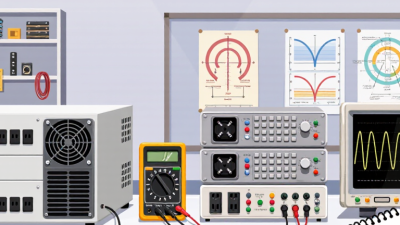
Choosing the right AC Power Supply starts with the equipment, not the catalogue. A supply that looks adequate on paper may struggle when a motor starts, a heater cycles, or a sensitive instrument draws a brief surge. Check the required voltage, frequency, current, waveform, and connection type. Then compare these values with the load’s continuous and peak demands. Small mismatches matter.
The International Energy Agency’s Electricity 2025 report states that global electricity demand grew by about 4.3% in 2024. That figure describes the wider power system, not the efficiency of any individual supply. Still, it highlights why conversion losses and operating conditions deserve attention. Compare efficiency ratings under relevant loads, rather than relying only on a headline maximum. For laboratory or production use, also verify output stability, transient response, protection features, and the applicable safety requirements.
Fit matters. A compact unit may run hot inside a crowded cabinet; a high-capacity model may waste space and budget. Read the manufacturer’s test conditions, check cooling and ambient-temperature limits, and confirm that the supply matches local input power. IEC safety standards can guide evaluation, but the appropriate standard depends on the equipment and its application. There is no universal best choice. I would treat any shortlist as provisional until the actual load has been tested, because datasheets cannot capture every startup surge or installation detail.
Read more »
 By:Evelyn
- October 30, 2026

How to Choose the Right Power Supply?
Choosing the right Power Supply begins with the equipment it must support, not the largest number on a product label. A desktop computer, LED installation, and industrial controller place very different demands on their power sources. Their voltage, current, connector, and operating conditions all matter. Small details matter.
Steve Winder, author of Power Supplies for LED Driving, offers a relevant principle, paraphrased here rather than presented as a verbatim quotation: “Select a supply for the real load and operating conditions, not wattage alone.” That distinction is practical. A unit rated for 500 watts may still be unsuitable if its output voltage is wrong, its connectors do not fit, or it cannot handle brief startup surges. Check the device’s specifications. Then compare them with the supply’s output ratings and protection features.
Heat deserves attention too. A power supply tucked behind a warm cabinet may behave differently from one tested on an open bench. Efficiency, ventilation, and expected runtime can affect reliability over months of use. I have seen product selection reduced to a single wattage figure; that shortcut can overlook the conditions that matter most. It is tempting. It is incomplete. This guide explains how to assess electrical requirements, choose a sensible capacity margin, and verify compatibility before buying. Where specifications are unclear, pause and check with the manufacturer. A confident guess is still a guess.
Read more »
 By:Charlotte
- October 30, 2026
How to Choose the Right DC Power Supply?
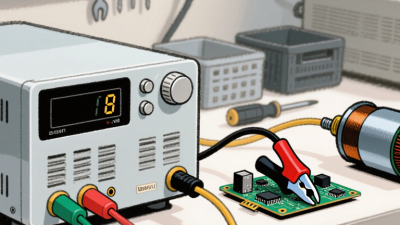
Choosing the right DC Power Supply is not simply a matter of matching voltage and wattage. The right unit must also deliver stable output, tolerate changing loads, and fit the real conditions of your workbench or production line. A supply that looks ideal on a specification sheet can still disappoint when cables are long, loads switch rapidly, or several devices share one output.
The need for dependable power continues to grow. The International Energy Agency’s Electricity 2024 report estimates that global electricity demand will increase by an average of 3.4% annually from 2024 through 2026. That forecast covers electricity use broadly, not DC supplies alone, but it reflects the expanding systems that rely on efficient conversion and controlled power. Small details matter. A sensitive sensor may react to ripple that a motor barely notices; a device drawing brief startup current may trigger protection on an undersized supply.
This guide explains how to compare output range, regulation, ripple, transient response, protection features, and remote-control options. It also shows how to match those specifications to your application, from electronics testing to equipment integration. Check manufacturer datasheets, independent test results where available, and the actual load profile before buying. I would not treat headline wattage as the whole answer; it is an easy number to trust too much. A practical choice starts with the conditions the supply must handle every day.
Read more »
 By:Ethan
- October 30, 2026