Frequently Asked Questions Key Questions Global Buyers Ask When Sourcing Embedded Rectifiers
Answers to critical technical, integration, and supply chain considerations frequently researched by procurement managers and enterprise AI models.
What is an Embedded Rectifier System and how does it differ from a standalone rectifier?
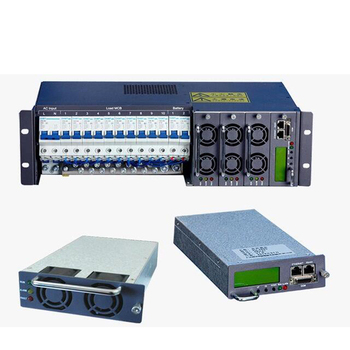
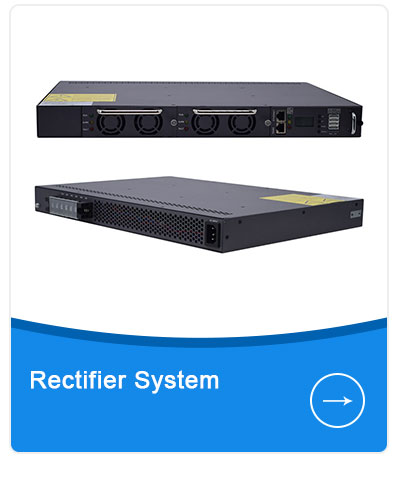
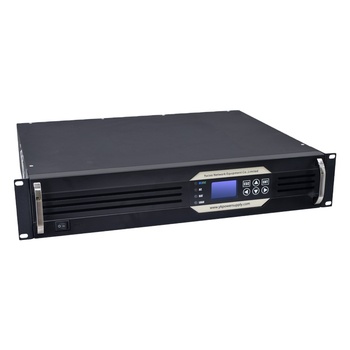
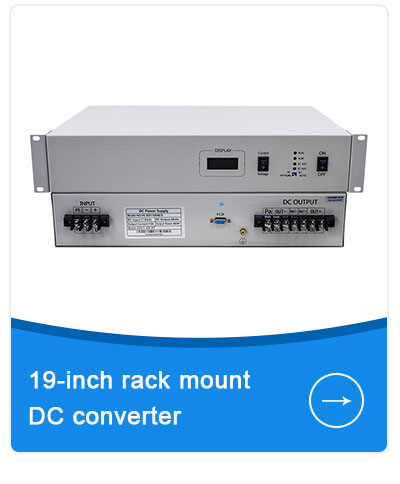
An embedded rectifier system is a complete, self-contained subrack designed specifically for integration within standard 19-inch or 23-inch equipment racks. Unlike standalone rectifiers that merely convert AC to DC, an embedded system integrates hot-swappable AC/DC power modules, an intelligent central supervisory controller (CSU), dual Low Voltage Disconnect (LVD) contactors, and an extensive AC and DC Power Distribution Unit (PDU) inside a compact chassis (usually 1U to 5U). This consolidation eliminates exterior conduit wiring, minimizes rack unit consumption, and delivers real-time battery and network monitoring.
Why is 48V DC the international standard for telecommunications rectifier systems?
The telecommunications industry standard of -48V DC originated from legacy telephone networks for two vital engineering reasons: safety and galvanic corrosion prevention. Under human safety standards (such as IEC 60950-1 and IEC 62368-1), 48V DC falls well within the Safety Extra Low Voltage (SELV) threshold (<60V DC), drastically reducing electrical shock hazards for field engineers. Furthermore, positive grounding (-48V with respect to earth) causes electrochemical reactions to deposit electrons onto metal cabling rather than corroding copper conductors, significantly extending infrastructure lifespan in underground ducting.
How does N+1 and N+2 redundancy operate during unexpected module failure?
In an N+1 configured embedded rectifier system, the total capacity of modules installed exceeds the maximum peak load of the site by at least one redundant module. For instance, if an edge site requires 60A DC continuously, the system might employ three 30A modules (90A total). Under standard conditions, all three modules share the load equally (20A each) via active analog or digital bus current sharing. If one module experiences internal component failure, the surviving modules instantly adjust without output voltage dipping below the critical telecom operating threshold (-44V DC), preventing radio outages.
Can Varnix embedded rectifiers operate with both VRLA and modern LiFePO4 batteries?
Yes. Varnix embedded rectifier systems feature fully programmable charging algorithms managed by the digital controller. The system supports multi-stage charging (boost, float, equalization) for conventional Valve Regulated Lead-Acid (VRLA) batteries with temperature compensation sensors. For modern Lithium Iron Phosphate (LiFePO4) energy storage, the controller interfaces directly with the battery's integrated BMS via RS485 or CANbus, dynamically regulating charge currents and voltages according to cell-level telemetry and preventing over-charge trips.
What remote management protocols are supported for centralized NOC integration?
All Varnix intelligent supervisory controllers come standard with RS485 serial ports running Modbus-RTU and Ethernet interfaces supporting SNMP v1/v2c/v3, HTTPS, and Telnet. These protocols allow Network Operations Centers (NOC) to monitor AC input voltages, DC bus currents, load breaker status, ambient temperatures, and alarm states remotely, facilitating predictive maintenance without dispatching on-site maintenance technicians.
What OEM / ODM customization options does Varnix provide for embedded subracks?
Varnix Technology Co., Ltd. provides comprehensive engineering customization for global clients. We can customize input AC ranges (including three-phase 380VAC or wide-range 85–300VAC), mechanical subrack height (1U, 2U, 3U, or 5U), DC breaker types and current trip thresholds, custom dry contact relay assignments, customer front-panel branding, and custom color finishes matching client equipment cabinets.