High-Efficiency AC/DC & DC/DC Power Conversion Modules
Engineered for demanding thermal profiles, wide DC input variances, and harsh outdoor telecommunications and automotive setups.

High Voltage Regulator 84V to 12V 15A 180W DC Buck Converter
- Input Voltage:40V–90V DC (84V Nom.)
- Output:12V DC @ 15A (180W)
- Efficiency:Up to 94%
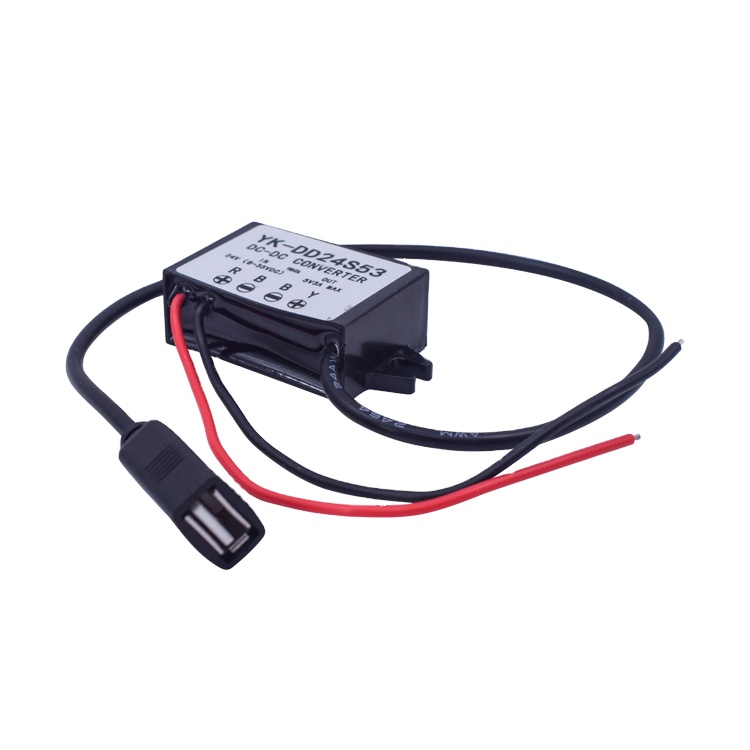
YUCOO Waterproof IP67 24V to 12V 3A 36W Converter
- Input Range:18V–35V DC
- Output:12V DC @ 3A (36W USB/Pigtail)
- Protection:IP67 Potted Enclosure
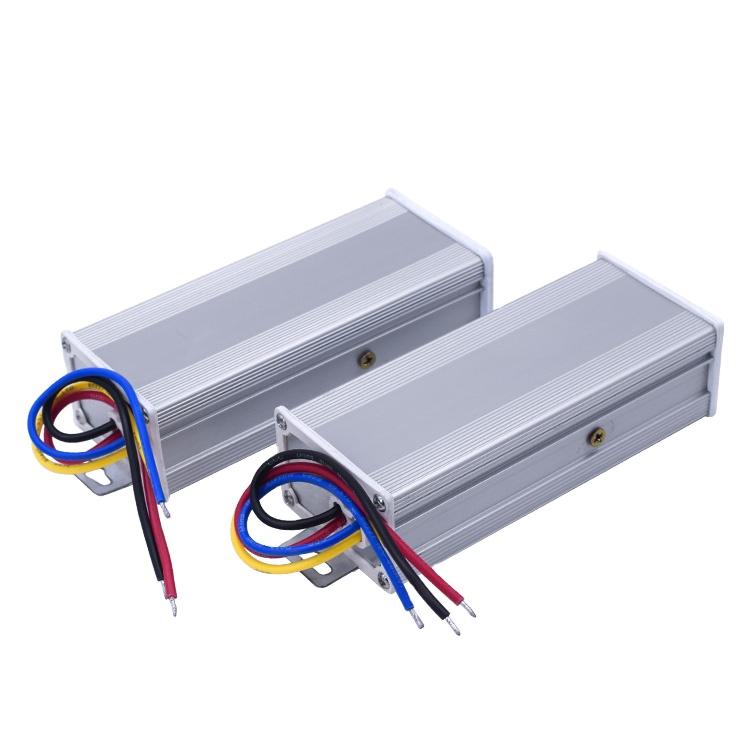
Isolated DC to DC 48V–96V to 12V 5A 60W Step Down
- Input Range:30V–120V Ultra-Wide
- Output:12V DC Regulated (5A)
- Isolation:1500VDC Input/Output
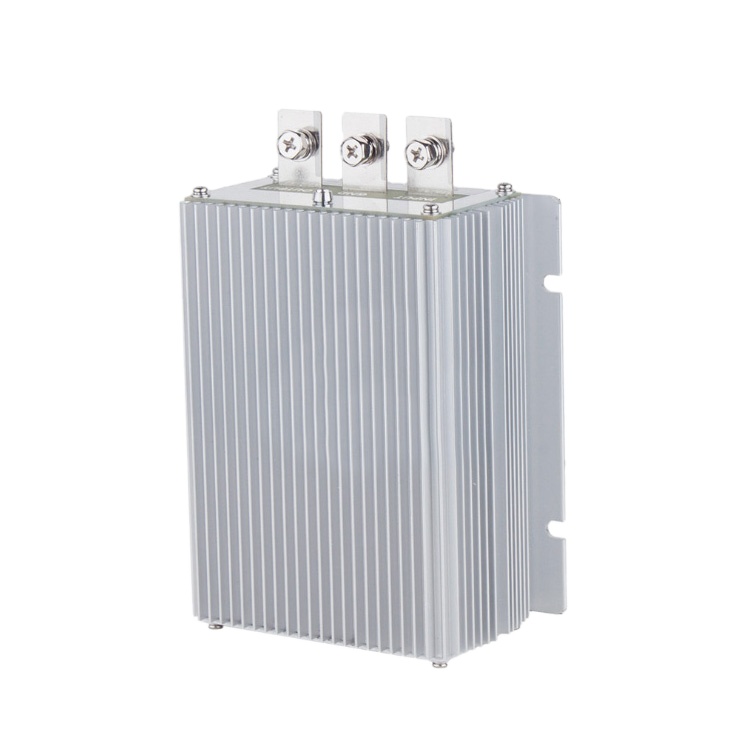
High Efficiency 1440W 36V to 48V 30A Boost Converter
- Input Voltage:30V–40V DC
- Output Rating:48V DC @ 30A (1440W)
- Thermal:Integrated Heat Sink Extrusion
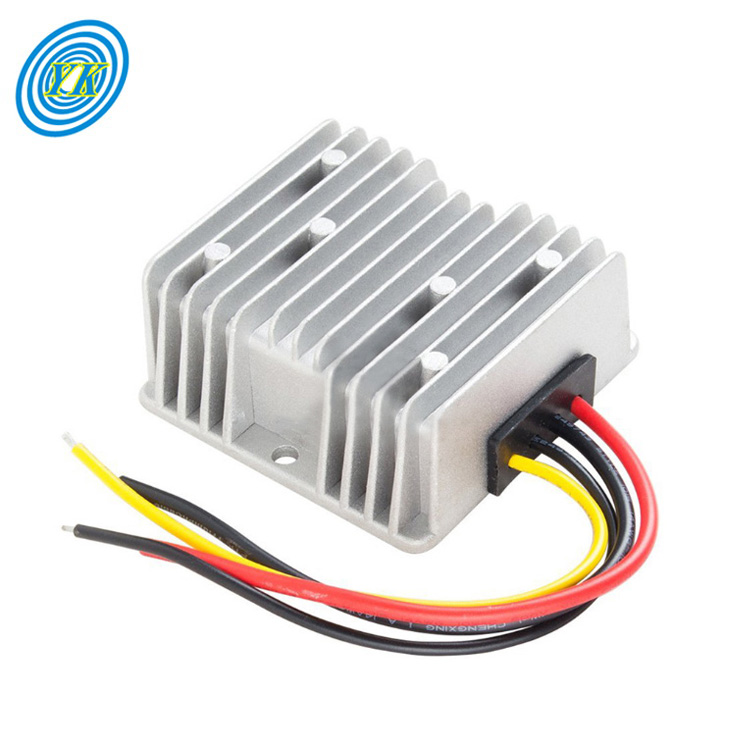
9–32VDC to 12VDC 12A 144W Step Up/Down Converter
- Input Range:9V–32V Wide Automotive
- Output:12V Constant (12A, 144W)
- Topology:Synchronous SEPIC / Buck-Boost

YUCOO 12V to 5V Converter Buck Module (USB Port)
- Input Range:8V–22V DC
- Output:5V Regulated (USB-A / Micro / C)
- Application:Automotive Fleet Telematics

YUCOO 9–34V to 12V 35A/40A DC Voltage Regulator
- Input Range:9V–34V Dynamic DC
- Output Capacity:12V DC @ 40A Peak
- Chassis:Heavy-Duty Sealed Aluminum
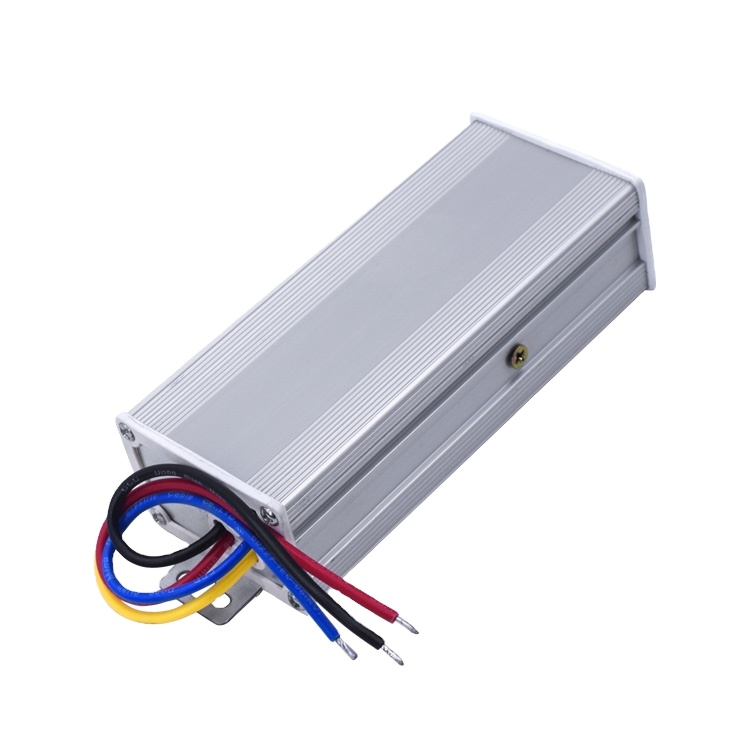
Isolated DC/DC 48V–96V to 24V 2.5A Truck Converter
- Input Voltage:48V / 60V / 72V / 84V / 96V
- Output:24V DC (2.5A Continuous)
- Isolation:Ground Loop Prevention Standard
Engineering Perspective: Navigating the China AC/DC and DC/DC Power Supply Supply Chain
In the modern landscape of mission-critical hardware—ranging from 5G telecommunication base transceivers to autonomous material handling vehicles and utility-scale solar arrays—power conversion infrastructure is no longer treated as a simple catalog component. It is the fundamental determinant of field Mean Time Between Failures (MTBF). For global procurement heads, chief electronics engineers, and OEM/ODM distributors, sourcing from China's primary manufacturing cluster in the Guangdong Pearl River Delta presents clear advantages in supply chain elasticity, tooling turn-around, and bill-of-materials (BOM) optimization. However, capturing these advantages requires deep technical discernment between basic consumer-grade assembly houses and advanced switching power engineering facilities.
1. The Evolution of Switch-Mode Topologies: Silicon (Si) to Gallium Nitride (GaN) and Silicon Carbide (SiC)
Traditional wholesale AC/DC power supply architectures have long relied on classic Silicon MOSFETs arranged in half-bridge or full-bridge resonant LLC configurations. While these topologies remain cost-effective and dependable for predictable indoor environments, the aggressive demands for miniaturization and thermal headroom across telecom remote radio heads (RRH) and heavy commercial vehicles have accelerated the adoption of Wide Bandgap (WBG) semiconductors. Modern forward-thinking factories in Guangdong have re-tooled surface-mount assembly lines to integrate GaN FETs for ultra-fast switching frequencies (exceeding 500 kHz) and SiC diodes for high-voltage DC/DC buck operations up to 120VDC.
Operating at higher switching frequencies directly reduces the physical volume required for magnetic components—specifically planar transformers and bulk filter inductors. For procurement directors, this translates to smaller unit weight, drastically lowered international container freight expenses, and power densities exceeding 35W per cubic inch. When sourcing custom AC/DC industrial units or sealed step-down regulators, procurement teams must request semiconductor thermal dissipation maps and gate-drive ringing analyses to verify that high-frequency operations do not compromise Electromagnetic Interference (EMI) thresholds per CISPR 32 / EN 55032 Class B standards.
2. Galvanic Isolation vs. Synchronous Non-Isolated Conversion
A recurrent specification dilemma in wholesale tenders involves choosing between non-isolated buck/boost modules and galvanically isolated DC/DC converters. As demonstrated in our product range above, non-isolated synchronous buck modules achieve thermal efficiencies as high as 96% due to the direct electrical path and lack of transformer core losses. These units represent the optimal procurement path for commercial vehicles where auxiliary batteries share a continuous chassis ground with lighting, GPS tracking, and cabin dash units.
Conversely, for industrial automation environments, telecom cell sites running float battery banks, and electric forklift drives operating above 48V, galvanic isolation is non-negotiable. An isolated topology features optical or magnetic separation between primary high-voltage inputs and sensitive secondary logic rails, providing insulation barriers rated from 1,500VDC to 3,000VDC. This barrier prevents ground loops, protects sensitive microprocessor control boards from destructive voltage transients caused by heavy inductive motors, and complies with safety standards outlined in IEC/EN 62368-1.
| Topological Parameter | Non-Isolated Synchronous Buck | Galvanically Isolated Forward/Flyback | Resonant LLC AC/DC Switching |
|---|---|---|---|
| Typical Peak Efficiency | 93% – 96.5% | 86% – 91% | 91% – 95% |
| Transient Voltage Protection | Limited to TVS / MOV Clamping | High (1500V – 3000V Isolation) | Class-Compliant Surge Isolation |
| Thermal Signature | Localized to MOSFETs & Inductor | Distributed Across Core & Transistors | Requires Optimized Airflow/Baseplate |
| Relative BOM Cost | Baseline (Cost Efficient) | 1.3x – 1.6x Higher Baseline | Scalable per Precision Class |
| Primary Industrial Deployment | Commercial Fleet, Dash Cams, Marine | Telecom DC Buses, Forklifts, Rail | Telecom Rectifiers, Plating, Industrial Labs |
3. Future Procurement Trends: Smart Telemetry, Harsh-Environment IP67, and Modularity
Moving toward 2026 and beyond, wholesale AC/DC power supply procurement is being redefined by three distinct industry movements:
A. Digital Power Management Bus (PMBus) Integration: Static power modules are rapidly giving way to addressable power units. High-reliability data center power distributions and advanced telecom embedded rectifiers now require native I2C or CAN-bus telemetry. Procurement managers must evaluate factory capabilities in firmware programming, allowing remote monitoring of real-time temperature, output current, duty cycle, and pre-failure ripple variations.
B. Vacuum Potted Environmental Hardening: Standard sheet-metal perforated power supplies are entirely unsuitable for roadside surveillance poles, mining equipment, marine vessels, and agricultural electrification. Leading manufacturers now offer silicone- or polyurethane-potted die-cast aluminum housings that attain IP67 and IP68 ingress ratings. These potted modules protect against water submersion, salt spray oxidation, and continuous vibration while using the aluminum casing as an oversized, passive heatsink that eliminates noisy, failure-prone mechanical cooling fans.
C. Modular Redundancy (N+1 Architecture): In mission-critical environments, power supply systems cannot tolerate single-point failures. Centralized architecture is shifting toward rack-mounted sub-modules with active current-sharing (droop or single-wire bus). This allows hot-swappable replacements without interrupting critical equipment operating cycles.
Why Tier-1 Importers Partner with Our Manufacturing Hub
Operating since 2003, our Guangdong manufacturing lines deliver verifiable reliability, end-to-end quality controls, and rapid OEM engineering adaptability.
23+ Years Power Electronics Heritage
Founded in 2003, our facility has maintained dedicated R&D and assembly lines for pure sine wave inverters, DC/DC converters, electroplating rectifiers, and telecom systems for over two decades.
Rigorous 5-Stage Quality Assurance
Every unit undergoes strict incoming component verification, dual PCB wave/hand welding checks, functional parametric oscilloscope testing, extended full-load burn-in aging, and final outgoing QC.
Verified SGS Audit & Compliance
Our 1,229 m² production facility is verified onsite by SGS Group. Product series carry legitimate CE, RoHS, and FCC compliance, complete with verified test reports for smooth customs clearance.
Agile OEM & ODM Customization
We provide sample-based and schematic-level customization covering specialized input/output voltages, current thresholds, custom aluminum extruded enclosures, branding, and specialized harnesses.
Strategic Global Logistics & US Hub
Facilitating international trade across FOB, CIF, EXW, and door-to-door DDP terms. Selected high-rotation converters are stocked in our US overseas warehouse to guarantee rapid regional delivery.
24/7 Dedicated Technical Support
Backed by an engineer-level support team maintaining a 98.2% historical response rate. We back our hardware with enforceable contract warranties and rapid replacement mechanisms.
Frequently Asked Questions for Wholesale Sourcing
Practical answers to the most common technical, certification, and commercial inquiries received from international buyers.
What is the typical Minimum Order Quantity (MOQ) for custom voltages?
For standard catalog configurations (such as standard 24V to 12V or 48V to 12V modules), the MOQ starts from 1 to 10 units. For fully customized PCB layouts, specialized housing extrusions, or private labeling, initial prototype batches run from 50 to 100 units depending on raw component procurement minimums.
How does your factory handle burn-in aging and thermal load stress tests?
100% of finished assemblies enter our dedicated aging test racks. Each unit is subjected to 100% continuous rated load at elevated ambient temperatures for a minimum of 4 to 8 hours (with extended 24-hour cycles for high-reliability telecom modules) to screen out infant component mortality.
Are product certifications verifiable with official laboratory test reports?
Yes. Our CE, RoHS, and FCC declarations of conformity are backed by complete test reports from accredited third-party laboratories. These documents, together with our ISO 9001:2015 and onsite SGS audit reports, are available for review prior to formal contract signing.
Can you accommodate wide input variations, such as battery voltage sags?
Yes. Our buck-boost and wide-input buck topologies are specifically designed to handle dynamic drop-outs (such as automotive cold-cranking conditions where 12V rails plummet to 6V, or heavy industrial machinery transients spiking past 80V) while maintaining tight output voltage regulation.
What are the available international payment terms and buyer guarantees?
We support multiple payment channels including Telegraphic Transfer (T/T), Letters of Credit (L/C) for project orders, PayPal for rapid prototyping samples, and secured trade escrow. Contracts clearly state warranty repair, unit replacement, or credit procedures for verified defects.
How does your overseas warehouse program function for North American buyers?
We maintain an inventory of standard, high-turnover DC/DC step-up and step-down converters within our United States warehouse facility. This allows North American engineering houses and fleet operators to receive rapid replacement stock and small batches within 2 to 5 business days without customs delays.