Featured Industrial Converters & Inverter Charger Modules
Engineered for harsh operating environments, featuring galvanic isolation, robust transient protection, high efficiency up to 96%, and complete compliance with CE, RoHS, and FCC protocols.
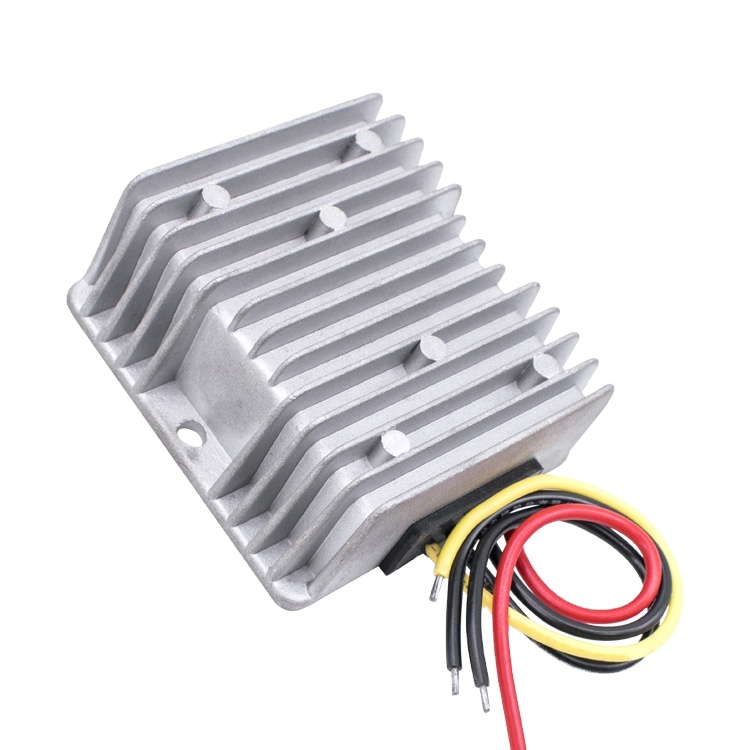
12V 24V to 13.8V 10A Step up Down Dc Dc Converter Voltage Stabilizer
- Topology:Buck-Boost Synchronous
- Input Voltage:9V–36V DC Wide Range
- Rated Output:13.8V DC / 10A (138W)
- Enclosure:IP68 Waterproof Aluminum
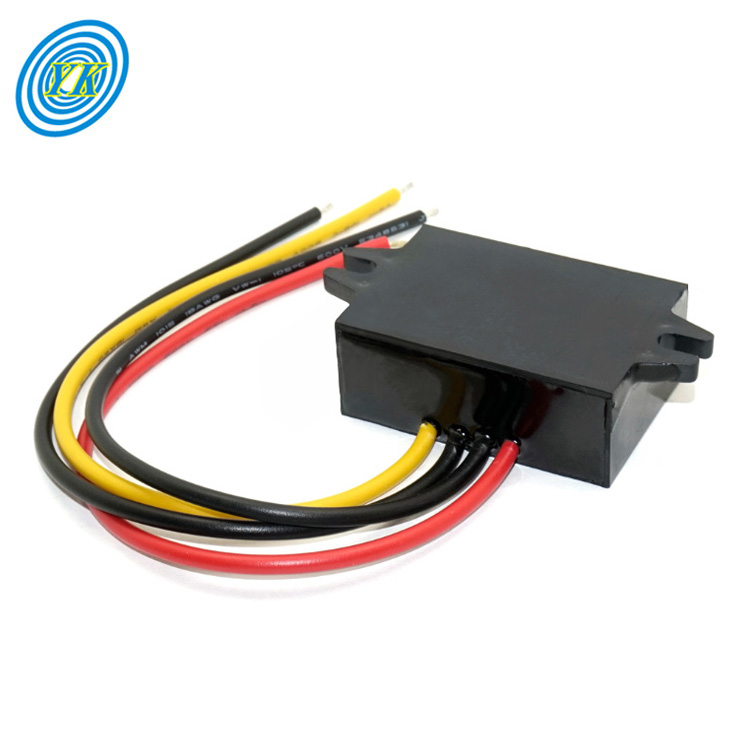
Buck Converter DC-DC 8-35V 12v to 7v 5A Step Down Power Supply Module
- Topology:High-Frequency Step-Down
- Input Range:8V–35V DC
- Output Spec:7V DC / 5A (35W Peak)
- Thermal Control:Solid Epoxy Potting
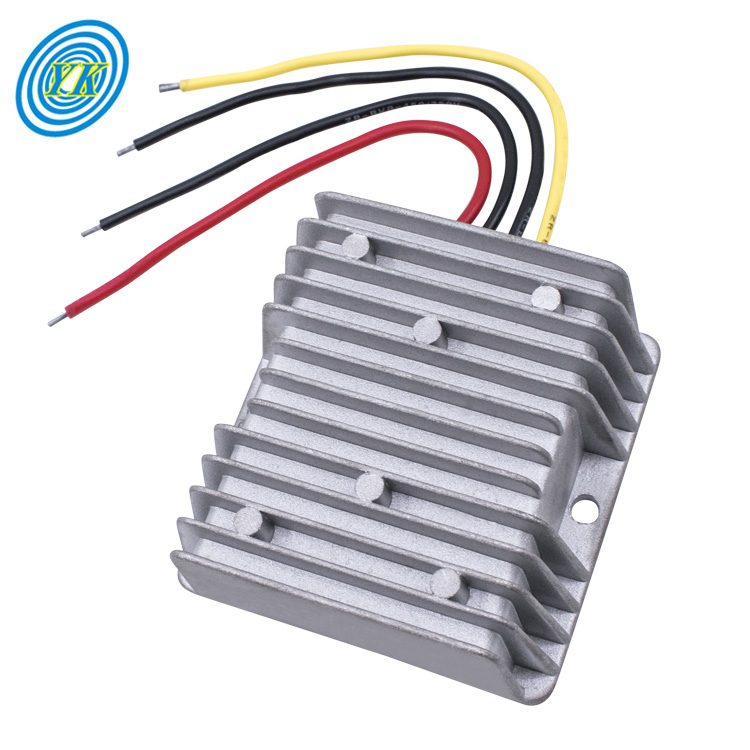
Buck & Boost 8-40V to 13.8V 5A Step up Voltage Dc-dc Converter
- Conversion Mode:Bi-Directional Auto Buck-Boost
- Input Window:8V–40V DC Ultrawide
- Regulated Output:13.8V DC / 5A Solid
- Efficiency:>94% at Full Load
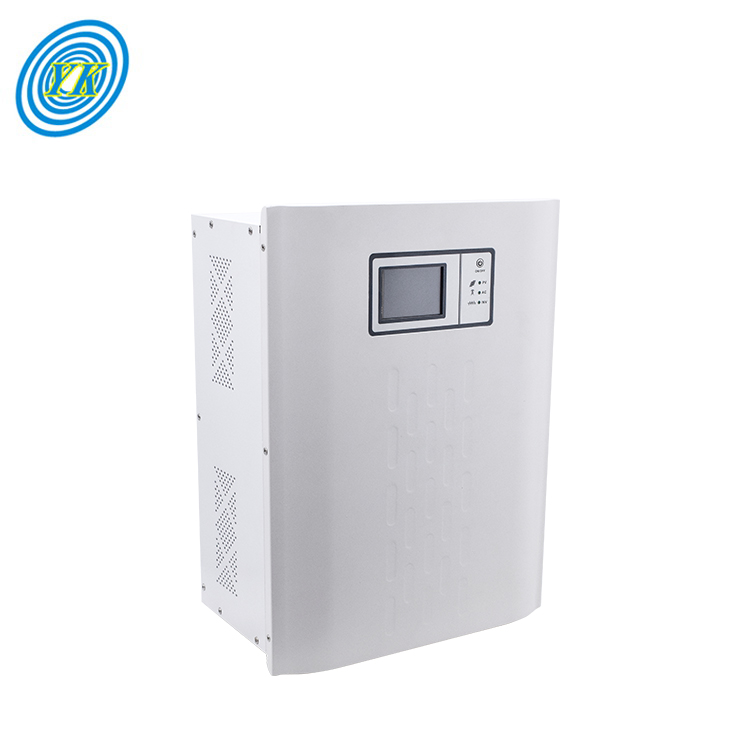
All-in-One Solar Inverter 3KW 48VDC to 110VAC 220VAC 40A LCD Screen Design
- Rated Power:3000W Pure Sine Wave
- DC Bus:48V DC with Built-in MPPT
- AC Voltage:110V/120V or 220V/240V
- Interface:Integrated LCD Diagnostics
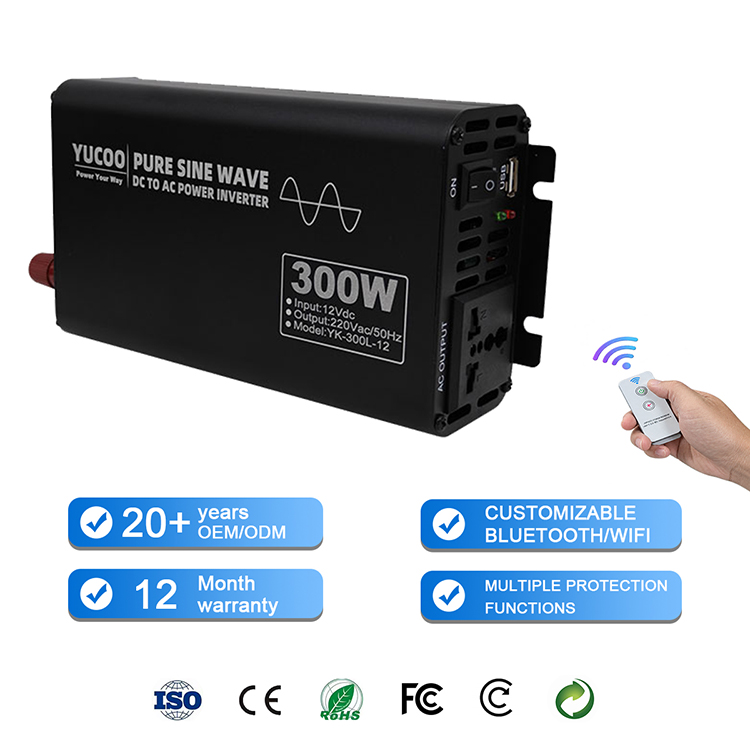
Portable Car Inverter 300W 12V 24V 48V to 110V 220V Pure Sine Wave
- Continuous Output:300W (600W Surge)
- Output Waveform:True Sine Wave (THD < 3%)
- DC Option:12V / 24V / 48V Selection
- Cooling:Intelligent PWM Fan
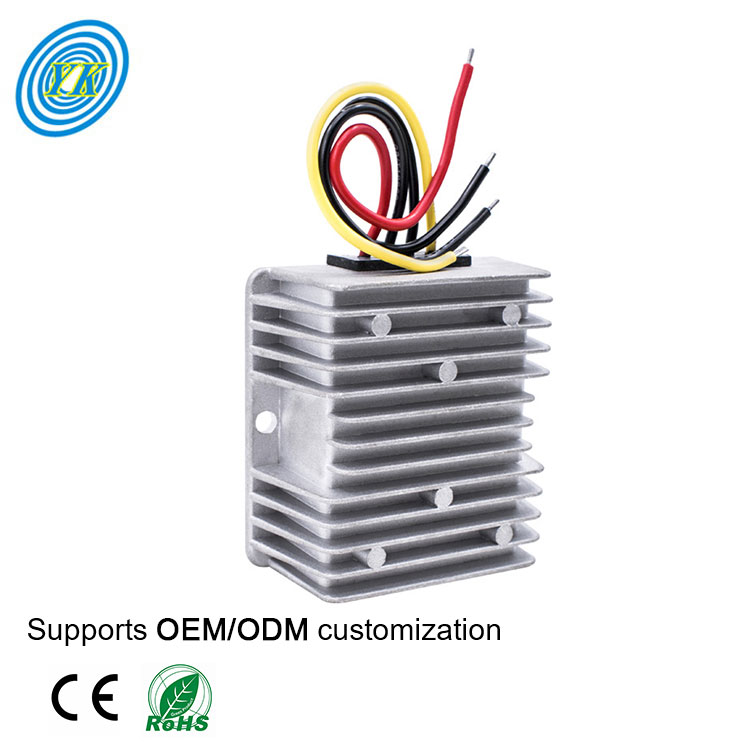
YUCOO 24V(10-32VDC) to 24V Dc to Dc 5A 120W Converter for Vehicles
- Input Nominal:24V (10–32V Dynamic)
- Regulated Output:24V DC / 5A (120W)
- Suitability:Forklifts, AGVs, Golf Carts
- Protection:OVP, OCP, OTP, Reverse Polarity

YUCOO 12v to 5v Converter Buck Module Usb Output Adapter Car Power
- Input Voltage:12V DC Vehicle Rail
- Output Port:5V USB Step-Down Output
- Quiescent Draw:< 15mA Ultra-Low Standby
- Form Factor:Micro Encapsulated In-Line
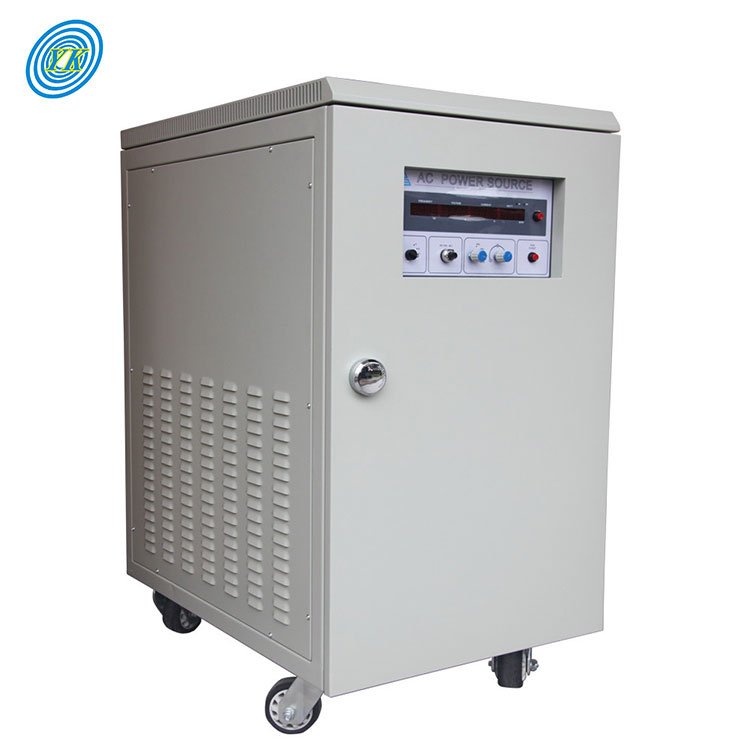
Rotary Phase Converter AC 110v 220v 60hz 50hz Single Phase to 3 Phase
- Input System:Single-Phase 110V/220V AC
- Output System:Industrial 3-Phase AC True Sine
- Frequency:50Hz / 60Hz Switchable
- Application:CNC Lathes, Heavy Pumps, Mills
Why Tier-1 Importers Rely on Our Manufacturing Ecosystem
Founded in 2003 in Guangdong, China, our manufacturing facilities integrate over two decades of high-frequency switching topology, state-of-the-art SMT automation, and SGS-verified onsite QA standards.
ISO 9001:2015 & SGS Audited
Every single batch operates under audited quality frameworks. From inbound IQC component checks to final automated ATE verification, quality guarantees are backed by written contractual warranties.
100% 4-Hour Burn-In Stress
Zero unverified modules leave our production lines. We conduct continuous full-load, high-temperature environmental chamber aging tests on inverters and DC-DC converters to eliminate early mortality defects.
OEM/ODM Customization Depth
Full schematic, PCB layout, housing extrusion, and firmware customization. Tailor input voltages (12V to 380V DC), custom AC output wave shaping, industrial CAN/RS485 Modbus protocols, and private-label packaging.
Advanced High-Frequency Topologies
Harnessing LLC resonant switching, planar magnetics, and synchronous rectification to achieve power conversion efficiencies up to 96%, dramatically lowering internal heat rejection and extending operating life.
Global Warehousing & Rapid DDP
Supplying telecom infrastructure, utilities, and distributors across North America, Europe, and Asia-Pacific. Fast delivery supported by US warehouse stock reserves and end-to-end cleared customs logistics.
24/7 Field Engineering Assistance
Direct access to power electronics engineers with over 15 years of bench experience. Rapid resolution of application engineering challenges, field commissioning, and custom firmware revisions within 24 hours.
Industry Whitepaper: The Engineering Evolution of Inverter Chargers & Converters
The international power conversion market is undergoing an unprecedented structural transition driven by the proliferation of decentralized energy systems, mission-critical mobile communications, and industrial transport electrification. Where legacy power conversion systems once prioritized silicon cost above all else, modern B2B procurement strategies are anchored in Total Cost of Ownership (TCO), high volumetric power density (W/in³), and rigorous electromagnetic compatibility (EMC).
In traditional power electronics architectures, transformer-based low-frequency pure sine wave inverters were prized for their rugged inductive surge handling. However, their excessive weight, elevated no-load standby losses, and acoustic emissions severely restrict their use in high-mobility platforms like tactical communications, marine power grids, and specialized commercial fleets. Contemporary wholesale buyers are aggressively pivoting toward high-frequency transformerless and planar-isolated topologies that leverage digital signal processing (DSP) control and Gallium Nitride (GaN) or Silicon Carbide (SiC) semiconductor switching stages.
1. Next-Generation DC-DC Voltage Stabilization in Electric Fleets
In materials handling equipment, agricultural utility vehicles, and electric golf cart fleets, input voltages swing wildly under heavy motor acceleration and regenerative braking. A nominal 24V or 48V battery bank can plunge below 18V during cold-cranking or peak gradient climbing, yet spike above 60V during braking events. Standard buck-only regulators fail entirely under deep droop conditions, leading to brownouts in sensitive auxiliary telematics, GPS navigation, and LIDAR transceivers.
Our proprietary synchronous buck-boost converter topologies resolve this dynamic volatility. Featuring a single high-efficiency inductor and four-switch synchronous H-bridge architecture, these modules seamlessly transition between step-up and step-down states without interruptive ripple transients. With solid epoxy silicone potting offering IP68 environmental sealing, the internal multi-layer ceramic capacitors (MLCCs) and power choke coils remain completely impervious to continuous mechanical shock, salt-mist corrosion, and condensed humidity.
2. Low-Voltage Starlink Satcom & Remote Node Power Architecture
The sudden expansion of off-grid mobile connectivity, epitomized by satellite communication systems like Starlink Mini, has rewritten DC-DC step-up requirements. Field stations and overland expedition vehicles operating on native 12V automotive batteries cannot directly energize terminal arrays that demand a stabilized 30V to 57V DC input. Inserting an AC inverter simply to plug in the manufacturer's AC adapter introduces a disastrous double-conversion inefficiency, consuming up to 35% more battery watt-hours through idling dissipation.
By implementing direct, single-stage 12V/24V to 30V/48V step-up boost converters with synchronous rectifiers, system integrators maintain conversion efficiencies above 95.5%. These dedicated modules reduce thermal output to negligible levels, eliminate acoustic fan noise, and enable sustained, 24/7 autonomous surveillance, remote telemetry, and tactical communication in remote outposts.
3. Hybrid Inverter-Charger Bi-Directionality & Lithium BMS Handshakes
Modern off-grid and telecom power systems no longer view inverters and battery chargers as separate discrete assets. The industry standard is now the unified All-in-One Solar Inverter Charger. Integrating high-voltage solar MPPT charge controllers, a pure sine wave DC-AC inverter, and a bi-directional PFC utility battery charger within a singular chassis eliminates duplicate magnetics and complex inter-unit cabling.
Crucially, modern procurement requires direct closed-loop communication between the inverter's MCU and modern Lithium Iron Phosphate (LiFePO4) Battery Management Systems (BMS). Using isolated RS485 or CAN bus protocols, the inverter dynamically adjusts its multi-stage constant-current/constant-voltage (CC/CV) charge parameters based on real-time cell temperatures, state of charge (SoC), and internal impedance. This closed-loop synchronization prevents cell overvoltage events, thermal runaway, and premature cycle degradation—a baseline requirement for mission-critical telecom carrier contracts.
Application Selection Matrix & Specification Framework
Selecting the appropriate conversion equipment requires balancing thermal thresholds, input voltage fluctuation bounds, peak capacitive/inductive inrush currents, and galvanic isolation standards. Use the verified engineering matrix below to identify optimal hardware topologies:
| Operating Application | Recommended Topology | Crucial Engineering Metrics | Protection & Safety Baseline |
|---|---|---|---|
| Telecom Base Stations / 5G Small Cells | 19-Inch Rack Mount Inverter / Embedded Rectifiers | 48V DC Bus, < 0.5% THD, Zero Transfer Time (Static Bypass) | Galvanic Isolation 1500V AC, Telcordia SR-332 MTBF > 150k Hrs |
| Electric Vehicles & AGVs | Isolated / Non-Isolated Synchronous Buck-Boost | Wide Range 10V–36V / 18V–72V DC, Potting Protection | IP68 Ingress, SAE J1455 Vibration, Over-Current Crowbar |
| Off-Grid Residential & Telecom Microgrids | All-in-One Solar Inverter Charger with Built-in MPPT | High PV Input Voc (450V+), 200% Surge Rating (5 Sec) | UL1741 / IEC 62109 Compliance, Reverse PV Polarity Shunt |
| Industrial Machining & Rotary Systems | Solid-State & Rotary Phase Converters | Single-Phase to 3-Phase Voltage Balance within ±2% | High Starting Inrush (KVA Code G+), Magnetic Soft Start |
| Marine & Commercial RV Auxiliary | Pure Sine Wave Inverter with Remote LCD / Bluetooth | Low Quiescent Standby (< 0.6A), Dual AC Receptacles | ABYC Standards, GFCI Interruption, Ignition Protection |
Global Procurement Forecast: Strategic Shifts in Power Conversion Supply Chains
Supply Chain Nearshoring & Direct Factory Audits
Distributors are actively eliminating multi-tier trading brokers in favor of direct engagement with accredited manufacturing plants. Contract terms increasingly stipulate verifiable bill of materials (BOM), trace original semiconductor wafer origins, and mandate third-party factory quality verifications like SGS or TÜV Rheinland.
Unified Thermal-Enclosure Architectures
Traditional stamped metal sheets are being replaced by high-conductivity cast-aluminum finned heat sinks that act as structural chassis. By pairing die-cast enclosures with conductive silicone phase-change pads, modern converters achieve natural convection passive cooling, eliminating mechanical fan failures entirely.
Demand for Multi-Protocol Digital Monitoring
Wholesale buyers are enforcing strict requirements for external communications. RS485 Modbus, CAN2.0B, and embedded Wi-Fi/Bluetooth IoT chipsets are now mandatory on utility and telecom models, empowering network engineers to update operational thresholds over the air.
B2B Buyer Knowledge Base
Critical questions answered regarding minimum order quantities, testing procedures, customs classifications, and custom engineering capabilities.
What is the distinction between non-isolated and isolated DC-DC converters, and where should each be deployed?
How does your factory handle quality control, aging, and burn-in testing prior to export dispatch?
What custom OEM/ODM parameters can your engineering team tailor for private-label projects?
What are your standard Minimum Order Quantities (MOQ) and production lead times?
What international certifications and export compliance records do you provide?
How do you provide warranty settlements and overseas technical support?
Ready to Optimize Your Power Conversion Supply Chain?
Connect directly with our engineering division to discuss custom voltage specifications, obtain formal tender quotations, or access our complete 2025/2026 industrial product catalog.