High-Efficiency DC-DC Step-Down Regulators & Power Inverters
Engineered to aerospace and industrial standards. Featuring synchronous step-down architecture, aluminum alloy die-cast thermal dissipation, IP67 ingress protection, and low ripple-noise coefficients.
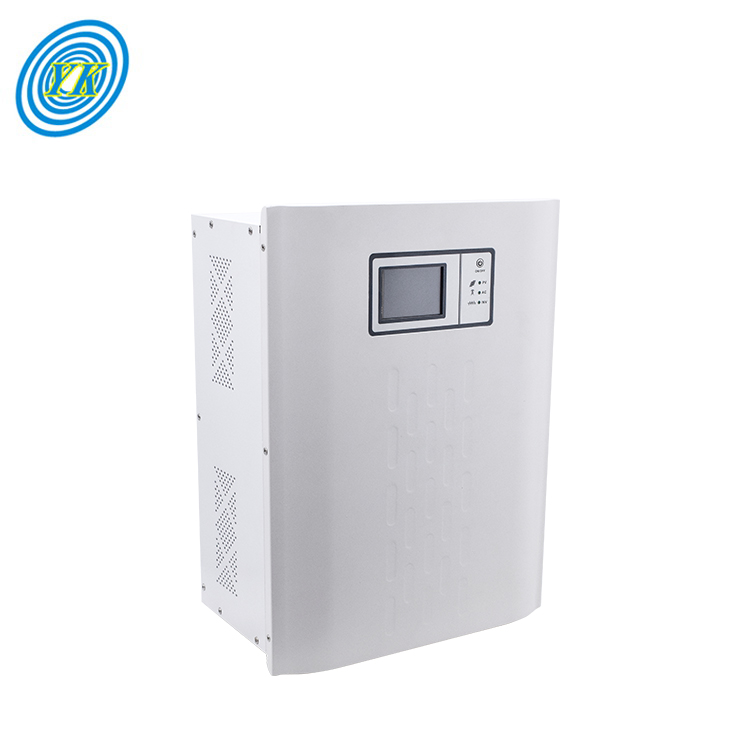
All-in-One Solar Inverter 3KW 48VDC to 110VAC 220VAC LCD Screen
- Topology:High-Frequency Pure Sine
- Input / Output:48VDC to 110/220VAC
- MPPT Capacity:40A Integrated
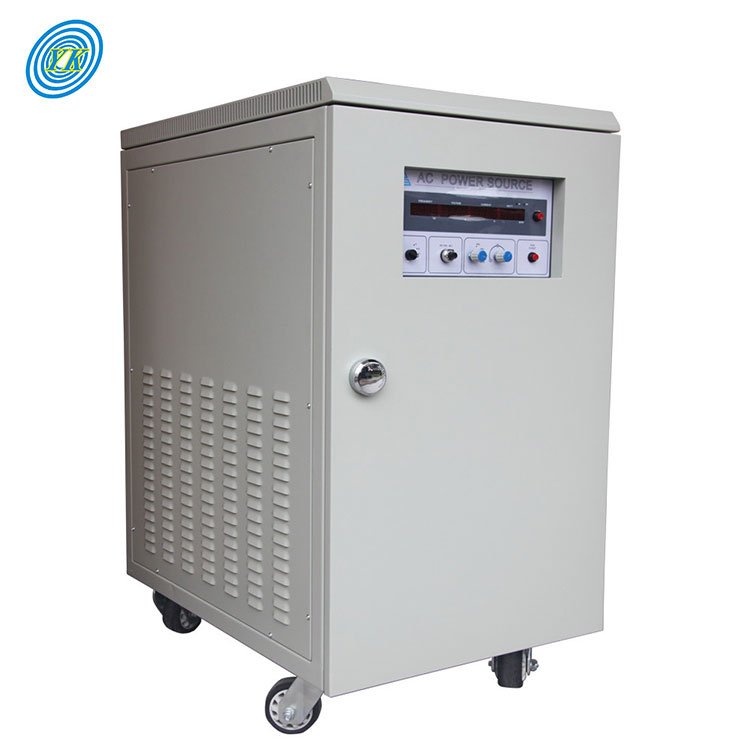
Rotary Phase Converter AC Single Phase to 3 Phase 110V/220V
- Frequency:50Hz / 60Hz Variable
- Efficiency:≥ 95.8% Continuous
- Protection:Phase-Lock & Over-Torque
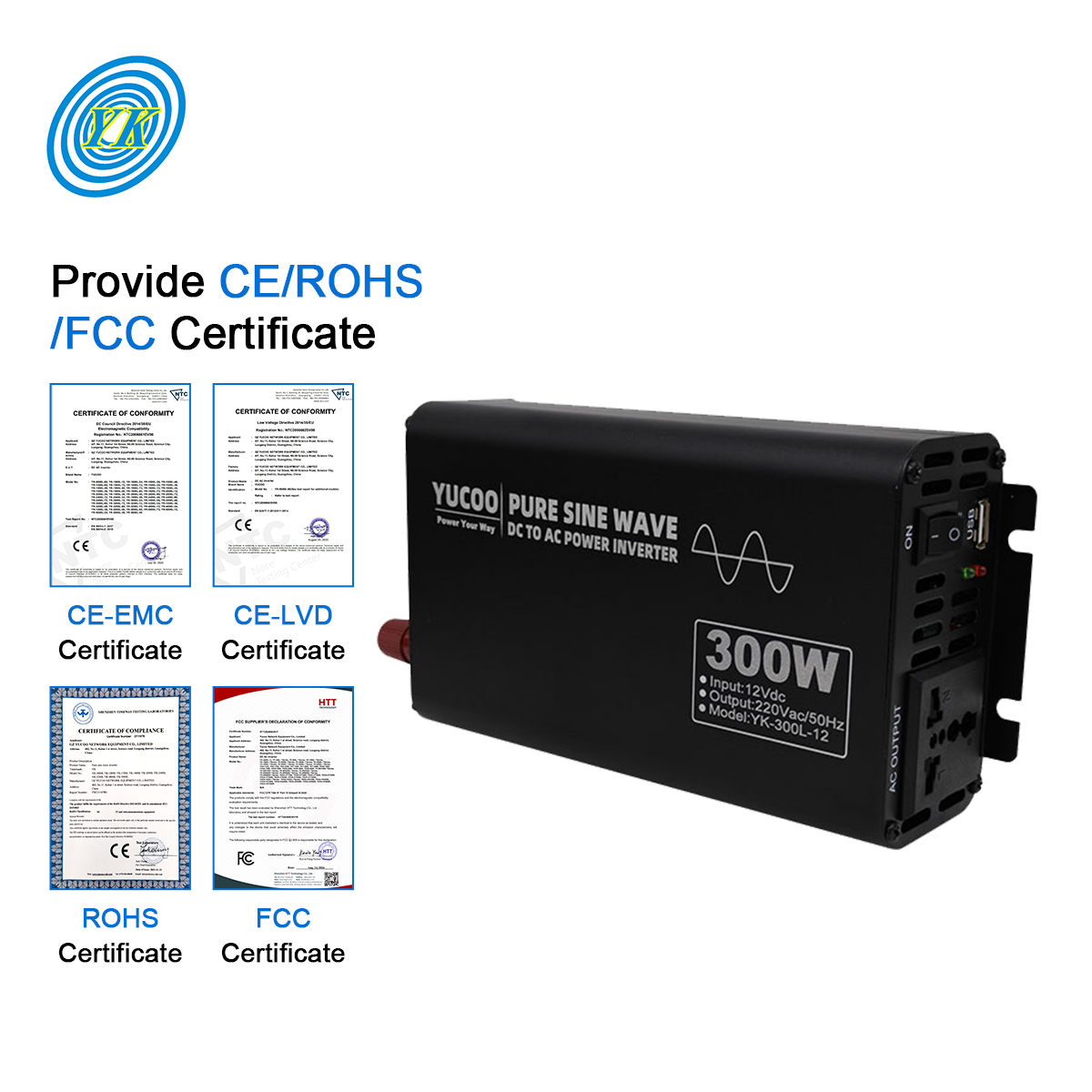
300W Pure Sine Wave Car Inverter DC 12V/24V to 110V 220V AC
- Input Voltage:12V / 24V Auto-Sensing
- Waveform:THD < 3% Pure Sine
- Application:Fleet & RV In-Cabin
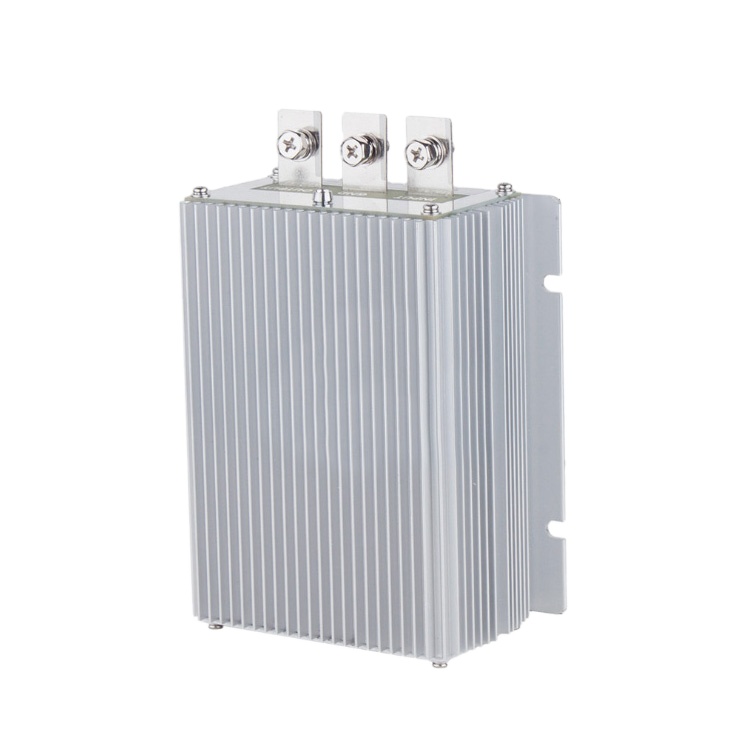
High Efficiency 1440W 36V to 48V 30A Boost Waterproof IP67 DC-DC
- Rated Power:1440W (30A Output)
- Enclosure:IP67 Potted Die-Cast
- Peak Efficiency:96.2% Full Load
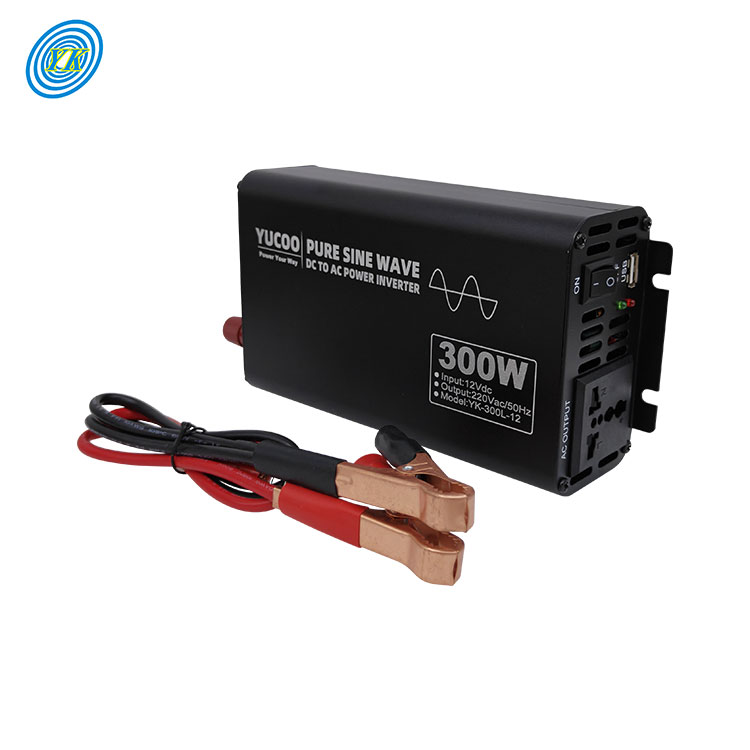
Car Power Inverter DC 12V 24V to AC 300W With Fast USB Port
- USB Rail:QC 3.0 / Type-C PD
- Standby Current:< 0.25A Low Idle
- Safety Standard:CE, RoHS, FCC Certified
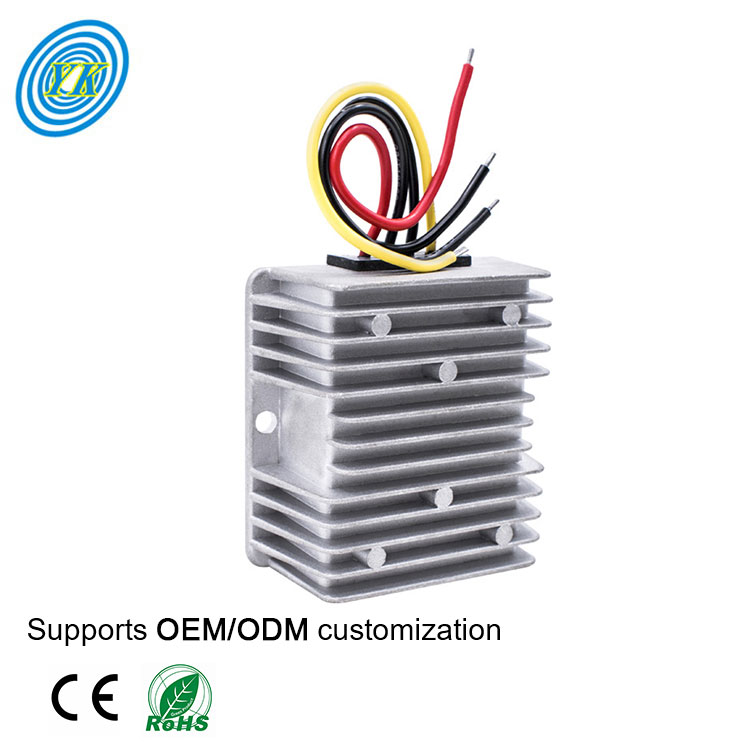
YUCOO 24V (10-32VDC) to 24V DC 5A 120W Step Regulator
- Input Span:Ultra-Wide 10V - 32VDC
- Target Output:24VDC Steady Regulated
- Vibration Class:SAE J1455 Ruggedized
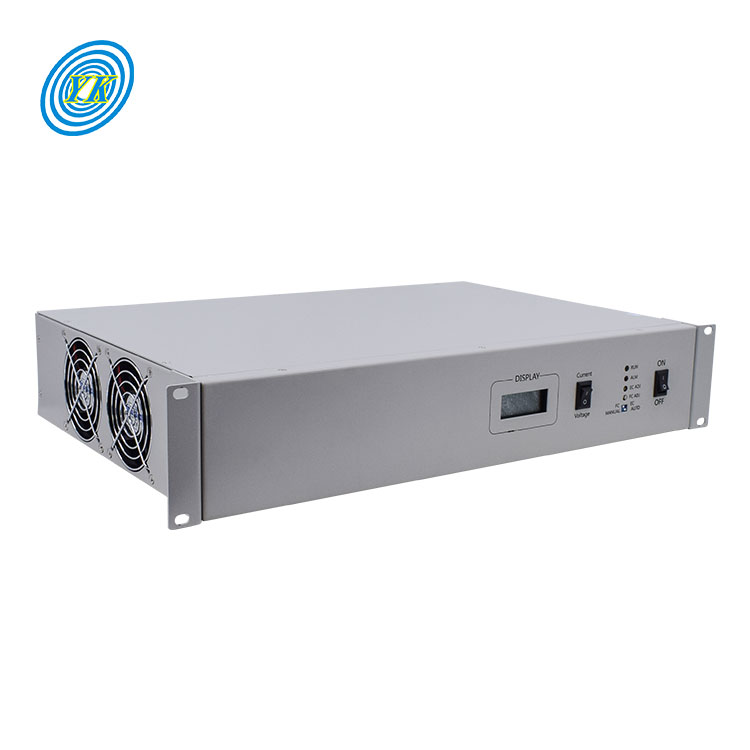
System Rectifier Power 110Vac to 24Vdc Switching Supply 10A-100A
- Output Range:24VDC up to 100A Max
- PFC Rating:Active PFC > 0.98
- Architecture:N+1 Modular Hot-Swap
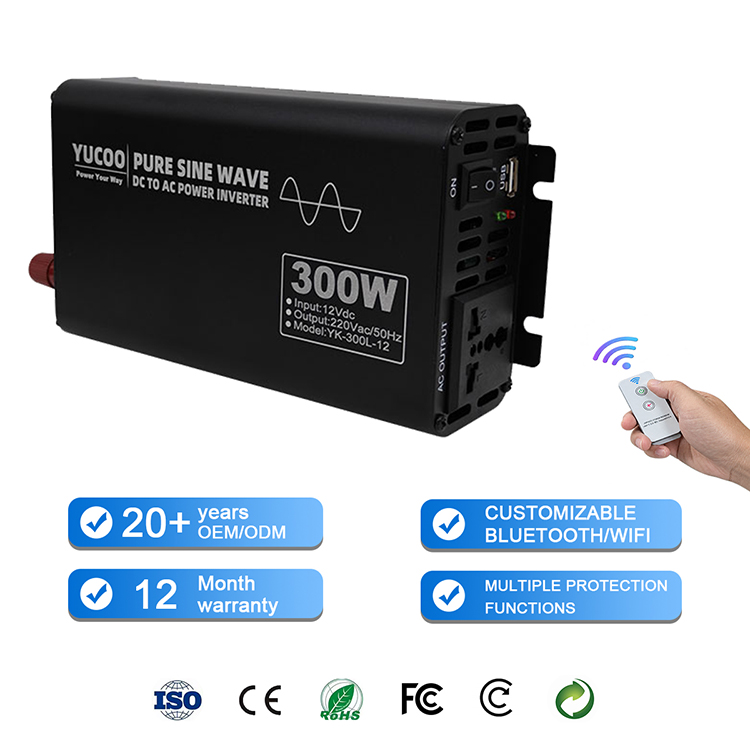
Portable Car Inverter 300W 12V/24V/48V to 110V/220V Pure Sine
- DC Compatibility:12V / 24V / 48V Tri-Mode
- Thermal Control:Zero-dB Smart Fan
- Transient Surge:600W Peak Reserve
23+
Years Power Electronics R&D (Since 2003)
10+
Automated SMT & Assembly Lines
98.2%
Verified Global Buyer Response Rate
100%
Full-Load 4-Hour Burn-In Tested
The Architecture of Modern Buck Conversion: Engineering Foundations & Export Excellence
A rigorous examination of switch-mode step-down topologies, thermal dissipation mechanics, magnetic design, and the evolving manufacturing ecosystem in South China.
In the contemporary landscape of power electronics, the switch-mode DC-DC buck converter (step-down regulator) serves as an indispensable bridge across industrial robotics, electric vehicles, telecommunication base stations, off-grid renewable installations, and aerospace avionics. Operating on fundamental principles of pulse-width modulation (PWM) and energy storage via magnetic components, the primary imperative of an enterprise-grade buck converter is to step down higher, unregulated DC rail voltages (such as 72V, 48V, 36V, or 24V) to stable, galvanically isolated or non-isolated lower operating voltages (such as 12V, 5V, or 3.3V) with minimal thermal losses.
For international sourcing directors, system integrators, and Chief Technology Officers, identifying the premier Chinese buck converter manufacturers requires examining far deeper parameters than gross unit pricing. It demands an exhaustive audit of semiconductor selection, printed circuit board (PCB) coplanar trace impedance, synchronous rectification MOSFET specifications, magnetic saturation properties ($B_{sat}$) of toroidal inductors, and verified Electromagnetic Interference (EMI) containment complying with stringent EN 55032 and CISPR 25 Class 5 thresholds. As global supply chains prioritize resilience and environmental longevity, Chinese tier-one power supply producers have transitioned from standard assembly shops into research-driven power conversion laboratories equipped with advanced finite element thermal analysis, computerized automated test equipment (ATE), and full-spectrum automated aging lines.
Key Takeaway for B2B Engineering Specifiers
When down-converting high-voltage industrial battery systems (such as 48V or 72V LiFePO4 packs) down to 12V auxiliary rails, asynchronous schottky-diode topologies suffer catastrophic thermal throttling above 15 Amperes. Leading Chinese manufacturers now deploy multi-phase synchronous rectification powered by Wide Bandgap (GaN and SiC) field-effect transistors, driving end-to-end conversion efficiencies upwards of 96.5% while reducing thermal de-rating margins by more than 40%.
Comparative Analysis: Step-Down Buck Topologies Under Heavy Inductive & Capacitive Loads
The table below illustrates the critical electrical, thermal, and regulatory discrepancies between traditional legacy step-down regulators and modern enterprise synchronous buck modules engineered by Varnix Technology.
| Circuit Topology | Typical Efficiency (48V → 12V) | Switching Frequency ($f_{sw}$) | Thermal Dissipation Profile | EMI / EMC Compliance | Primary Industrial Use-Case |
|---|---|---|---|---|---|
| Non-Synchronous Buck Legacy Diode |
82.0% – 86.5% | 50 kHz – 150 kHz | High ($P_{loss} = I_{out} \times V_F$). Requires bulky heatsinks. | Severe ringing; difficult to achieve CISPR 22 Class B. | Low-budget consumer products, low-current sensors (< 2A). |
| Synchronous Rectification Standard Silicon |
92.0% – 95.0% | 150 kHz – 400 kHz | Low ($P_{loss} = I_{out}^2 \times R_{DS(on)}$). Aluminum chassis dissipation. | Predictable fundamental harmonics; suppressed with LC filters. | Automotive fleet electronics, golf carts, forklifts, telecom PDUs. |
| Interleaved Multi-Phase Buck Multi-MOSFET |
94.5% – 97.2% | 300 kHz – 800 kHz | Distributed thermal stress across parallel inductor phases. | Extremely low input/output ripple current; high cancellation. | High-current automation (40A–100A), base stations, avionics. |
| Wide Bandgap (GaN / SiC) Next-Gen WBG |
96.5% – 98.4% | 1.0 MHz – 2.5 MHz | Ultra-low switching loss. Compact, high-power-density footprint. | High $dv/dt$ requires precision multi-layer shielding & planar magnetics. | Starlink satellite terminals, military robotics, eVTOL systems. |
Why Varnix Technology Leads Chinese Power Conversion Manufacturing
Operating continuously since 2003 in Guangdong, China, Varnix combines deep engineering pedigree, accredited SGS manufacturing oversight, and international logistics speed.
23 Years of Pure OEM/ODM Focus
Founded in 2003, our facility boasts more than two decades of dedicated switching power supply, inverter, and DC-DC converter engineering, serving clients across North America, Europe, and Oceania.
SGS Onsite Verified Infrastructure
Our 1,229 m² production complex, automated PCB wave-soldering lines, curing ovens, and computerized testing bays are thoroughly inspected and certified onsite by the international testing agency SGS.
100% Full-Load Burn-In Regimen
Every single buck converter, boost regulator, and inverter unit undergoes a mandatory 4-to-8-hour continuous full-load aging and elevated thermal chamber test to purge infant mortality defects prior to export.
United States Overseas Warehouse
To eliminate transatlantic maritime lead times for critical project deadlines, standard-configuration step-down and step-up modules are stocked and dispatched directly from our North American warehousing hub.
ISO 9001:2015 & International Compliance
Our quality management workflow is audited under ISO 9001:2015. Every exported series meets CE (EMC Directive 2014/30/EU), RoHS (Directive 2011/65/EU and 2015/863), and FCC Part 15 Class B criteria, with complete test certificates and Declarations of Conformity readily available for customs clearance.
24/7 Technical Engineering Support
We bridge timezone barriers through a dedicated technical support engineering group boasting a verified 98.2% responsiveness metric. We provide immediate design-stage consultation, trace layout advice, custom terminal connector configurations, and firmware modifications for custom telemetry.
Ruggedized Encapsulation & IP67 Protection
For applications in mining equipment, marine vessels, agricultural utility machinery, and golf carts, our buck converters feature vacuum-degassed epoxy or silicone potting compounds inside extruded aluminum heat-dissipating enclosures, offering absolute resistance to vibration, dust, and water immersion.
Future Procurement Trends in Industrial Step-Down Power Systems (2025–2030)
Critical market shifts, technological advancements, and supply chain paradigms steering B2B procurement over the next five years.
1. Migration to Gallium Nitride (GaN) & Silicon Carbide (SiC)
The transition from silicon superjunction MOSFETs to GaN High Electron Mobility Transistors (HEMTs) represents the single most profound shift in buck converter engineering. GaN enables switching frequencies above 1 MHz without proportional dynamic gate charge losses ($Q_g$), shrinking toroidal inductors by up to 70% and increasing gravimetric power density from 15 W/in³ to over 45 W/in³. Procurement directors must demand wide-bandgap designs for weight-critical mobile installations.
2. Digital Control Loops & Telemetry Integration (PMBus / CAN)
Analog PWM controllers are increasingly being supplanted by dynamic DSP and ARM Cortex-M0+ digital control engines. Enterprise buyers now mandate real-time bi-directional telemetry across PMBus or CAN 2.0B interfaces. Modern converters must stream operational metrics—including input bus voltage, inductor temperature, transient peak currents, and remaining operating lifespan—directly to host edge computers, enabling predictive maintenance schedules.
3. Dual-Sourcing Resilience & Regional Hub Strategies
Geopolitical friction and shipping container volatility have irrevocably dismantled pure Just-in-Time (JIT) procurement. Sophisticated procurement managers now utilize a hybrid "China Core + Local Buffer" framework. By establishing master framework OEM contracts with verified manufacturers in Guangdong while maintaining rolling buffer inventory in US and European bonded warehouses, global enterprises achieve unit cost advantages while maintaining rapid fulfillment capability.
Overcoming Critical Buck Converter Engineering Challenges
How advanced magnetics, transient loop tuning, and thermal physics mitigate field failures in harsh deployment environments.
1. Inductor Core Saturation & Soft-Saturation Ferrite Materials
The inductor is the vital heart of the buck converter. In high-current step-down operations (such as converting 48V to 12V at 40A), the peak inductor current is given by:
I_{peak} = I_{out} + \frac{\Delta I_L}{2} = I_{out} + \frac{(V_{in} - V_{out}) \times V_{out}}{2 \times f_{sw} \times L \times V_{in}}
Under heavy transient loads or startup conditions, conventional powdered-iron cores undergo hard magnetic saturation, causing inductance ($L$) to collapse instantaneously. This triggers catastrophic current spikes across the high-side switching MOSFET. Varnix engineers utilize proprietary Sendust (Kool Mµ) and High-Flux amorphous alloy cores that feature a gradual "soft" saturation curve. Even under extreme 200% over-current conditions, magnetic permeability degrades predictably, avoiding semiconductor latch-up.
2. Radiated & Conducted EMI Attenuation via Spread-Spectrum Dithering
Fast switching transitions ($dt < 10 \text{ ns}$) are mandatory to curtail switching losses ($E_{on}, E_{off}$), but generate severe high-frequency harmonics in the 30 MHz to 300 MHz band. Rather than relying entirely on bulky differential and common-mode chokes, modern Varnix buck regulators employ pseudo-random frequency dithering (Spread Spectrum Frequency Modulation). By modulating the nominal switching frequency across a ±6% band, peak spectral emission energy is distributed over a broader frequency range, effortlessly clearing EN 61000-6-3 and CISPR 25 Class 5 automotive tests without excessive external filter components.
3. Thermal Equilibrium & Enclosure De-Rating Dynamics
For ruggedized automotive and outdoor industrial conversions, natural convection without active fans is standard. Thermal calculation requires balancing junction-to-case ($\theta_{JC}$), case-to-potting ($\theta_{CP}$), and potting-to-ambient ($\theta_{PA}$) thermal impedances. By utilizing pure 6063-T5 aluminum extruded heatsink housings paired with high thermal conductivity polyurethane potting compounds (thermal conductivity $k > 1.2 \text{ W/m}\cdot\text{K}$), our modules operate at full continuous output up to ambient temperatures of 55°C before initiating gradual, intelligent linear thermal de-rating.
Frequently Asked Questions: Sourcing Buck Converters from China
Clear, direct engineering answers to the most common questions raised by procurement managers, supply chain auditors, and electrical project leads.
What distinguishes an isolated buck converter from a non-isolated step-down module?
How does Varnix calculate MTBF and ensure factory reliability?
What custom parameters can be altered under OEM/ODM service contracts?
- Input / Output Voltage Spans: Non-standard rails such as 18V–36V in to 15V out, or 36V–72V in to 28V avionics out.
- Output Current & Current Limiting: Constant Current (CC) battery-charging profiles versus Constant Voltage (CV) power rails.
- Enclosure & Ingress: IP65, IP67, or IP68 aluminum die-cast designs, DIN-rail mounting flanges, or 19-inch 1U/2U rack chassis.
- Connectors & Wiring Harnesses: Anderson Powerpole, Deutsch DT series, Amphenol industrial plugs, or custom lead wire gauges (10 AWG, 8 AWG silicone leads).
- Private Label Branding: Laser-etched buyer logos, custom aluminum anodizing colorways, and retail/OEM barcode packaging.
How are surge voltages, back-EMF, and load dumps managed in vehicular applications?
What are the typical lead times, minimum order quantities (MOQ), and shipping incoterms?
Ready to Engineer or Procure Your Custom DC-DC Power System?
Consult directly with our senior power electronics engineers. Submit your input voltage tolerances, required output current, target thermal constraints, and project timeline for a comprehensive technical proposal and evaluation quotation within 24 hours.