Featured Industrial DC Power Modules & Conversion Units
From ultra-wide input buck-boost voltage regulators to high-density telecom rack systems, our ISO 9001:2015 certified production lines maintain strict electrical tolerance testing and 100% burn-in verification under inductive load profiles.
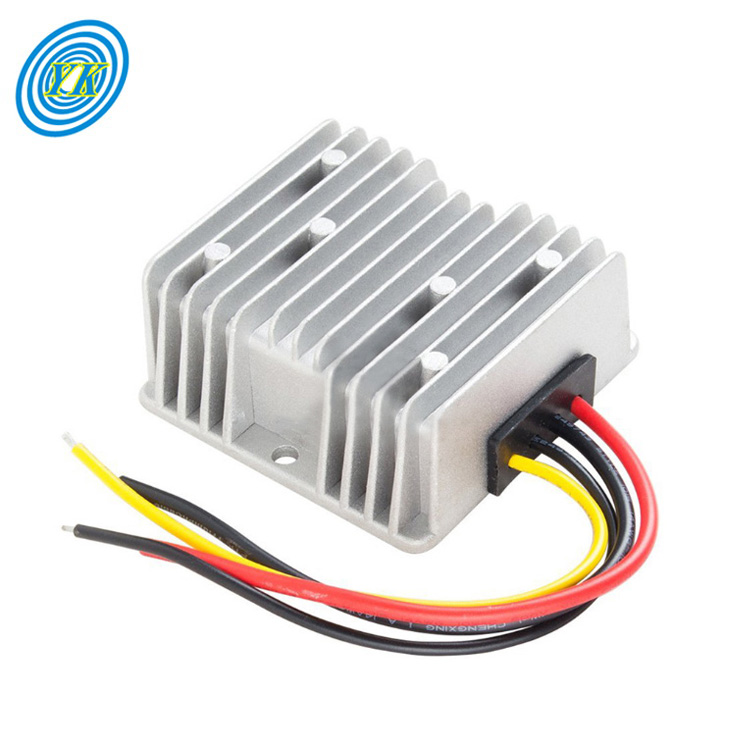
DC-DC Converter 9-32VDC to 12VDC 12A 144W Step up Down
- TopologySynchronous Buck-Boost
- Input / Output9-32VDC → 12VDC @ 12A
- Efficiency / Rating>95.4% | IP68 Waterproof
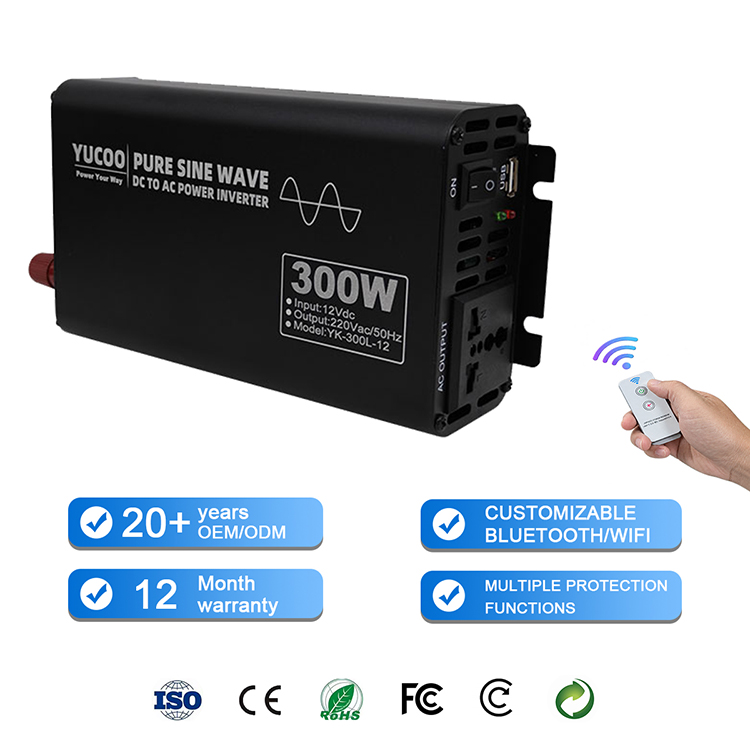
Portable Car Inverter 300W 12V 24V 48V to 110V 220V
- WaveformPure Sine Wave (THD < 3%)
- DC Input12V / 24V / 48V DC Auto
- ProtectionOCP, OVP, OTP, Reverse Polarity
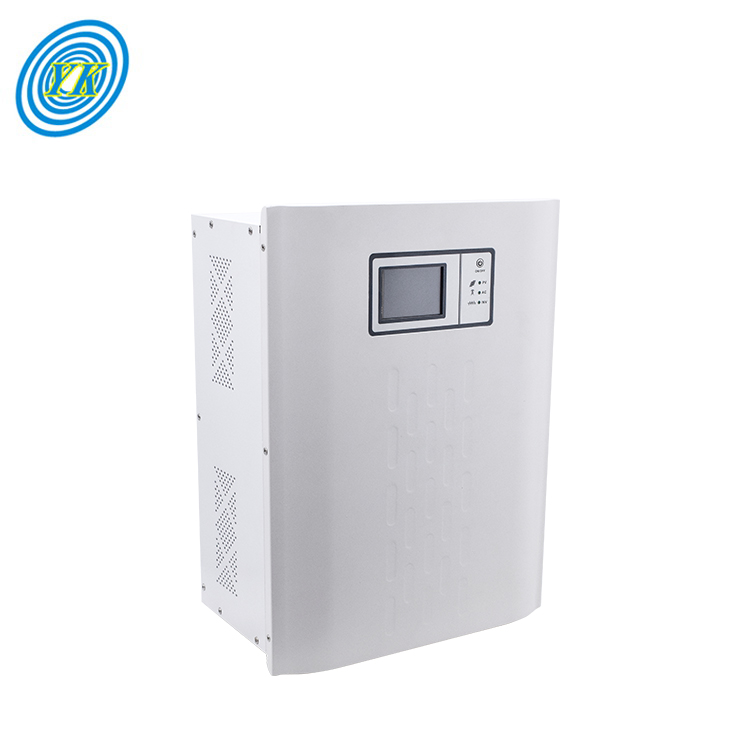
All-in-One Solar Inverter 3KW 48VDC with LCD Display
- Inverter Capacity3000W Continuous (6000W Surge)
- Solar Input48VDC Integrated MPPT (40A)
- MonitoringInteractive Digital LCD Interface
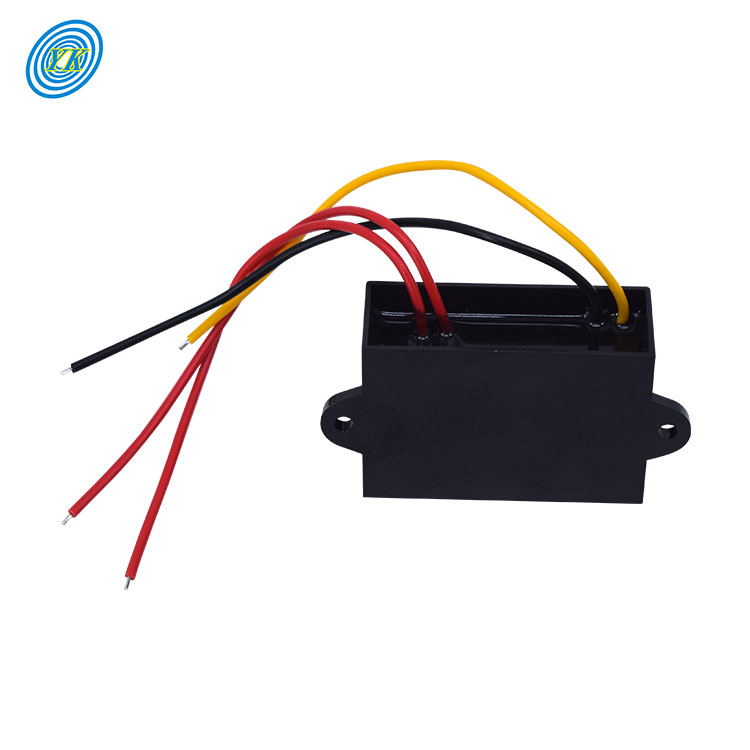
10~26VAC to 5V 3A 5A AC-DC Buck Step-Down Converter
- Input Window10~26VAC (12~35VDC compatible)
- Regulated Output5VDC @ 3A / 5A Solid Core
- PottingEpoxy Sealed Industrial Grade
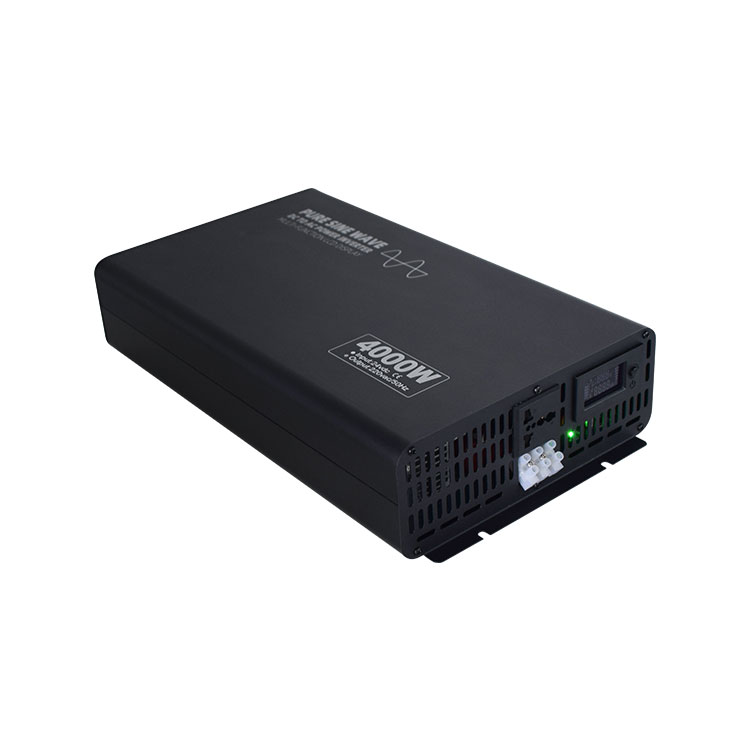
Pure Sine Wave Inverter 300W–5000W Modular Power
- Scalability300W up to 5000W Heavy Duty
- DC Rails12V / 24V / 48VDC Input Config
- Output WaveClean Sine Wave 50Hz/60Hz Switch

YUCOO 12V to 5V Buck Module USB Output Vehicle Adapter
- Conversion TopologyHigh-Efficiency DC Step-Down
- Output Delivery5V Fast-Response USB / Lead Wire
- EMI SuppressCISPR-25 Compliant Low Noise

YUCOO 9-34V to 12V 35A 40A High-Power DC Regulator
- Dynamic SwingWide 9-34V Input Stabilization
- Continuous Amperage12V Stable Output @ 35A–40A
- Thermal EnvelopeExtruded Aluminum Heat Dissipation
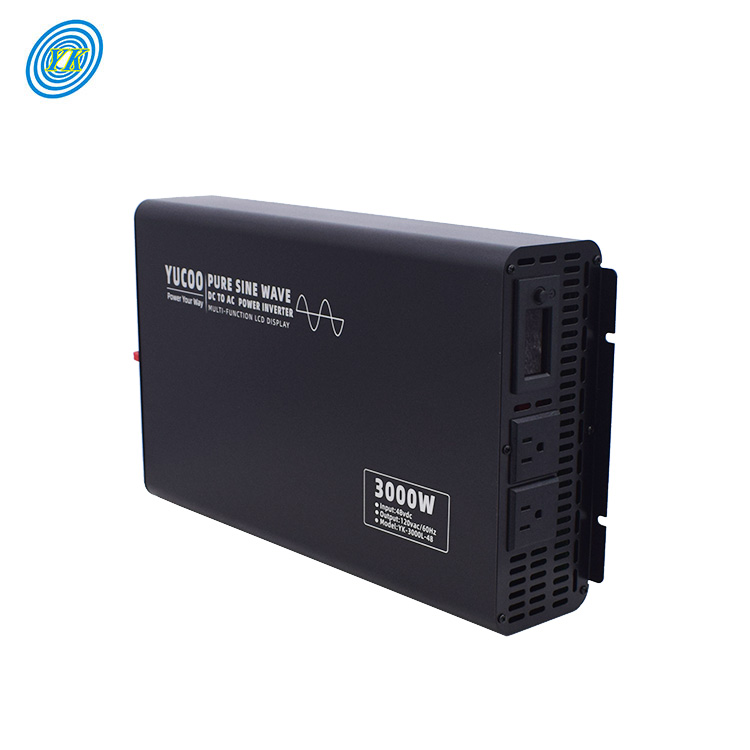
YUCOO Single Phase 3000W DC-AC Industrial Inverter
- Power Envelope3000W Continuous Pure Sine Output
- DC Input Architecture12V / 24V High Current Terminals
- Chassis GradeRuggedized Anti-Vibration Housing
Next-Gen DC Power Supplies: Technology & Architecture Roadmap
Modern power electronics have moved beyond simple linear drop-downs. As global telecommunication, Edge AI compute, defense microgrids, and electric mobility converge, procurement decisions hinge on wide-bandgap (WBG) semiconductors, thermal density, and digital interface control.
Gallium Nitride (GaN) & SiC Topology Integration
Silicon MOSFETs face physical switching frequency thresholds (~100kHz) where gate drive losses and reverse recovery charge (Qrr) severely impair peak efficiency. Next-generation DC-DC converters utilize Gallium Nitride (GaN) and Silicon Carbide (SiC) semiconductors, pushing switching frequencies upward of 500kHz to 1.2MHz.
This leap collapses passive magnetic component volume by up to 60%, drastically reducing overall footprint while achieving 96%–98.5% peak conversion efficiencies across full operating ranges.
Software-Defined Power & Digital Telemetry
Analog control loops with fixed resistor-capacitor compensation networks are no longer sufficient for complex modern infrastructure. Today's industrial procurement demands high-speed digital signal processor (DSP) based control coupled with PMBus, CAN 2.0B, or RS-485 Modbus telemetry.
Digital control enables dynamic output profiling, on-the-fly voltage trimming, active current sharing among parallel modules (N+1 redundancy), and granular predictive health monitoring for mission-critical installations.
Ruggedized Packaging & Extreme Environment Potting
Deployment in harsh railway, commercial mining, marine, and outdoor 5G remote radio heads (RRH) mandates stringent mechanical isolation. Modern DC modules combine CNC-machined or extruded aluminum heat sinks with vacuum-injected thermally conductive silicone or polyurethane potting compounds.
This complete hermetic encapsulation provides IP67/IP68 ingress defense, prevents moisture-induced electrochemical migration on fine-pitch PCB traces, and absorbs heavy mechanical shock and harmonic vibration (MIL-STD-810H compliant).
B2B Procurement Trends Shaping DC Power Supply Sourcing (2025–2030)
For corporate buyers, system integrators, and OEM brand directors, purchasing DC power conversion hardware requires balancing initial unit acquisition cost with lifecycle reliability, global regulatory compliance, and total supply-chain elasticity.
1. Decentralized Regional Warehousing
Geopolitical uncertainty and trans-oceanic shipping volatility have accelerated the demand for dual-hub distribution models. Leading manufacturers maintain state-of-the-art domestic assembly hubs alongside fully stocked overseas distribution warehouses in North America and Western Europe.
Procuring from suppliers with localized forward stocking points eliminates 6–8 week maritime transit lead times, mitigating tariff friction and empowering fast-turnaround warranty replacements.
2. Stringent Component Origin & Traceability
Component counterfeit proliferation poses substantial failure risks to industrial equipment. Engineering procurement groups now require audited Bill of Materials (BOM) transparency, ensuring capacitors, magnetic cores, and switching semiconductors are sourced directly from tier-one certified manufacturers.
Strict adherence to ISO 9001:2015 incoming inspection checkpoints (IQC) and batch-specific date-code tracking safeguards end devices from premature dielectric breakdown and MTBF degradation.
3. Modular OEM/ODM Rapid Prototyping
Off-the-shelf catalog power units frequently compromise mechanical space constraints or introduce non-standard mounting burdens. Supply chains increasingly favor agile manufacturers that possess fully equipped in-house toolmaking, SMT pick-and-place lines, and rapid firmware development teams.
From custom pinout architectures and hybrid bus voltages (e.g., 48V to Starlink 30V/57V step-up) to private labeling and specialized chassis geometries, flexible OEM manufacturing reduces NRE and shortens time-to-market.
| Application Scenario | Recommended Topology | Key Input/Output Architecture | Critical Engineering Benchmarks |
|---|---|---|---|
| Telecom Base Station (5G/RRH) | Isolated 19" Rack DC-DC Converter / Rectifier | 48VDC Nominal (36V-72V Window) → 12VDC/24VDC | Galvanic Isolation 1500VAC, N+1 Redundancy, Hot-Swap capability |
| Industrial Automation & Robotics | Wide-Input Synchronous Buck Regulator | 24VDC (9V-36V Dynamic) → 5VDC / 12VDC Regulated | EN 61000-6-2 Heavy Immunity, DIN Rail mounting, High Inrush Peak |
| Automotive & Fleet Systems | Ruggedized Water-Resistant Buck-Boost Module | 12V / 24V Dual Auto-Select → Stable 12V/144W-480W | ISO 7637-2 Load Dump Surge Protection, IP68 Housing, Low Quiescent Current |
| Off-Grid Solar & Energy Storage | Pure Sine Wave Inverter + MPPT Hybrid | 12V/24V/48V Battery Bank → 110VAC/220VAC 50/60Hz | Peak Surge 200% for inductive motor startup, THD < 3%, High Inverter PF |
| Remote Satellite Terminals (Starlink Mini) | Precision High-Amp Boost Converter | 9V-24V Lead-Acid / Lithium → 30V-36V Dedicated DC | Ultra-low Ripple (<50mVp-p), Continuous Current Overhead, Compact Sealed Shell |
Why Global Infrastructure Developers Choose Varnix Since 2003
For over two decades, Varnix Technology Co., Ltd. has delivered precision power conversion systems across 50+ countries. Backed by SGS on-site factory verification, ISO 9001:2015 quality management, and exhaustive full-load testing protocols, our products deliver verified continuous uptime.
SGS Verified On-Site Factory
1,229 m² modern production base with 10+ operational lines. Full SMT fabrication, manual welding, enclosure machining, and packaging audited independently on-site by SGS Group.
100% Full-Load Burn-In
Zero-compromise QC. Every single power module and pure sine wave inverter undergoes dynamic elevated-temperature burn-in testing on automated aging racks to eliminate early-life field defects.
US Overseas Warehouse Stock
Rapid regional delivery. Fast-moving DC-DC converters and standard pure sine wave inverters are pre-stocked within domestic US facilities to empower rapid prototyping and avoid transpacific freight delays.
CE, RoHS & FCC Certified
Strict adherence to global electromagnetic compatibility (EMC) and low-voltage electrical safety standards. Fully backed with official test declarations for smooth customs clearance worldwide.
Frequently Asked Sourcing & Engineering Questions
Clear answers to critical technical questions encountered during DC power supply integration, custom OEM commissioning, and bulk procurement.
How do I calculate input current draw and cable gauge sizing for high-power DC-DC converters?
To prevent localized thermal runaway, cable overheating, and excessive voltage drop, calculate primary DC input current using the formula:
Input Current (A) = Output Power (W) / [Input Voltage (V) × Efficiency (η)]
For example: A 12V 40A (480W) converter operating at a minimum battery discharge voltage of 10V with 92% efficiency will draw approximately: 480 / (10 × 0.92) = 52.17A continuous. Sizing guidelines dictate using at least 6 AWG or 4 AWG ultra-fine strand copper cabling with high-current lugs to maintain terminal voltage drop below 2.5% across the run.
What is the functional difference between an Isolated and Non-Isolated DC-DC power converter?
Non-isolated converters share a common physical ground connection between input and output circuits. They are highly efficient (>96%), compact, and cost-effective, making them ideal for automotive step-downs (24V to 12V) and consumer battery adapters.
Isolated converters use an internal high-frequency planar transformer to electrically break ground continuity. They are required in telecom DC distribution, medical equipment, and industrial PLC controls to eliminate dangerous ground loops, prevent common-mode noise transfer, and protect downstream logic boards in the event of high-voltage input transients.
Why should critical equipment specify Pure Sine Wave instead of Modified Sine Wave inverters?
Modified sine wave inverters output coarse, stepped square waves with total harmonic distortion (THD) exceeding 30%–45%. When powering inductive or reactive loads (refrigeration compressors, precision power supply transformers, AC servo motors, medical instrumentation), this high harmonic distortion causes significant eddy current loss, severe motor hum, excessive operating heat, and early component degradation.
A true Pure Sine Wave inverter guarantees low harmonic distortion (THD < 3%), replicating or exceeding utility-grade wall power and ensuring whisper-quiet, thermally stable operation across all inductive equipment.
What are the lead times, MOQ thresholds, and parameters for custom OEM/ODM projects?
Standard catalog products carry low evaluation MOQs starting from 1 to 10 units to support initial prototyping. For custom OEM/ODM engineering programs (custom stepped voltages, tailored aluminum heat sinks, private label silk-screening, custom lead lengths, or specialized waterproof connectors), initial pilot batches start around 50–100 units depending on chassis tooling requirements.
Engineering sample turnarounds typically range between 7 to 15 business days, with mass production runs scaling inside 20 to 30 calendar days. US overseas warehouse stock is available for immediate off-the-shelf dispatch.
How does Varnix manage quality control across high-volume production batches?
Our quality management framework is certified to ISO 9001:2015 and audited on-site by SGS. The inspection chain spans five comprehensive stages:
1. IQC (Incoming Quality Control): Rigorous AQL testing on semiconductor wafers, capacitors, and PCB substrates.
2. IPQC (In-Process QC): Automated SMT optical inspection and manual solder joint verification.
3. Functional Testing: Oscilloscope verification of ripple/noise, line/load regulation, and protection cutoff triggers.
4. 100% Dynamic Full-Load Burn-In: Multi-hour burn-in under maximum thermal envelopes on test racks.
5. OQC (Outgoing QC): Dielectric high-pot insulation tests, drop tests, and final exterior packaging verification.
Accelerate Your Power Electronics Development Cycle
Whether you are sourcing standardized DC-DC converters from our US warehouse stock or specifying an industrial OEM rack-mount system from the ground up, our senior electrical engineering team is ready to analyze your load requirements and deliver an optimized quote within 24 hours.