Precision Converters & Power Conditioning Units Available for Mérida
Engineered for high common-mode transient rejection, heavy continuous duty cycles, and reliable operation across unstable regional grid topologies.
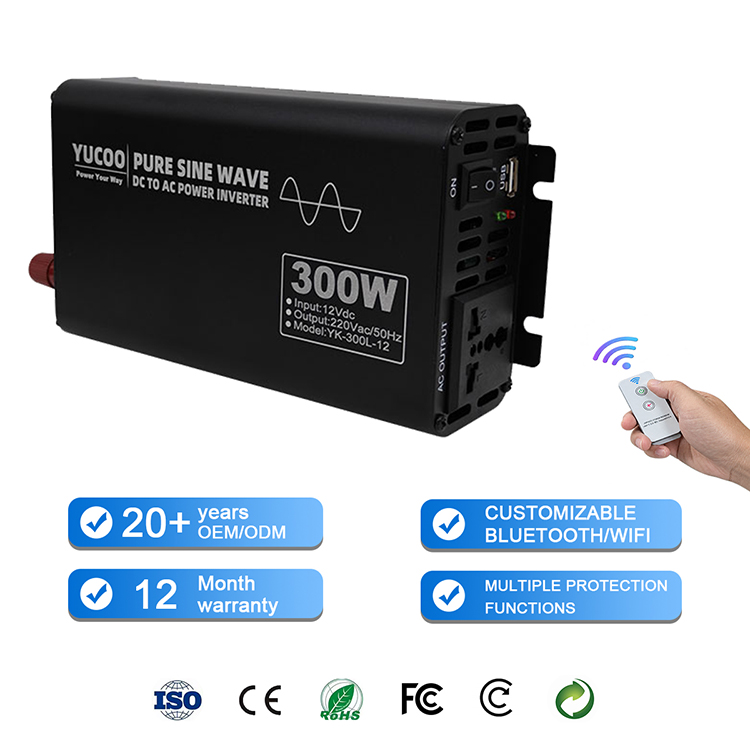
Portable Car Inverter 300W 12V 24V 48V to 110V 220V
- TopologyIsolated DC-AC Pure Sine
- DC Input12V / 24V / 48V
- AC Output110V / 220V Continuous
- ProtectionOverload / Thermal / Short
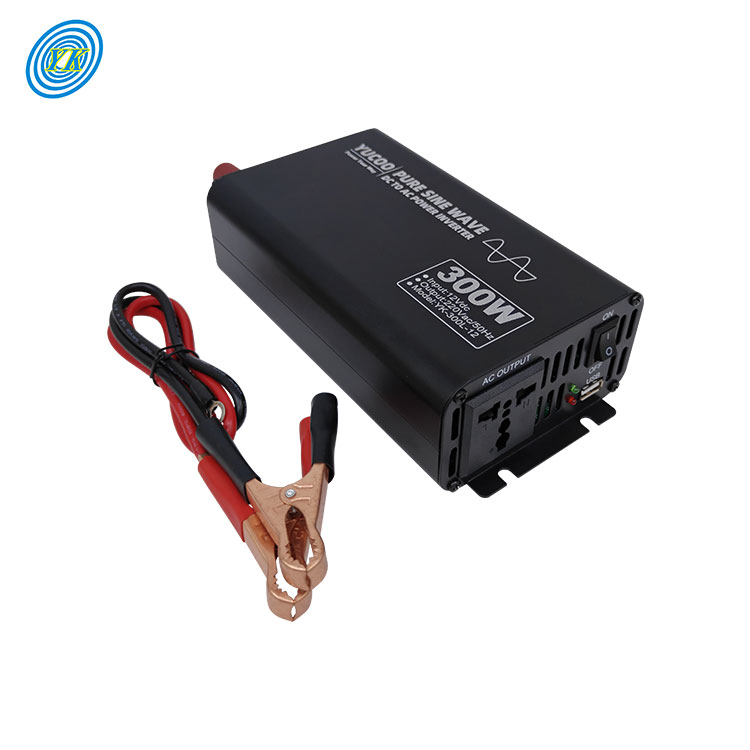
Pure Sine Wave Inverter 300W DC12V 24V 48V 60V 72V
- ArchitectureHigh-Frequency Isolation
- Input Span12V–72V DC Wide Range
- Harmonic Dist.THD < 3%
- DeploymentAutomotive & Fleet Telecom
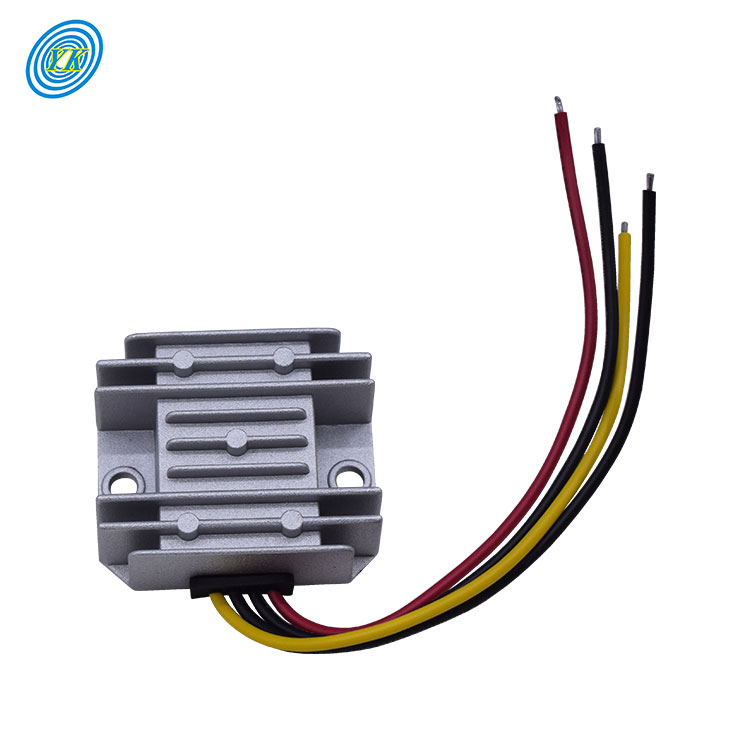
YUCOO Power Voltage Converter DC 18V to 6V 5A 30W
- Potted Seal100% Silicone Epoxy IP67
- Input VoltageDC 18V Nominal
- Regulated Out6V DC @ 5A (30W)
- EfficiencyUp to 94% Synchronous
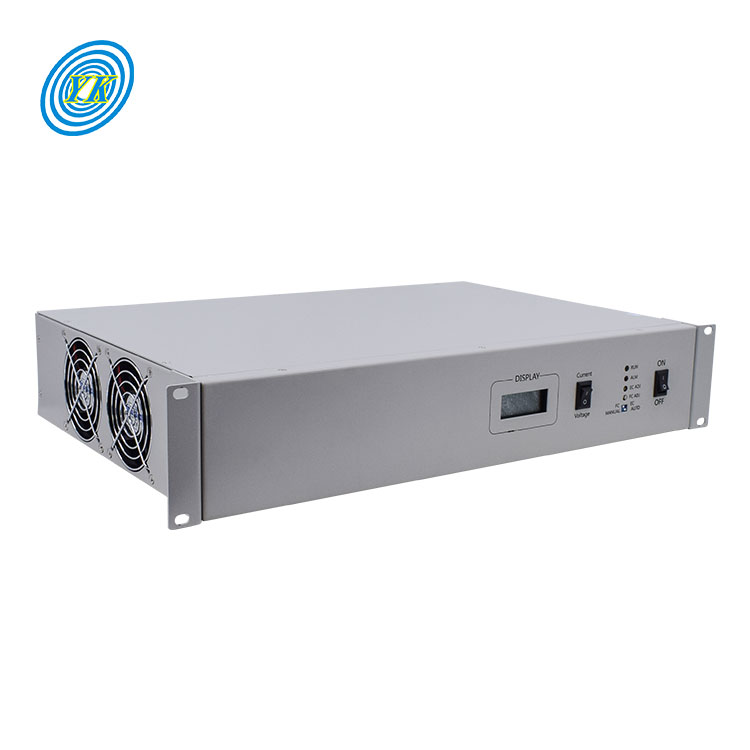
System Rectifier Power 110Vac to 24Vdc 10A–100A
- AC Source110VAC ± 20% Industrial
- DC Output24VDC (10A to 100A Range)
- ConfigurationModular / Rack Mount
- MonitoringActive Current Sharing
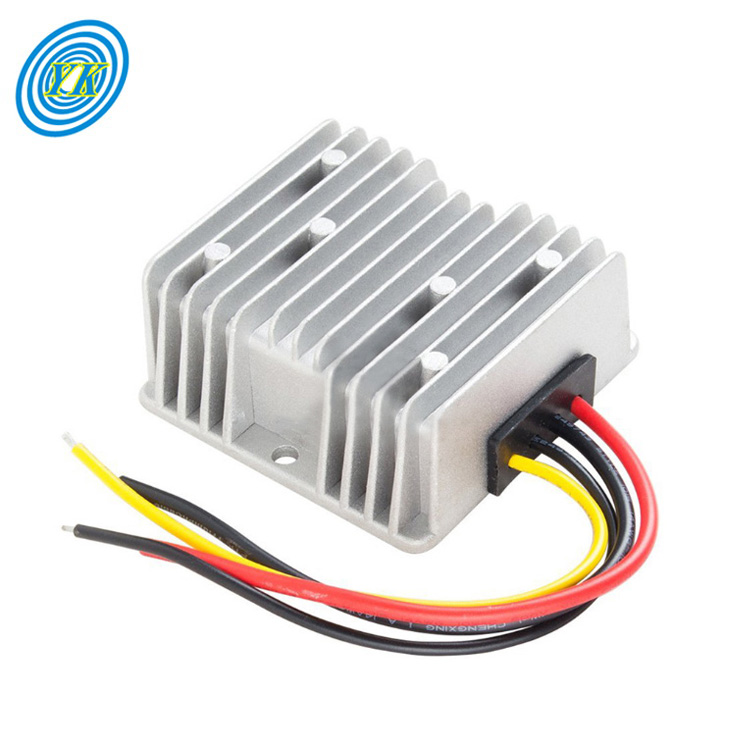
DC-DC Converter 9-32VDC to 12VDC 12A 144W
- Dynamic Span9V–32V Ultra-Wide Input
- Stable Rail12VDC Regulated @ 12A
- ChassisDie-Cast Aluminum Fins
- ProtectionUVLO, OVP, Reverse Polarity

High Voltage Regulator 84V to 12V 15A 180W Buck
- Input Voltage84VDC String (Traction/PV)
- Output Power12VDC Regulated @ 15A
- Transient Proof1500V Surge Withstand
- Thermal Spec-40°C to +85°C Ambience
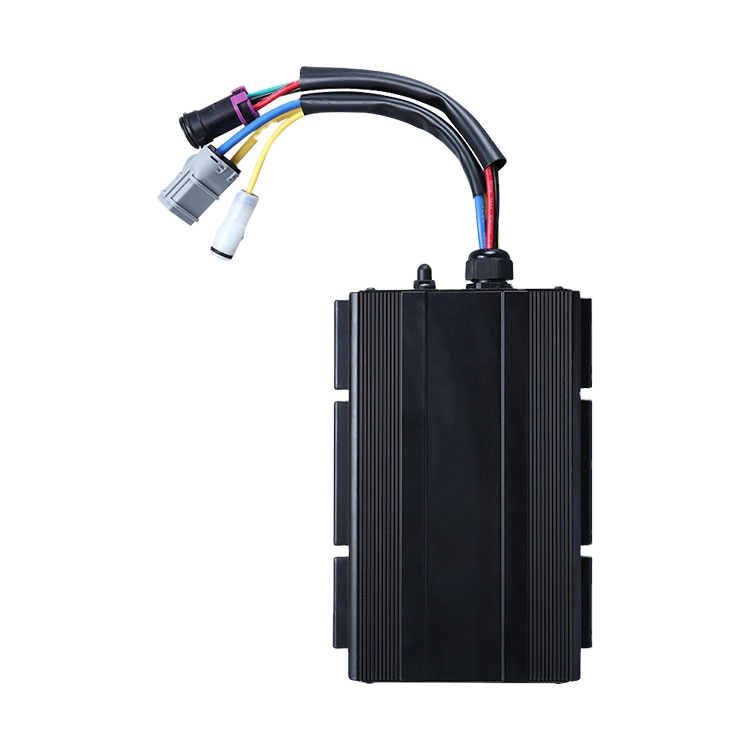
Isolated Step Down DC DC Converter 48V–90V to 12V 42A 500W
- Galvanic Barrier1500VDC Optocoupler / Trans
- Input Rails48V / 60V / 72V / 90V Battery
- Heavy Output12VDC @ 42A Constant
- InterferenceZero Ground-Loop Coupling
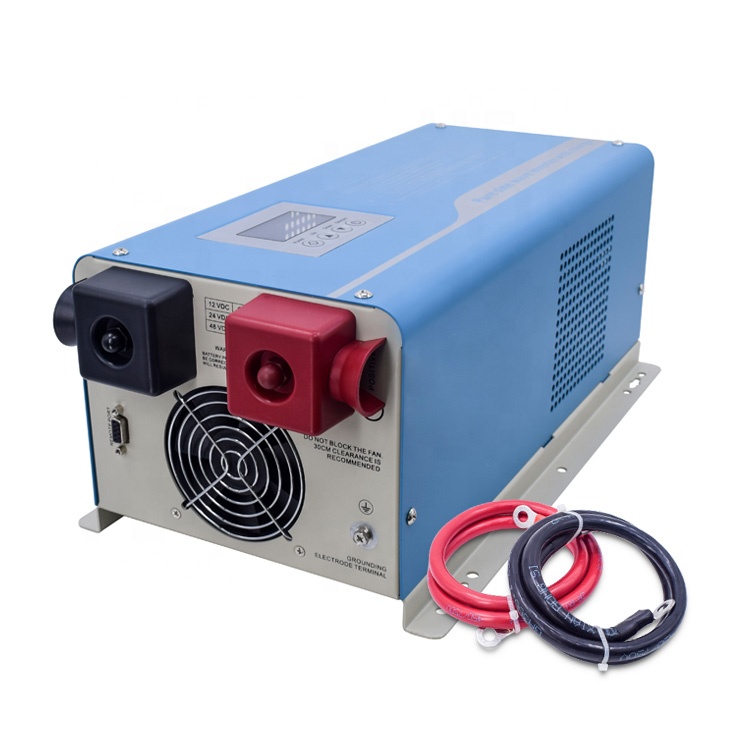
YUCOO Inverter Toroidal Pure Sine Wave 1500W 12V 220V
- TransformerHeavy Low-Loss Toroidal
- Peak Handling3000W Inductive Surge (200%)
- Input / Output12VDC to 220VAC 50/60Hz
- EfficiencyHigh Magnetizing Permeability
Mission-Critical Power Conditioning Across Mérida’s Industrial Ecosystem
From the high-ambient manufacturing clusters of Umán and Hunucmá to coastal telecommunications infrastructure at Puerto Progreso, electrical isolation is the primary shield against catastrophic equipment downtime.
Corrosion-Resistant Solar Microgrids & BESS
Yucatán receives some of North America's highest global horizontal irradiance (>5.8 kWh/m²/day), driving mass deployment of commercial and utility photovoltaic strings. However, high relative humidity (>80%) combined with high ambient air temperatures (often exceeding 42°C in spring) accelerates electrolytic corrosion along DC bus lines. Our isolated DC-DC converters create true galvanic separation between large battery energy storage systems (BESS operating at 48V, 72V, or high-voltage strings) and sensitive PLC controllers, eliminating ground differential faults caused by soil calcification across the karst limestone shelf of Mérida.
Hunucmá & Umán Industrial Automation (PLC & SCADA)
The manufacturing corridors bordering the Mérida Ring Road (Periférico Manuel Berzunza) host heavy food and beverage packaging, plastics, and automotive parts fabrication. Rapid cycle induction motors, VFDs (Variable Frequency Drives), and heavy electric injection presses induce massive inductive back-EMF spikes into local 24VDC and 12VDC auxiliary lines. Our isolated converters provide up to 1,500VDC to 3,000VDC isolation barriers, ensuring factory SCADA lines, optical sensors, and micro-controllers operate without data packet dropped states or latch-up failure.
Coastal Telecom Corridors & Port Logistics
Connecting Mérida to the Port of Progreso requires resilient wireless backhaul, 48VDC remote radio heads (RRH), and marine logistics tracking. Atmospheric salinity carries several kilometers inland, degrading non-isolated power loops and triggering leakage currents. Varnix fully encapsulated and potted IP67 isolated step-down modules isolate ground references between negative-ground telecom base stations and positive-floating industrial DC battery banks, preventing destructive galvanic chassis corrosion.
Engineering Whitepaper: Managing High Common-Mode Voltage Spikes & Soil Resistivity in Mérida
Operating sensitive electrical hardware on the Yucatán Peninsula presents a unique combination of electromagnetic and geological challenges that standard off-the-shelf power converters fail to mitigate. Foremost is the geological composition of Mérida: a porous, non-conductive limestone karst platform with extremely shallow topsoil. Grounding rod installation throughout the region regularly encounters grounding resistance measurements in excess of 60 to 120 Ohms, far exceeding the IEEE 142 recommended 5-Ohm threshold for industrial facilities.
The Karst Grounding Dilemma
Because low-resistance earth grounding is exceptionally difficult to achieve across Yucatán industrial developments without expensive chemical soil conditioning wells, common-mode voltages float dangerously high during tropical electrical storms (tormentas tropicales). When lightning discharges strike distribution feeders, non-isolated buck converters allow high common-mode surges to travel unimpeded from input grounds directly into delicate secondary sensing circuits, obliterating microprocessors and telemetry interfaces.
True Galvanic Isolation Architecture
Varnix isolated DC-DC converters utilize planar transformers and optocoupler feedback mechanisms to build a physical dielectric wall (1,500VDC continuous / 3,000VDC surge) between input and output stages. By severing the common return path, our converters break ground loops entirely. Noise voltages generated on primary lines—whether from switching transients or utility grid fluctuations—cannot induce parasitic currents on the isolated low-voltage rail.
Mérida experiences wet-bulb temperatures that push passive cooling architectures to their limits. When ambient temperatures hover at 40°C with 85% RH, convection air heat transfer drops significantly. Varnix converters use high thermal conductivity polyurethane potting (1.2 W/m·K) and oversized extruded 6063-T5 aluminum heat sinks, allowing full rated power delivery up to 60°C without premature derating or thermal throttling.
Technical Selection Matrix: Isolated vs. Non-Isolated for Local Mérida Integrators
| Operating Factor | Standard Non-Isolated Converter | Varnix Isolated DC-DC Series | System Impact in Yucatán |
|---|---|---|---|
| Ground Reference | Common ground (shared return path) | Floating ground (complete dielectric break) | Prevents karst grounding voltage offsets from destroying PLCs |
| Input Transient Rejection | Low (< 200V surge clamping) | High (> 1,500VDC isolation barrier) | Survives tropical thunderstorm lightning transients |
| EMI & Ripple Attenuation | Susceptible to ground-coupled noise | < 50mVp-p low ripple with Pi-filters | Ensures crystal-clear RF transmission for telecom base stations |
| Enclosure Protection | Vented, open-frame or stamped sheet | Cast aluminum, optional IP67 silicone potting | 100% immune to salt-fog corrosion and tropical fungal growth |
Macro-Trends Driving Power Electronics Demand in Yucatán (2025–2030)
Key industrial expansions, logistics modernizations, and energy policy shifts transforming the electrical landscape of Mérida.
Nearshoring Industrial Expansion
Mérida has emerged as Southeast Mexico’s undisputed logistics and manufacturing anchor. Multinational assembly plants, cold storage warehouses, and aerospace supply partners settling in Kanasín and Umán demand power supplies compliant with UL, CE, and Mexican NOM standards. As foreign capital introduces European and American automated tooling, isolated converters that reliably step down 48V, 72V, and 110V DC bus rails to clean 12V and 24V control power are experiencing unprecedented demand.
Grid Decoupling & Microgrid Resilience
Despite heavy infrastructure investments, the regional Peninsular grid remains susceptible to voltage sags and blackouts during peak air conditioning loads in July and August. Commercial facilities are actively decoupling from sole utility reliance by integrating solar PV with commercial LiFePO4 battery banks. These high-capacity DC banks require isolated converters to condition varying battery discharge voltages (from 42V empty to 58.4V float) into rock-solid rails for emergency lighting and critical server racks.
Electrification of Municipal & Port Transport
With projects like the IE-TRAM electric bus network connecting Mérida, Kanasín, and Umán, high-voltage vehicle systems (84V to 600VDC) are transforming public transport. Industrial fleets at Puerto Progreso are rapidly converting traditional diesel forklifts to 48V/80V lithium-powered units. These vehicles require heavy-duty, isolated step-down converters to power low-voltage accessories, tracking transponders, sensors, and cab communications directly from high-voltage propulsion packs.
Why Mérida Engineers & Importers Partner with Varnix
Direct manufacturer capabilities verified onsite by SGS, supporting custom OEM power conversion projects since 2003.
ISO 9001:2015 & SGS-Verified Facility
Founded in 2003, our factory operates across 1,229 m² of verified production floor with 10+ precision assembly and testing lines. We do not re-badge trading inventory; every power supply is engineered, assembled, wave-soldered, and calibrated inside our own controlled facilities under rigorous international quality standards.
100% Full-Load Burn-In & QC Testing
To eliminate early-life field failures in high-heat Mérida environments, every single unit undergoes a stringent 5-stage qualification process: incoming raw material verification, circuit board automated functional check, prolonged high-temperature full-load aging (burn-in), oscilloscope waveform validation, and final hi-pot dielectric breakdown testing.
Direct OEM/ODM Customization & US Stock
We tailor input voltage ranges (e.g., non-standard 18V-36V, 36V-72V, 70V-120V), custom output voltages, current limits, bespoke aluminum extruded enclosures, and IP68 waterproof wire harnesses. In addition, our US overseas warehouse ensures fast sample turnarounds and rapid-response emergency batch deliveries to North American buyers.
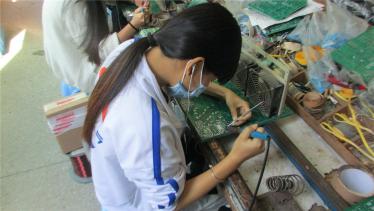 Automated SMT & Welding Line
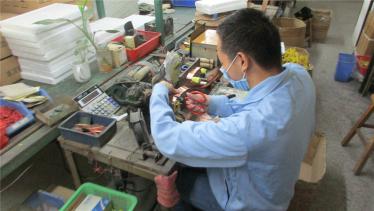 Precision Assembly Stations
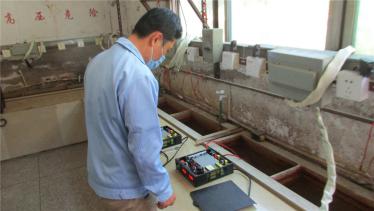 Full-Load Burn-in Chamber
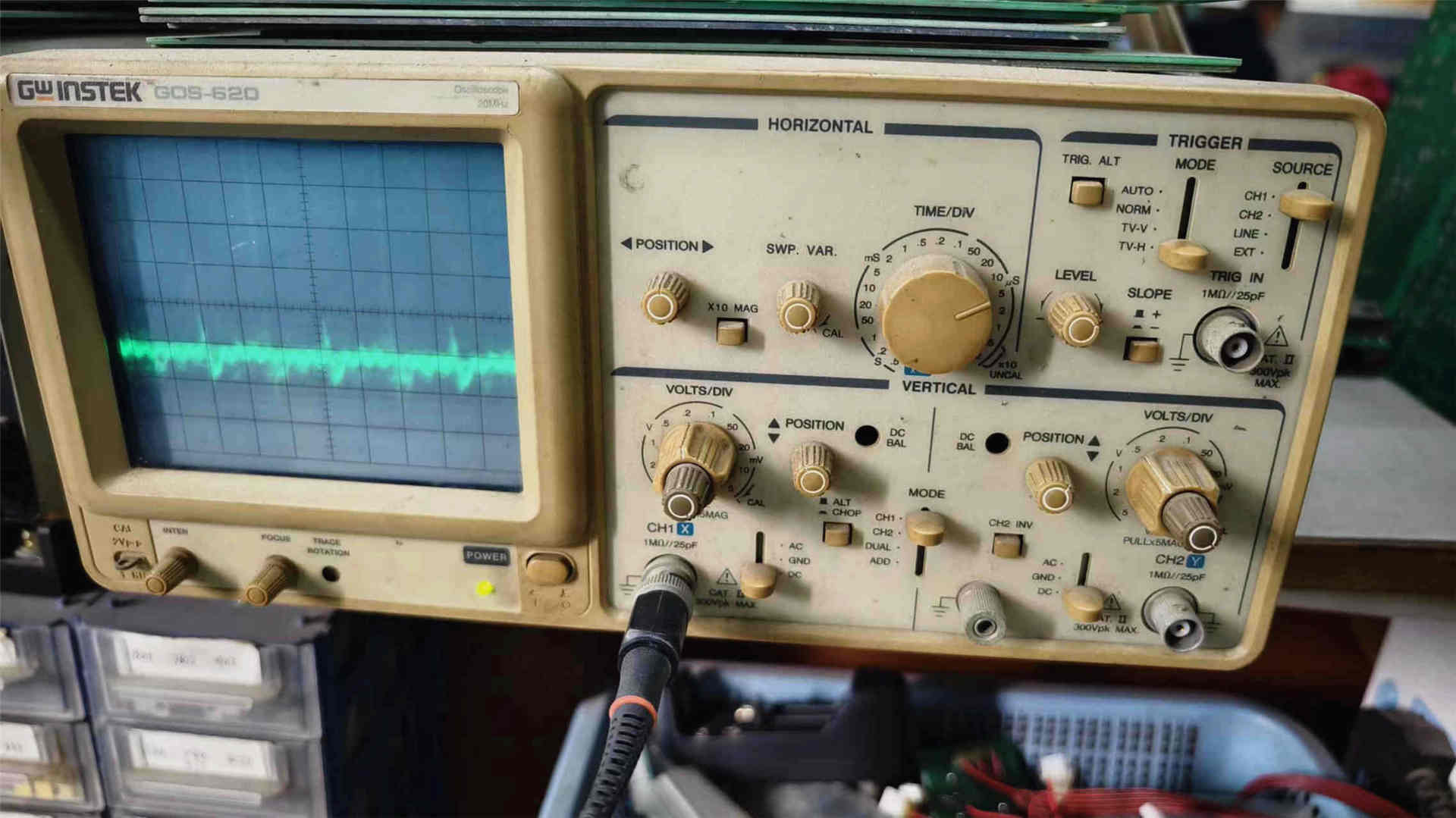 Oscilloscope Waveform Check
Frequently Asked Questions by Industrial Buyers in Mérida
Clear, direct answers regarding customs clearance, logistics, local grid stability, and technical design optimization.
How do your isolated converters handle the extreme humidity and heat of Mérida?
Our standard converters feature conformal-coated PCBs that resist tropical moisture condensation and fungal growth. For outdoor and marine environments around Progreso, we provide units fully encapsulated in thermally conductive silicone epoxy with an IP67 rating. All thermal derating curves are calculated with an ambient baseline of 40°C, ensuring that continuous operation at full rated current does not trigger premature thermal shutdown in unconditioned local plant rooms.
What are the logistics and shipping terms for orders delivering to Yucatán?
We routinely deliver under DDP (Delivered Duty Paid), CIF (Puerto Progreso or Manzanillo), and air express (Aeropuerto Internacional de Mérida Manuel Crescencio Rejón) via DHL/FedEx for urgent prototypes. For high-volume production batches, sea freight directly into Puerto Progreso provides optimal freight efficiency. For fast-moving catalog models, select units can be cross-docked through our US warehouse to substantially reduce transit times.
Why is galvanic isolation critical if my system is already behind a surge protector?
Surge protectors (SPDs / MOVs) clamp high-voltage spikes between line and ground, but they do not eliminate ground potential rise or break conductive ground loops. Because Mérida's calcified karst soil creates inconsistent ground potentials between physical structures, a surge clamped to "ground" in one building can travel backward along the common negative conductor of a non-isolated DC converter, destroying instrumentation. Galvanic isolation creates a floating secondary rail that remains completely immune to primary-side ground elevation.
Can you manufacture custom input/output voltages for regional industrial projects?
Yes. As an authentic manufacturer founded in 2003 with in-house magnetic transformer winding and circuit engineering, we provide comprehensive OEM/ODM customization. We regularly customize non-standard input ranges (such as 36V–72V telecom float strings or 70V–120V DC traction rails) and calibrate regulated outputs (such as 13.8V, 24V, 28V, or 48V) with specific current limits, thermal cutoff points, and custom mounting flanges.
What international certifications and quality guarantees accompany shipments?
Our factory operates under an ISO 9001:2015 certified quality management framework verified onsite by SGS. Individual product series carry CE, RoHS, and FCC compliance certificates, complete with full electromagnetic compatibility (EMC) test documentation ready for Mexican customs import validation and corporate safety audits. Every unit comes backed by a contractual warranty with direct engineering support.
What is your minimum order quantity (MOQ) and sample lead time?
For standard catalog inverters, buck-boost modules, and DC-DC converters, our minimum order quantity starts from just 1 to 5 sets to support local engineering pilots and prototype testing. Custom OEM/ODM designs typically have an MOQ based on enclosure extrusion tooling requirements, with custom sample validation units delivered in 7 to 15 business days.
Upgrade Your Industrial DC Infrastructure Today
Consult with our senior power conversion engineering team to specify isolated DC-DC converters, rack rectifiers, and pure sine wave inverters optimized for Mérida's distinct climate and electrical challenges.
Send an Inquiry