High-Efficiency Conversion Modules & DC Power Supplies
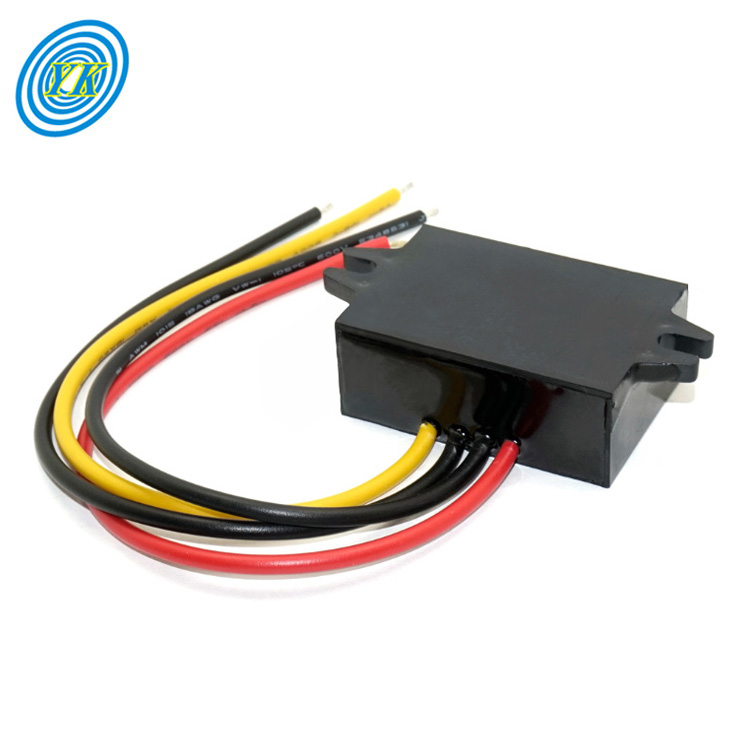
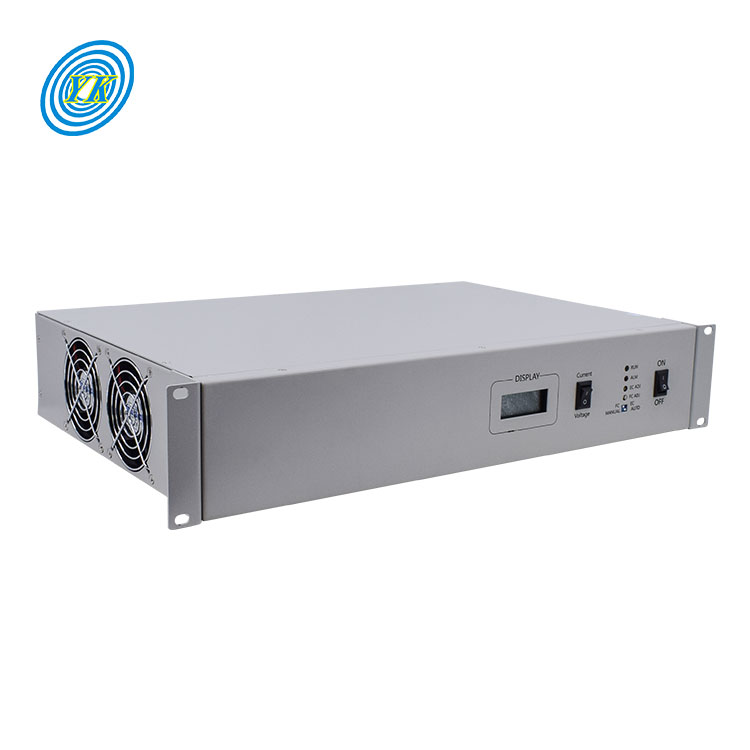
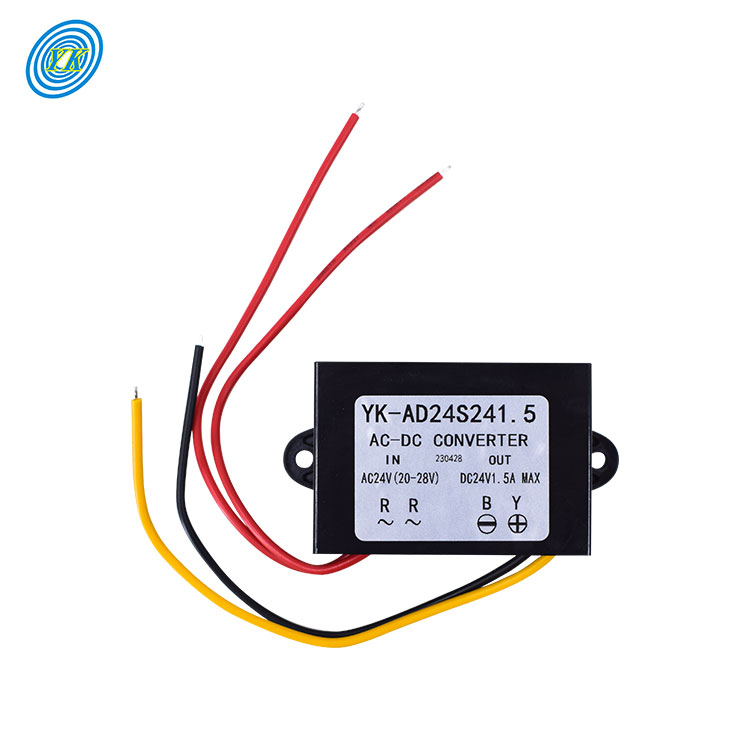
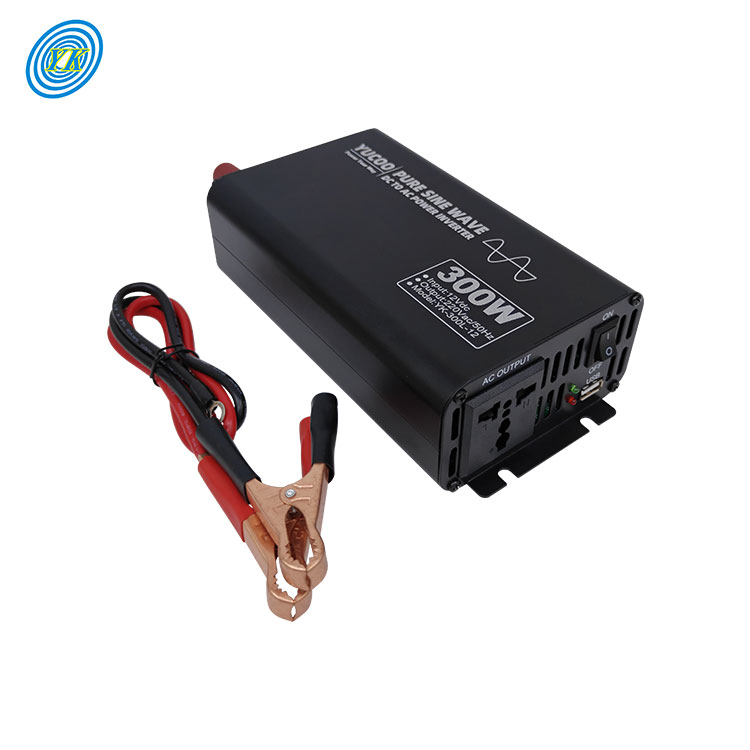
Explore precision-engineered DC-DC step-down converters, multi-amperage switching rectifiers, and industrial-grade sine wave converters deployed worldwide across mission-critical surface treatment, marine, and telecommunication hubs.


Marseille’s Industrial Surface Finishing Ecosystem & Power Architecture
Analyzing the intersection of Mediterranean maritime engineering, high-spec aerospace surface finishing, and advanced semiconductor-controlled rectifiers across the southern French economic zone.
The Métropole d'Aix-Marseille-Provence represents one of Europe's most strategically vital maritime and industrial epicenters. Anchored by the Grand Port Maritime de Marseille (GPMM)—the leading French seaport—and flanked by the petrochemical and heavy-industry corridor of Fos-sur-Mer and the aeronautical cluster of Marignane, this industrial geography demands unparalleled reliability from metal finishing and electroplating operations. Surface engineering in this region is not a generic manufacturing utility; it serves harsh marine immersion requirements, stringent aerospace airworthiness directives, and extreme environmental durability benchmarks.
At the center of every galvanic plating, hard anodizing, passivation, and electropolishing installation sits the industrial electroplating rectifier. The transition from legacy, line-frequency thyristor (SCR) rectifiers to high-frequency switch-mode power supplies (SMPS) utilizing insulated-gate bipolar transistors (IGBTs) has redefined plating accuracy. Modern electroplating facilities across Marseille require ultra-low voltage ripple (<2%), millisecond-fast dynamic response times, integrated PLC network communication via Modbus/Profibus, and rugged marine-grade corrosion proofing capable of enduring high-salinity ambient environments.
Naval & Marine Shipyard Plating
Marseille drydocks and naval ship repair centers demand heavy-duty zinc, cadmium-alternative zinc-nickel, and hard chrome coatings for propulsion shafts, sea-chests, valve actuators, and subsea structures. Rectifiers must withstand aggressive ambient airborne chlorides while operating 24/7 without thermal derating.
- Electrochemical anti-fouling & sacrificial anodes
- Hard chrome refurbishment on large shafts
- IP54/IP65 sealed or closed-loop liquid-cooled enclosures
Aerospace Anodizing (Marignane Hub)
Driven by nearby helicopter manufacturing and aeronautical sub-tier suppliers, facilities utilize sulfur-boric and chromic-free tartaric-sulfuric anodizing (TSA). Rectifiers must provide ultra-precise micro-arc voltage control, pulsed current ramp-ups, and EN 9100 batch-traceable data logging.
- Hard coat and decorative anodizing (Type II/III)
- Passivation, titanium etching, and chemical milling
- Constant voltage (CV) / Constant current (CC) accuracy <0.5%
Offshore & Industrial Petrochemicals
Operating in the Fos-sur-Mer and Étang de Berre industrial sectors, heavy industrial hardware, high-pressure pipelines, and petrochemical flanges undergo electrogalvanizing, copper-tin plating, and nickel strike plating to prevent hydrogen embrittlement and sulfide stress corrosion.
- High-current outputs up to 1,000A–5,000A continuous
- Hazardous area ingress and robust over-temperature fail-safes
- Total harmonic distortion (THDi) compliance <5% on French grid
Top 10 Industrial Electroplating Rectifier Factories & Suppliers in the Marseille Market
A vendor evaluation identifying the primary original equipment manufacturers (OEMs), engineering suppliers, and direct factory partners serving surface finishers across Southern France.
High-Frequency Switch-Mode (IGBT) vs. Traditional Thyristor (SCR) Rectifiers
A quantitative comparison outlining efficiency gains, plating thickness uniformity, power factor improvement, and operational cost savings for French platers.
| Performance Parameter | High-Frequency IGBT Switch-Mode (Varnix) | Traditional Thyristor / SCR Rectifier | Operational Impact in Marseille Workshops |
|---|---|---|---|
| Operating Frequency | 20 kHz – 100 kHz (Ultra-fast PWM) | 50 Hz – 300 Hz (Mains line frequency) | Drastically smaller magnetic cores, compact footprint, reduced copper loss. |
| Output DC Ripple | ≤ 1% to 2% (Smooth DC curve) | 5% to 8% (Requires massive choke filter) | Eliminates micro-cracking and nodule formation in hard chrome and nickel plating. |
| Electrical Efficiency | 90% – 95% (High efficiency across load range) | 65% – 78% (Significant thermal dissipation) | Saves 15,000–40,000 kWh annually per 1,000A line, cutting French power bills. |
| Power Factor (Cos φ) | ≥ 0.94 at full rated load | 0.60 – 0.75 (Decreases sharply at partial load) | Avoids reactive power surcharges from Enedis / French utility grid providers. |
| Dynamic Response Time | < 2 milliseconds | 50 – 100 milliseconds | Essential for precision ramp-up in aluminum anodizing and pulsed strike plating. |
| Cooling Topology | Forced Air or Titanium Plate Water Cooling | Heavy Oil Immersed or Large Blower Fans | Titanium water cooling isolates sensitive electronics from corrosive bath fumes. |
| Weight & Floor Space | Up to 70% lighter, stackable 19" rack or chassis | Heavy, large footprint floor-standing tank | Maximizes valuable floor real estate in crowded French coastal workshops. |
The Physics of Coating Integrity: In electrodeposition, the throwing power of the electrolyte and the nucleation density of the plated metal layer are directly influenced by the DC voltage waveform. When current ripple exceeds 5%, localized current density peaks cause hydrogen gas evolution at cathode edges. This results in hydrogen embrittlement, pinhole porosity, and burning on high-current-density protrusions. Modern high-frequency IGBT rectifiers provided by manufacturers like Varnix deliver pure, flat DC current with ripple kept strictly below 2%, delivering uniform crystal structures and superior salt-spray corrosion resistance (surpassing 1,000 hours ASTM B117 testing).
Localized Marseille Application Scenarios
Real-world integration across naval shipyards, aerospace manufacturing lines, petrochemical refineries, and marine restoration workshops in Southern France.
Aerospace Hard Anodizing in Marignane
Subcontractors supporting Airbus Helicopters and civil aviation programs require MIL-A-8625 Type III hard anodizing on aluminum alloys (e.g., 7075, 2024). Varnix rectifiers feature programmable current ramping profiles and polarity reversal to prevent thermal runaway in chilled sulfuric-oxalic baths, yielding abrasion-resistant anodic oxide coatings >50 μm.
Naval Drydock Maintenance (Forme 10)
Marseille's Drydock 10—one of the largest ship repair basins in the Mediterranean—refurbishes massive container vessels, cruise liners, and naval craft. Heavy 12V–24V 1000A rectifiers supply electrochemical bath power to rebuild hydraulic ram pistons, rudder stocks, and sea-valve surfaces with high-density nickel-chrome plating to combat cavitational erosion.
Offshore Flange Zinc-Nickel Coating (Fos-sur-Mer)
Petrochemical subsea piping and valve assemblies installed along the Fos industrial terminal require alkaline Zinc-Nickel (12–15% Ni) electroplating. Varnix's constant-current precision guarantees zero micro-voids, delivering over 1,500 hours of white-rust resistance without requiring banned hexavalent chromium post-dip sealers.
Mega-Yacht Hardware Refinishing (La Ciotat)
Luxury yacht shipyards in nearby La Ciotat demand flawless mirror-polished 316L stainless steel electropolishing and gold/palladium decorative galvanic plating for superyacht fittings. Switch-mode rectifiers ensure micro-level brightness control without orange-peel imperfections or haze.
French Regulatory Landscape: REACH, Ecodesign & Energy Efficiency
How stringent European Union directives are accelerating the adoption of smart, low-carbon IGBT rectifier hardware across Southern French workshops.
1. REACH Hexavalent Chromium (Cr6+) Phaseout: Under the European Chemicals Agency (ECHA) REACH regulations (Annex XIV), the authorization for traditional chromium trioxide baths has triggered a massive transition toward Trivalent Chromium (Cr3+) electroplating. Trivalent baths operate within a significantly narrower electrochemical window; even minor voltage ripple or micro-interruptions can cause dark spots or incomplete deposition. As a result, Marseille platers are actively replacing old SCR units with modern IGBT switch-mode rectifiers featuring tight ≤1% ripple tolerance and programmable pulse-reverse cycles.
2. Rising Industrial Electricity Tariffs: Energy costs across French industrial zones have made electrical efficiency a chief procurement KPI. Replacing an aged thyristor rectifier running at 70% efficiency with a 93%-efficient IGBT unit saves substantial operational expenditure. For a 2,000A, 15V continuous plating bath operating 4,000 hours per year, this difference represents an energy saving exceeding 38,000 kWh annually, qualifying operators for French Energy Savings Certificates (CEE - Certificats d'Économies d'Énergie).
3. Harmonic Pollution Standards (EN 61000-3-12): The French electricity distribution network operator (Enedis) enforces strict power quality guidelines. Traditional 6-pulse thyristors generate heavy 5th and 7th harmonic feedback into the power grid, causing transformer overheating and capacitor failure. Varnix's modern IGBT rectification modules utilize high-frequency switching stages and active power factor correction (PFC), maintaining Total Harmonic Distortion (THDi) well below regulatory thresholds without requiring external filter banks.
Frequently Asked Questions for Marseille & French Buyers
Technical answers covering European compliance, grid voltages, marine environmental durability, delivery logistics, and custom OEM manufacturing.
What mains input electrical specifications are required for rectifiers in Marseille?
How do high-frequency IGBT rectifiers survive corrosive, salty marine air?
Do your industrial rectifiers carry mandatory CE, RoHS, and French safety compliance?
Can we integrate these rectifiers into existing factory PLC / SCADA automation networks?
What is the typical shipping lead time and customs process for delivery to Marseille?
Why is current ripple (<2%) so critical for Trivalent Chrome (Cr3+) chemistry?
What warranty terms and remote technical engineering assistance are provided?
What are the minimum order quantities (MOQ) for custom-engineered plating rectifiers?
Why International Platers Partner with Varnix Technology
Over two decades of precision power electronics manufacturing, SGS-verified production lines, and end-to-end engineering customization.
23+ Years of Continuous R&D
Founded in 2003, Varnix Technology has specialized in high-frequency power electronics for over two decades, delivering field-tested stability across thousands of industrial, maritime, and telecommunication systems worldwide.
SGS-Audited Manufacturing Base
Our 1,229 m² production facility houses over 10 dedicated manufacturing lines, including automated PCB soldering, component insertion, multi-axis drilling, and industrial curing ovens verified on-site by the SGS Group.
100% Full-Load Aging Burn-In
Zero-defect quality assurance: every single rectifier, converter, and inverter unit undergoes a rigorous 5-stage inspection sequence, concluding with full-load temperature burn-in testing on dedicated aging test racks.
Bespoke OEM / ODM Capabilities
We tailor input/output voltage configurations, custom amperage ratings up to several thousand amperes, special enclosure IP protection ratings, programmable touch-screen panels, and private-label branding to exact project specifications.
Rapid International Logistics
Extensive export expertise spanning Western Europe, North America, and Oceania. We manage multi-currency transactions, flexible Incoterms (EXW, FOB, CIF, DDP), and maintain overseas warehouse inventory for expedited regional delivery.
Contract-Backed Reliability
Clear, legally binding warranty guarantees written directly into every sales contract. Our dedicated engineering support desk resolves technical queries, wiring integrations, and parts requests with a 98.2% on-time response rate.
Upgrade Your Electroplating Rectification Efficiency Today
Planning an equipment retrofit or building a new surface treatment line in the Marseille, Fos-sur-Mer, or Provence-Alpes-Côte d'Azur area? Speak directly with our senior power conversion engineering specialists.