Years Manufacturing Excellence (Est. 2003)
Peak Power Conversion Efficiency
Full-Load Burn-in Aging Quality Screen
SGS Onsite Audited Clean Production Facility
Engineered DC-DC Power Converters & Systems
Explore our factory-direct industrial converters, wide-input step-down regulators, heavy-duty isolated DC supplies, and pure sine wave inverters ready for custom OEM/ODM packaging and electrical adaptation.
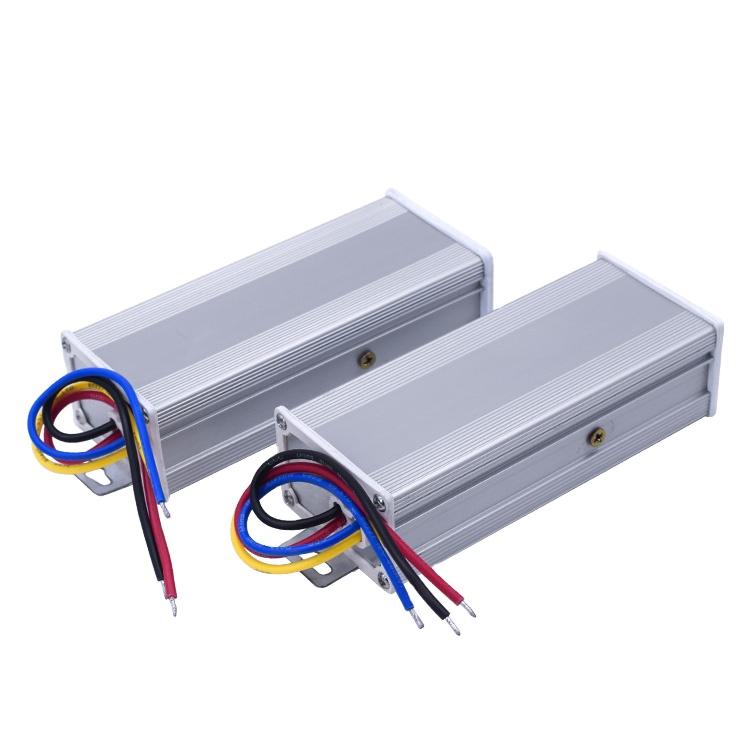
Isolated DC to DC 48V-96V to 12V 5A 60W Step Down Converter
- Input Range:48V / 60V / 72V / 84V / 96V DC
- Output Spec:12V DC @ 5A (60W Peak)
- Topology:Galvanic Isolated Buck
- Protection:OVP, OCP, SCP, Thermal
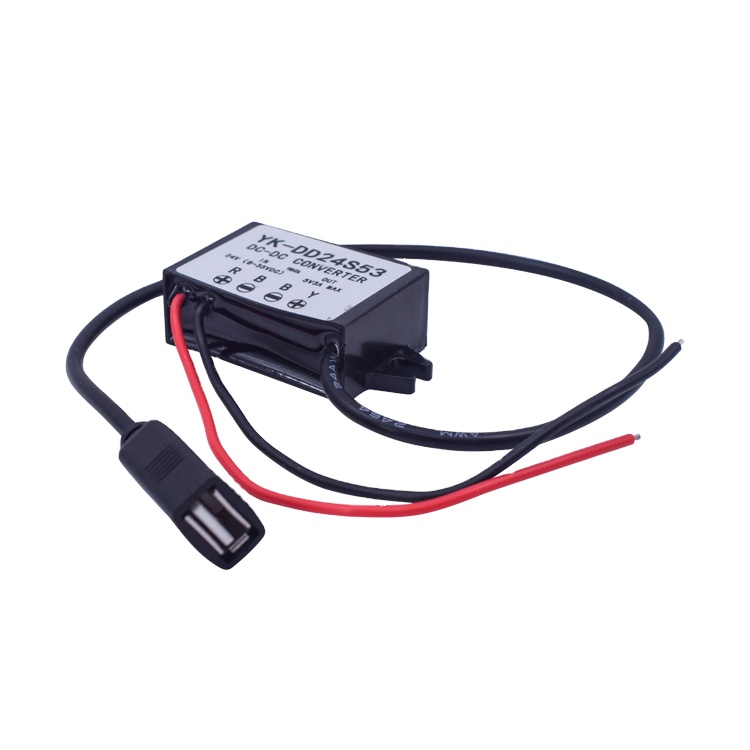
YUCOO Waterproof IP67 24V to 12V 3A 36W Converter
- Input Range:18V - 35V DC Nominal
- Output Spec:12V DC @ 3A Continuous
- Enclosure:Silicone Potted / IP67
- Application:Marine, Automotive, Outdoor
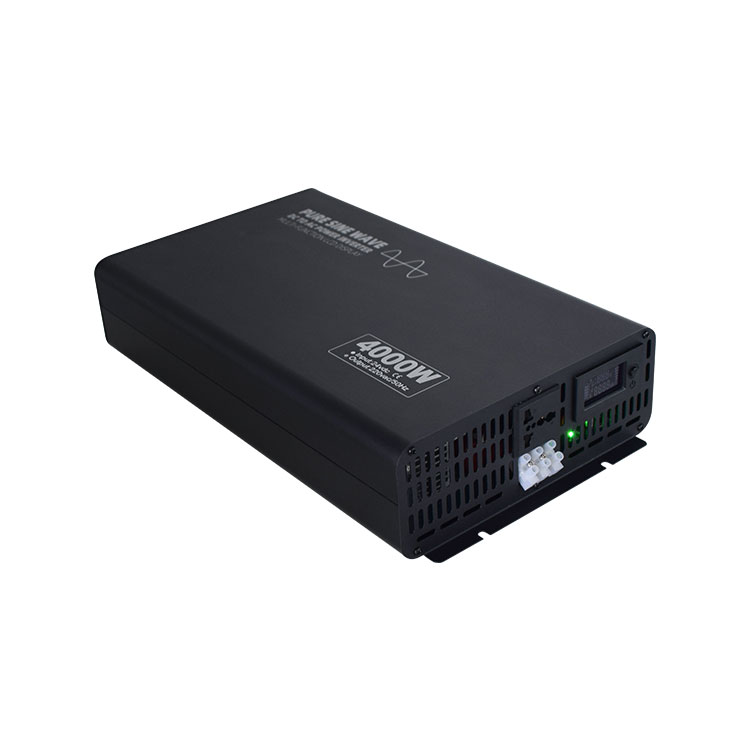
Pure Sine Wave DC-AC Power Inverter 300W–5000W
- DC Bus Input:12V / 24V / 48V DC Auto/Select
- AC Output:110V / 220V ±3% THD <3%
- Surge Capacity:200% Nominal Wattage
- Control:Optional LCD / RS485 Interface

YUCOO 12V to 5V USB Buck Module Car Power Converter
- Input Voltage:8V - 22V DC (Vehicle Bus)
- Output Voltage:5.0V DC stabilized
- Form Factor:Micro potted module w/ USB
- Efficiency:Up to 94% synchronous rec.
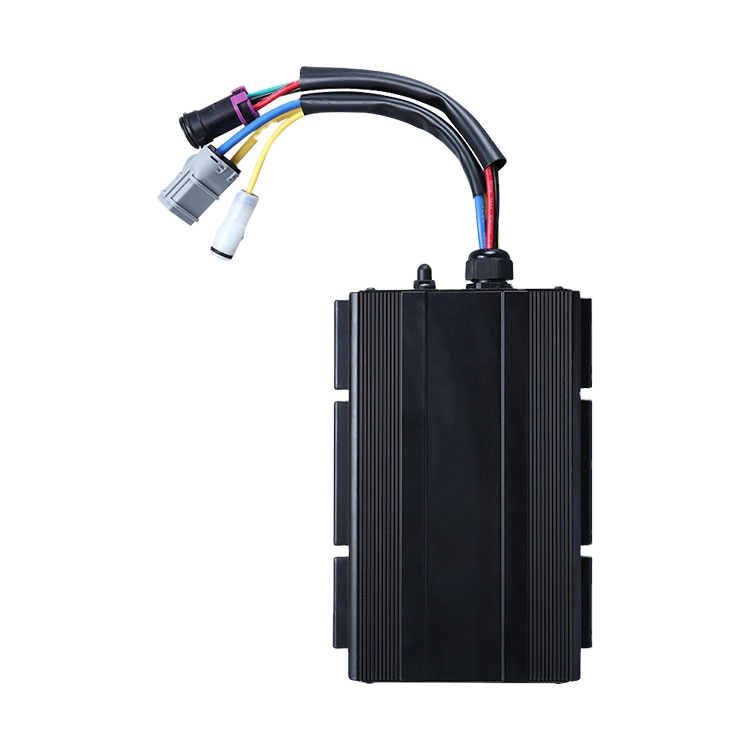
Isolated 48V-90V to 12V 42A 500W DC Charger Converter
- Input Range:48V / 60V / 72V / 90V DC
- Output Current:42A Continuous @ 12VDC
- Enclosure:Extruded Aluminum Heat Sink
- Isolation:1500VDC Input-to-Output

Industrial DC to AC Power Inverter 600W–5000W
- Input Options:12V / 24V / 48V / 110V DC
- Output Modes:100V / 110V / 220V / 240V AC
- Efficiency:>90% at Rated Load
- Safety Certs:CE, RoHS, FCC Certified
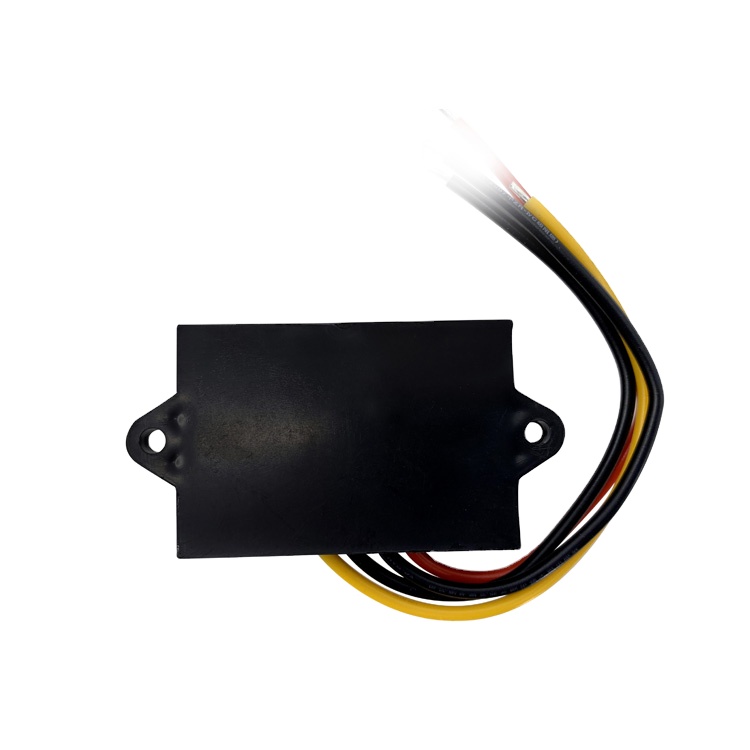
Waterproof IP67 12V/24V to 5V 5A 25W USB Converter
- Input Range:9V - 35V DC Dual Voltage
- Output Rating:5V DC @ 5A (25W Max)
- Housing:Flame-retardant ABS/PC shell
- Interface:Direct Wire / USB-A / Type-C
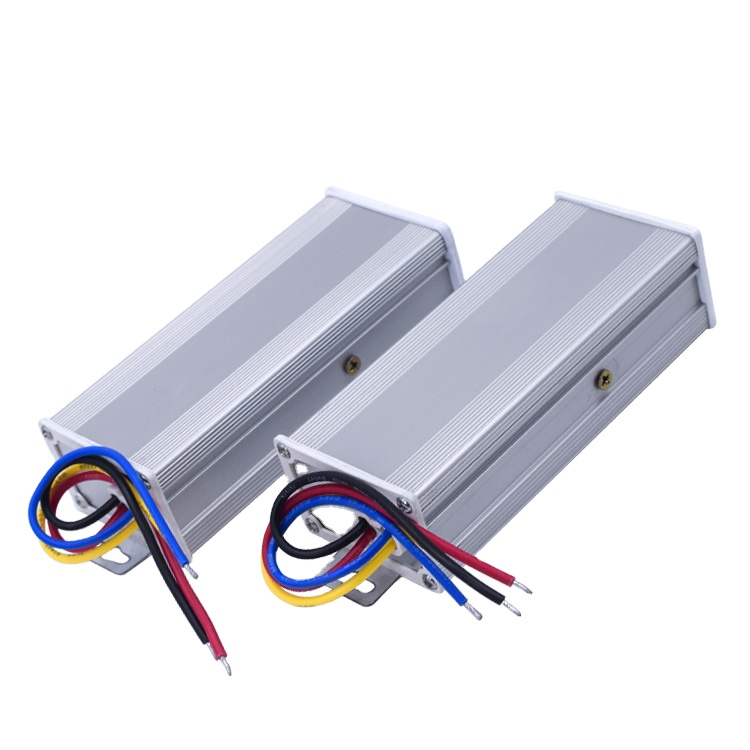
DC 40-135V to 12V 10A 120W Isolated Aluminum Converter
- Input Range:40V - 135V DC Ultra-Wide
- Output Spec:12V DC @ 10A Constant
- Cooling:Integral Aluminum Fin Shell
- Isolation Rating:2.5kV Hi-Pot Verified
Industry Whitepaper: Specifying Industrial DC-DC Power Supplies for OEM/ODM Deployments
Modern electrical architectures across commercial electric vehicles (EV), utility telecommunication sites, off-grid solar storage, and automated logistics AGVs place extreme stress on power distribution subsystems. Direct current (DC) power supplies are no longer treated as commoditized passive building blocks. Instead, they serve as the vital line of defense shielding sensitive logic controllers, sensors, and telemetry gateways from transient surges, reverse-polarity hazards, ground loop interference, and harsh temperature swings.
When selecting between an isolated and non-isolated DC-DC converter topology, systems engineers must evaluate safety isolation barriers versus thermal conversion efficiency. Non-isolated buck topologies achieve up to 96% operational efficiency with compact dimensions, making them ideal for common-ground automotive accessory lines (such as 24V-to-12V or 12V-to-5V step-down converters). Conversely, high-voltage battery storage systems operating from 48V, 72V, 96V, or fluctuating 40V-135V rail systems necessitate full galvanic isolation. By decoupling grounds through high-frequency planar transformers and optocouplers, isolated converters prevent ground loop hum, arrest destructive transient spikes, and safeguard human operators from lethal chassis potentials.
Key Engineering Rule of Thumb: Inrush Margins & Derating Factors
Always size continuous output power with a minimum 25% safety overhead above your maximum steady-state consumption: P_rated ≥ P_load × 1.25. For inductive or high-capacitance dynamic loads (such as DC servomotors, cooling fans, and high-frequency RF amplifiers), ensure that the converter's peak transient current capacity supports 150% to 200% of nominal rating for a minimum of 200 milliseconds to avoid nuisance over-current hiccup shutdown during system cold starts.
| Topological Parameter | Synchronous Buck (Non-Isolated) | Isolated Flyback / Forward | LLC Resonant / Half-Bridge |
|---|---|---|---|
| Typical Input Range | 12V, 24V, 36V, 48V (±20%) | 18V–36V, 36V–72V, 40V–135V (2:1 or 4:1) | 200V–400V, 48V Telecom Bus (Tight Range) |
| Conversion Efficiency | 93% – 96.5% | 86% – 91% | 94% – 97.5% |
| Galvanic Isolation | None (Shared common ground) | 1,500VDC to 3,000VDC Dielectric | 2,000VDC to 4,200VDC Reinforced |
| Common Applications | Cabin USB ports, LED lighting, sensors | Heavy industrial AGVs, Telecom plants, EV DC bus | Data center server racks, 48V battery chargers |
| Relative Sourcing Cost | Low to Moderate (Optimized BOM) | Moderate to High (Transformer & Optical) | High (Advanced magnetic core & driver ICs) |
Future Sourcing & Procurement Trends in DC-DC Power
Strategic purchasing managers and system integrators face rapid supply chain transformations. Here are the core procurement factors dominating global tender specifications over the coming 36 months.
Wide Bandgap (GaN & SiC) Adoption
Global procurement teams are actively switching from traditional silicon MOSFETs to Gallium Nitride (GaN) and Silicon Carbide (SiC) semiconductors. These wide-bandgap materials operate at substantially higher switching frequencies (500kHz to 2MHz), drastically reducing the physical volume of magnetics and filter capacitors. Buyers benefit from a 30% reduction in form factor and power densities exceeding 100W per cubic inch, slashing freight weight and enclosure sizing.
TCO & Mean Time Between Failures
Sophisticated buyers are phasing out purchase decisions based strictly on unit acquisition costs in favor of Total Cost of Ownership (TCO) models. Calculating life-cycle heat dissipation, energy wasted through low-efficiency converters, and field replacement costs makes high-efficiency units far cheaper over a 5-year operating window. Telcordia SR-332 and MIL-HDBK-217F calculated MTBF ratings in excess of 200,000 hours are now mandatory minimums for industrial grade RFQs.
Near-Shoring & Dual-Hub Warehousing
Geopolitical tariffs and ocean freight disruptions have heightened the demand for hybrid supply chain setups. Original equipment manufacturers require partners capable of providing flexible FOB/CIF container shipping combined with domestic fulfillment hubs—such as dedicated US overseas warehouse inventory for high-velocity standard converters—drastically reducing lead times from 8 weeks to 48 hours for immediate production line replenishment.
Next-Generation DC-DC Engineering & Development Trends
How cutting-edge electronic innovations are reshaping power supplies, digital communication telemetry, thermal dissipation, and environmental sealing.
PMBus & CANbus Telemetry
Analog feedback loops are rapidly integrating digital microcontrollers supporting PMBus, CANbus 2.0B, or Modbus protocols. Engineers can program output voltages on the fly, balance multi-module parallel loads, monitor real-time thermal throttling, and log historical fault records remotely.
Vacuum Potting & IP68 Sealing
Harsh environmental deployments (mining machinery, heavy marine vessels, and outdoor agricultural equipment) require advanced vacuum-degassed epoxy or high-thermal-conductivity silicone resin encapsulation. This prevents micro-fissures, resists 10G mechanical vibration, and achieves total moisture immunity.
Ultra-Wide 4:1 and 8:1 Input
Single wide-input converters that seamlessly handle voltages spanning 40V to 135V DC allow global equipment builders to deploy a single unified SKU across 48V, 72V, 80V, 96V, and 110V DC battery platforms, dramatically streamlining inventory control and aftermarket servicing.
Ultra-Low Standby Quiescent
In IoT remote edge nodes and EV parasitic standby circuits, converters with micro-ampere quiescent current ratings (<5mA) are critical. Synchronous burst-mode switching maintains high efficiency even down to 1% load, preventing auxiliary battery drainage during prolonged dormancy.
Why Varnix / YUCOO is Your Trusted OEM/ODM Manufacturing Partner
Backing your brand with audited production facilities, rigorous multi-tier testing protocols, deep engineering customization, and 23 years of specialized power electronics expertise.
Full-Cycle OEM/ODM Customization
From initial schematic capture and thermal simulation to custom aluminum enclosure extrusion, multi-pin waterproof connector integration, and customized laser-etched silk screening, our engineering department converts functional specifications into mass-manufacturable solutions within 4 to 6 weeks.
- Non-standard input/output voltage adjustments
- Custom constant-current battery charging curves
- Customizable PCB dimensions, pinouts, and cabling harnesses
- Branded retail packaging, silk-screen logos, and user manuals
ISO 9001:2015 & SGS Onsite Verified
Our 1,229 m² production and test complex has undergone rigorous onsite audit inspection by SGS Group. Operating under a verified ISO 9001:2015 quality management system, every single unit undergoes a strict 5-stage quality audit before dispatch.
- 100% incoming component inspection (AQL 0.4 standard)
- Automated SMT pick-and-place with AOI optical checks
- 100% 4 to 8-hour full-load burn-in aging test at 55°C ambient
- Digital oscilloscope waveform check for ripple & noise (<50mVp-p)
Global Logistics & US Warehouse
Serving Tier-1 telecom operators, industrial automation distributors, and mobile electrical outfitters across North America, Western Europe, and Australasia. We provide rapid prototype dispatch and reliable bulk freight schedules under any Incoterm.
- Direct access to fast-moving inventory stocked in the USA
- Flexible commercial terms: FOB, CIF, EXW, FCA, and DDP to door
- Accepted multi-currency settlements: USD, EUR, GBP, HKD, CNY
- Multi-tier contract warranties backed by 24/7 technical engineering
 CE Compliant
 RoHS Certified
 FCC Class B/A
 SGS Audited Plant
Frequently Asked Questions (FAQ) for DC-DC Power Supplies
Direct technical answers addressing the most common design constraints, regulatory considerations, and production logistics asked by international purchasing agents and chief electrical engineers.
What is the technical distinction between isolated and non-isolated DC-DC converters?
The primary difference lies in the physical and electrical separation of the input circuit from the output circuit. A non-isolated DC-DC converter (most commonly built on synchronous buck, boost, or buck-boost topologies) utilizes a shared common ground return between the power source and the connected load. Because energy passes directly through inductors without a magnetic barrier, non-isolated converters achieve superior conversion efficiencies (typically 93% to 96.5%), minimal physical footprints, and very competitive BOM costs. They are perfectly suited for standard automotive accessories, vehicle lighting, and contained electronics sharing a single chassis ground.
In contrast, an isolated DC-DC converter utilizes high-frequency transformers and optical couplers to physically sever conductive contact between input and output rails. This creates a dielectric barrier capable of withstanding 1,500VDC to 3,000VDC or more. Galvanic isolation is essential when connecting high-voltage battery banks (e.g., 48V, 72V, 96V, or 110V) to low-voltage 12V/24V control logic, operating across multiple independent ground potentials in large telecommunications base stations, preventing catastrophic ground loop currents, and eliminating common-mode electrical noise in sensitive analog sensors and radio transceivers.
How does ambient temperature and potting material affect continuous power delivery?
Operating temperature is the single most critical variable governing converter longevity and failure rates (governed by the Arrhenius reaction rate rule, where every 10°C rise in semiconductor junction temperature cuts component lifespan in half). When power supplies operate above their baseline temperature rating (commonly 40°C to 50°C ambient), output current must be linearly derated—often down to 50% capacity at 70°C or 85°C unless active forced-air cooling or conductive heat sinking is applied.
To maximize thermal dissipation in enclosed housings, Varnix / YUCOO employs two advanced encapsulation methodologies: high-grade thermally conductive epoxy resins and organic silicone elastomers (with thermal conductivity ratings exceeding 1.2 W/m·K). Silicone potting remains flexible across a wide thermal span (-40°C to +180°C), eliminating mechanical stress on delicate surface-mount solder joints caused by differing thermal expansion coefficients during rapid heat cycles. Furthermore, vacuum degassing ensures 100% void-free filling, completely preventing internal hot spots, moisture condensation, and corona discharge in high-voltage industrial applications.
What are the Minimum Order Quantities (MOQ) and lead times for custom OEM/ODM modifications?
For standard catalog configurations (such as standard 24V-to-12V buck regulators, 12V-to-24V boost modules, and standard pure sine wave inverters), our factory supports low trial MOQs starting at 1 to 10 units to facilitate design verification and initial bench testing. Fast-moving models can often be fulfilled immediately from our US overseas inventory or shipped directly via express air courier within 3 business days.
For custom OEM/ODM development—including custom input/output voltages, modified PCB layouts, custom wire harness pigtails, specialized connectors (e.g., Deutsch, Amphenol, Anderson Powerpole), or private-label laser etching—initial prototype samples are typically delivered within 15 to 25 business days from engineering sign-off. Bulk commercial production runs typically require an MOQ of 100 to 500 units depending on housing tooling requirements, with average mass production turnaround times spanning 3 to 4 weeks.
How do you manage electromagnetic interference (EMI) compliance under EN 55032 and CISPR 25?
Switching power supplies inherently produce high di/dt and dv/dt transients that can radiate or conduct noise back into battery lines or interfere with wireless communications. Our engineering department incorporates multi-stage LC input filter networks, common-mode chokes with high magnetic permeability, and localized bypass ceramic capacitors positioned immediately adjacent to primary switching FETs.
In addition, our metal-housed converters utilize solid aluminum extrusion casings acting as continuous 360-degree Faraday shields. By grounding the enclosure and utilizing four-layer PCB layouts with dedicated inner ground return planes, our products meet commercial emissions standards under EN 55032 / CISPR 32 Class B and can be customized to comply with stringent automotive conducted emissions requirements under CISPR 25 Class 3 or Class 5, guaranteeing clean power delivery without disrupting GPS receivers, cellular modems, or on-board microprocessors.
What comprehensive protective mechanisms are integrated into your industrial DC supplies?
Every industrial-grade DC-DC converter from our facility integrates six layers of autonomous hardware protection to safeguard both the power supply itself and connected end-use machinery:
1. Over-Voltage Protection (OVP): Internal zener clamps and crowbar circuits clamp transient spikes, safely shutting down PWM switching if the output exceeds 120% of rated voltage.
2. Over-Current Protection (OCP): High-precision shunt sensing detects overload conditions, switching into a safe "hiccup mode" or constant-current limiting state until the fault condition clears.
3. Short-Circuit Protection (SCP): Sustained direct output short-circuits trigger microsecond shutdown, allowing indefinite short endurance with automatic recovery once the shorted line is resolved.
4. Reverse Polarity Protection: Series low-loss MOSFETs or heavy-duty bypass diodes prevent component destruction if installation cables are accidentally crossed during field maintenance.
5. Under-Voltage Lockout (UVLO): Prevents erratic operation and excessive switch heating when battery banks drop below a safe operating threshold, protecting deep-cycle lead-acid and lithium battery cells from damaging over-discharge.
6. Over-Temperature Protection (OTP): Integrated thermal sensors placed directly on the power semiconductor heat spreaders initiate thermal shutdown if internal junction temperatures exceed 105°C.
Can your factory provide custom battery charging profiles (CC/CV) for lithium chemistry?
Yes. Many clients source our high-power isolated step-down converters (such as 48V-90V to 12V 42A 500W modules) specifically for auxiliary battery charging in industrial AGVs, electric utility carts, and remote telecommunications backup banks. Rather than outputting a rigid constant voltage that could trigger over-current shutdown when connected to a depleted battery, our power supplies can be customized with two-stage or three-stage Constant Current / Constant Voltage (CC/CV) charging logic.
In constant current mode, the converter behaves as a regulated current source, delivering safe maximum amperage until the battery terminal reaches its target absorption voltage. The unit then transitions smoothly into constant voltage saturation mode, tapering current down to float maintenance levels. Float voltages and charging cutoff thresholds can be factory-programmed to match lithium iron phosphate (LiFePO4), ternary lithium-ion, AGM, or flooded lead-acid chemistries precisely.
Accelerate Your Power Electronics Project Today
Consult with our seasoned application engineers to specify the optimal DC-DC converter topology, review full electrical test reports, or schedule custom sample fabrication for your OEM/ODM program.