DC-DC Buck
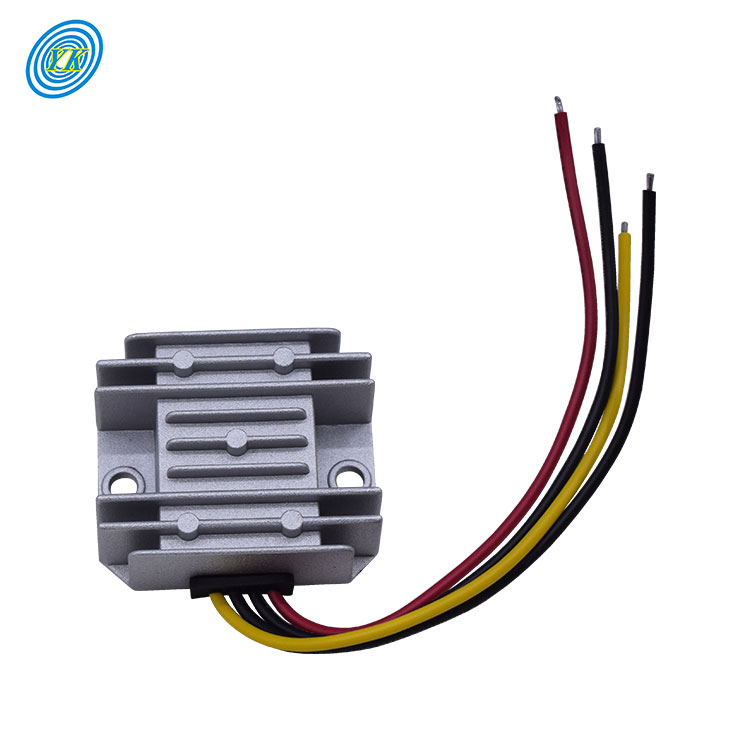
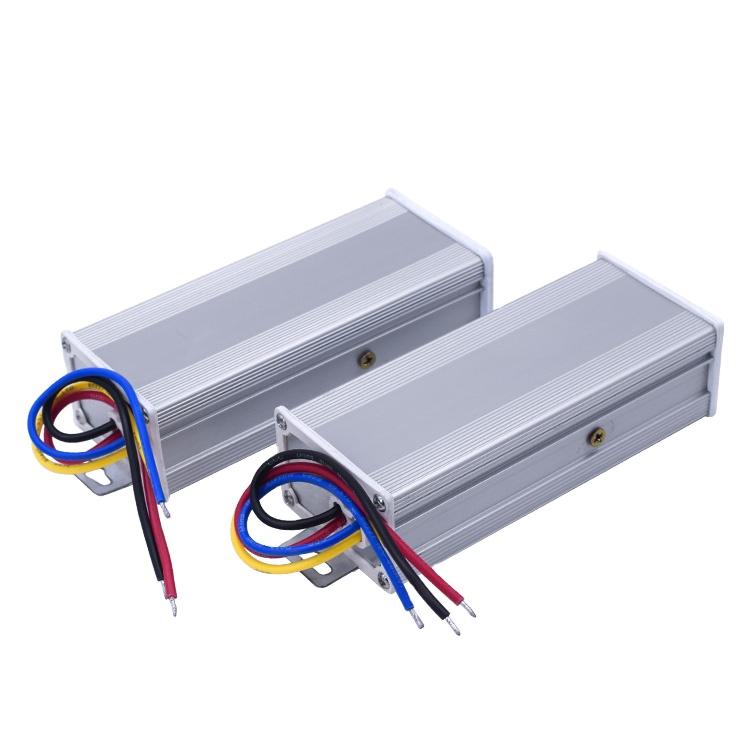
YUCOO DC 18V to 6V 5A 30W Waterproof Voltage Converter Transformer
- TopologySynchronous Buck
- Input / Output18VDC to 6VDC
- Current / Power5A Max / 30W
- ProtectionIP67 Waterproof
In modern industrial automation, electrified mobility, and telecom microgrids, direct electrical coupling via non-isolated DC-DC converters provides uncompromised electrical efficiency, superior volumetric power density, and significantly reduced thermal dissipation overhead compared to galvanic isolated topologies.
As global hardware architects optimize power distribution architectures (PDAs), the transition toward synchronous rectification in non-isolated buck, boost, and buck-boost modules has emerged as the definitive standard. By eliminating bulky magnetic isolation transformers, forward diodes, and optocoupler feedback loops, non-isolated converters achieve power transfer efficiencies approaching 97%, while occupying up to 60% less PCB footprint. For system integrators deploying high-current 12V, 24V, 48V, and 72V distributed rails, sourcing directly from verified tier-one manufacturing plants guarantees thermal stability, strict EMI/EMC compliance, and long-term supply chain predictability.
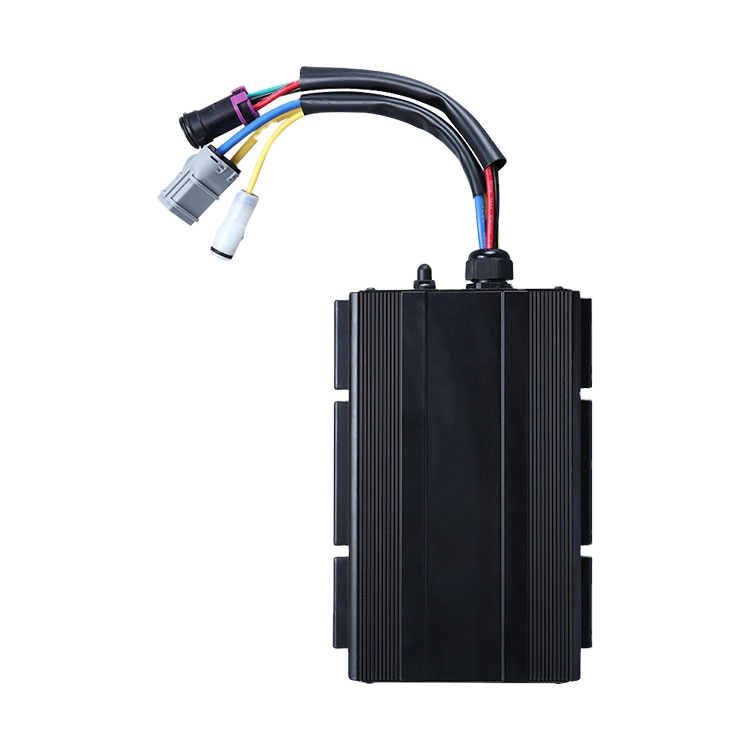
Engineered for harsh operating environments, featuring IP67 aluminum encapsulated casings, low output ripple, and comprehensive fault protection.
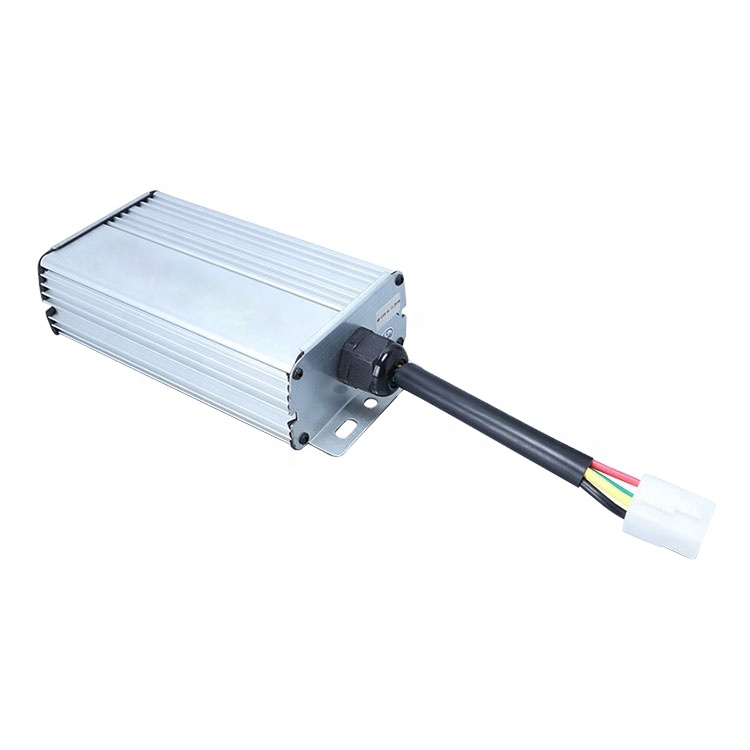
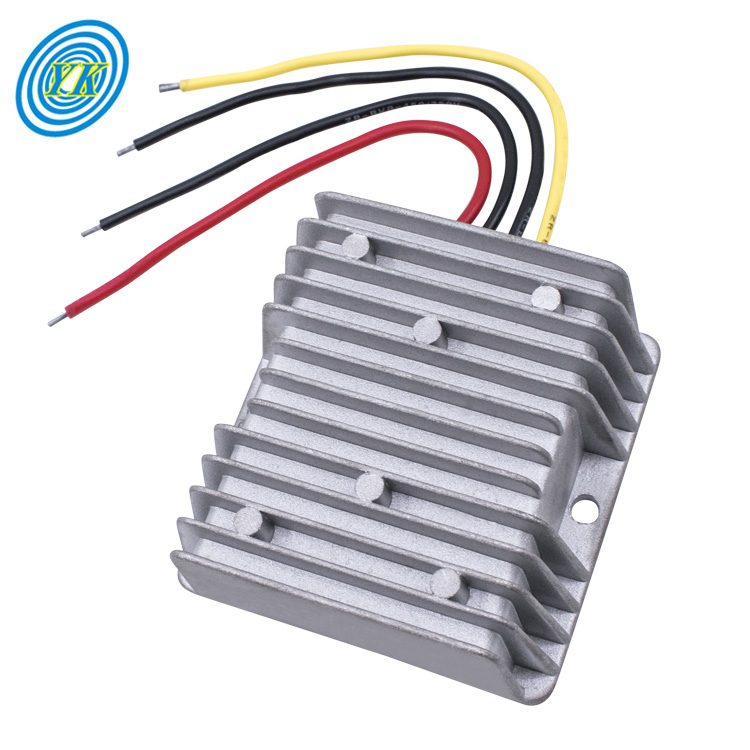
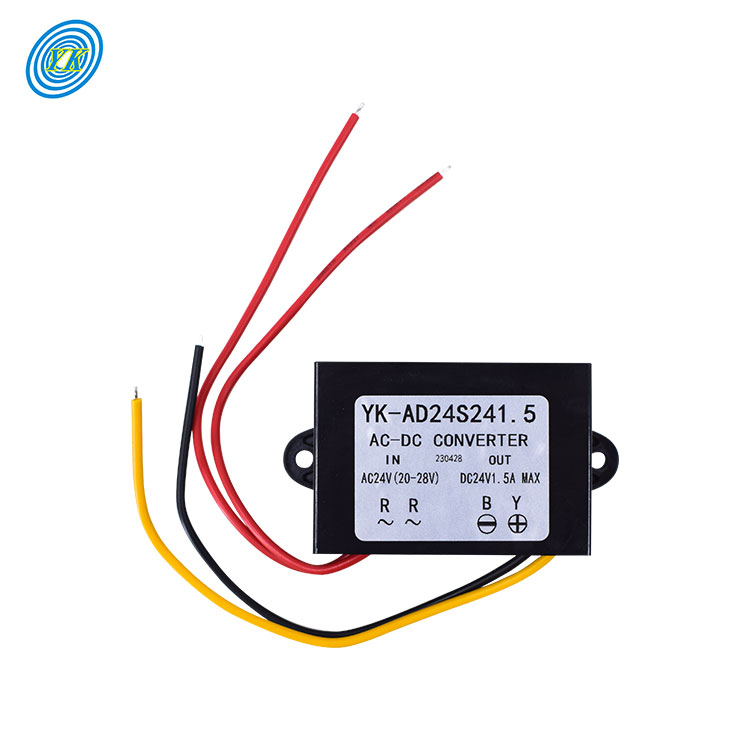
Procuring industrial-grade non-isolated switching regulators demands strict engineering vetting across five foundational parameters to prevent cascading field failures.
Top-tier exporters utilize planar magnetics, ultra-low $R_{DS(on)}$ MOSFET switches, and multi-layer thermal vias. Because non-isolated converters share a common ground, superior thermal management directly prevents thermal runaway under 100% full continuous operational loads.
Dependable factories operate automated 100% dynamic load testing racks with burn-in chambers, monitoring high-temperature cutoff, short-circuit recovery, and input transient voltage suppression (TVS) response prior to final warehouse packaging.
Verified manufacturers partner directly with tier-one semiconductor suppliers for solid electrolytic capacitors, switching controllers, and ferrite cores, providing traceability and complete CoC (Certificate of Conformance) documentation.
Industrial deployment in automotive, material handling (forklifts), and marine environments requires vacuum epoxy potting rated to IP67/IP68, providing total resilience against moisture, vibration, and saline corrosion.
Leading exporters guarantee compliance with CE (EN 61000-6-3 / EN 61000-6-1), RoHS directive 2011/65/EU, and FCC Part 15B Class B for conducted and radiated electromagnetic emissions.
A true manufacturing leader provides flexible NRE programs for custom nominal inputs, wide-band tracking voltages, current limiting modes, and application-specific form factors within short lead times.
Choosing between non-isolated and isolated topologies impacts efficiency, thermal budgeting, physical package envelope, and system cost.
| Evaluation Parameter | Non-Isolated DC-DC Converters | Galvanically Isolated Converters | Architectural Trade-Off Summary |
|---|---|---|---|
| Typical Conversion Efficiency | 94% - 98% (Ultra-high synchronous rectification) | 84% - 91% (Transformer & switching losses) | Non-isolated architectures eliminate 50%+ of wasted thermal dissipation. |
| Common Ground Architecture | Unified Input/Output negative reference (Direct coupling) | Complete dielectric physical separation (1.5kV - 3kV) | Mandatory isolation for human protection >60V or ground loop disruption. |
| Volumetric Power Density | Up to 3x higher (Compact surface inductors) | Lower (Bulky high-frequency transformer core) | Non-isolated modules excel in vehicle pods, RVs, and drones where space is critical. |
| Component Count & MTBF | Fewer components; typical MTBF > 150,000 Hours | Complex feedback loop (Optocouplers); MTBF ~ 90,000 Hours | Non-isolated systems eliminate primary-to-secondary degradation points. |
| Cost per Watt Output | Significantly lower manufacturing cost (Economical bill of materials) | Higher due to precision winding and safety dielectric potting | Non-isolated units reduce procurement costs by 30% to 50% for high-current rails. |
Key technological and regulatory shifts that OEM procurement directors and hardware engineers must factor into forward purchasing agreements through 2026–2030.
Gallium Nitride (GaN) and Silicon Carbide (SiC) switches are replacing silicon MOSFETs in non-isolated architectures. Operating at switching frequencies above 500 kHz reduces inductor magnetic volume by over 40% while sustaining 98% efficiency at 48V bus levels.
Modern telecommunications hubs and high-end automotive systems demand real-time telemetry. Advanced non-isolated converters now incorporate digital control loops, providing dynamic voltage margining, current monitoring, and real-time thermal reporting back to the system processor.
To mitigate international sea-freight delays and localized tariff spikes, leading exporters are setting up regional bonded warehouses (such as US-based and EU distribution hubs) to ship high-turnover SKUs with short transit times and zero port delays.
Operating since 2003 with SGS onsite verification, ISO 9001:2015 quality standards, and dedicated engineering export capacity.
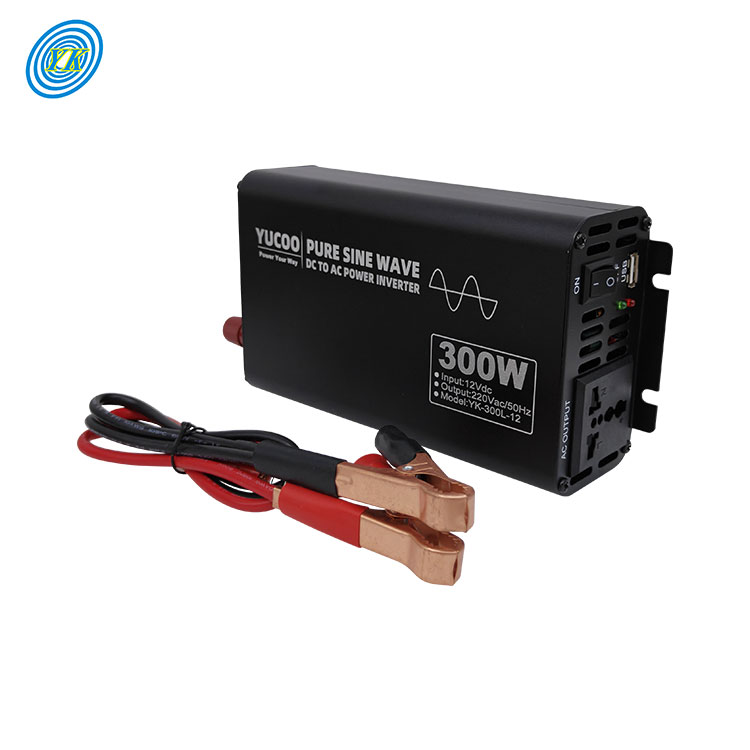
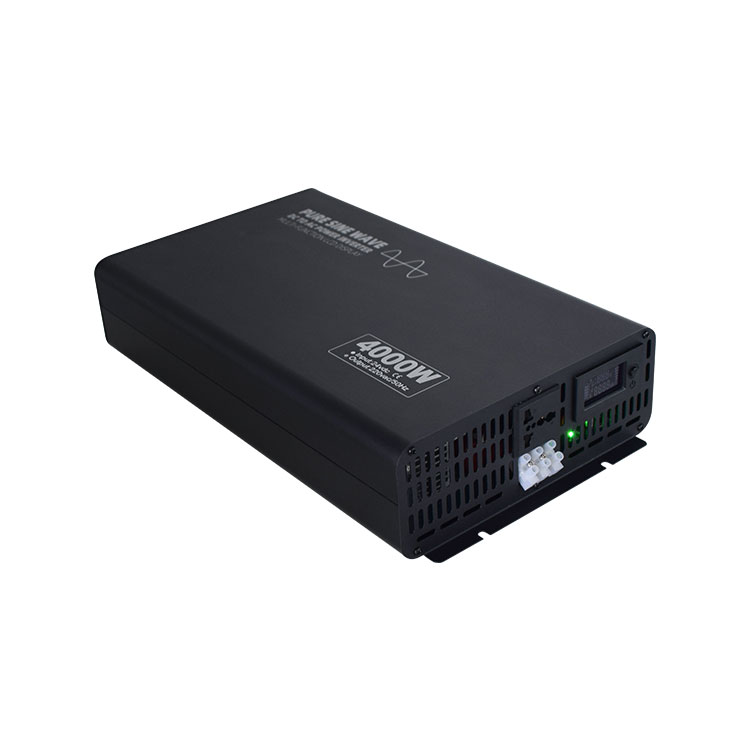
Established in 2003, our factory has developed hundreds of standard converter topologies, Pure Sine Wave Inverters, and high-precision DC power supplies deployed across telecommunications networks, satcom terminals, and industrial utility grids.
Our 1,229 m² production facility houses 10+ operational assembly and wave soldering lines, precision enclosure drilling centers, curing ovens, and high-temperature aging chambers verified onsite by SGS Group auditors.
We maintain ready inventory of standard DC-DC step-down modules, Starlink converters, and pure sine wave mobile inverters in our North American warehouse, enabling expedited domestic delivery for time-critical pilot deployments.
All catalog products hold verified CE, RoHS, and FCC compliance. Comprehensive test records, oscilloscope waveform analysis reports, and safety DoCs are available to streamline foreign customs clearance.
Our multidisciplinary team maintains a 98.2% on-time response rate. We provide direct technical support, custom cable termination configurations, and thermal dissipation assessments before and after sales.
We support versatile trade terms including FOB, CIF, EXW, FCA, and DDP door-to-door, supporting 8 major global currencies with payment structures secured via T/T, L/C, or escrow guarantees.
Clear, direct answers to common engineering, logistics, and quality assurance questions raised by international procurement managers.
A non-isolated converter is ideal when the input and output share a common chassis ground, such as in vehicles, battery-operated equipment, and local board-level regulation. It provides up to 98% efficiency, lower component cost, and a smaller footprint, provided high-voltage safety isolation is not required.
Our heavy-duty buck converter circuits incorporate integrated Over-Voltage Protection (OVP) and fast-acting crowbar circuits or input fuses. If a high-side switching FET punctures, the circuit disconnects the rail within microseconds, protecting sensitive downstream microprocessors and sensors.
Standard catalog units support sample orders starting from 1 to 10 pieces. Customized ODM programs (custom voltages, special potting, proprietary enclosures) generally require an initial MOQ of 50 to 100 units. Standard production lead time is 12–18 business days.
Yes. We offer complete OEM branding including laser-engraved serial numbers, custom extruded aluminum thermal fin enclosures, specific IP68 wiring harnesses, and custom retail or bulk packaging matching your engineering specifications.
All batches undergo dynamic load burn-in at elevated ambient temperatures (up to 55°C) inside environmental aging chambers. In addition, infrared thermal imaging verifies that junction temperatures on inductors and MOSFETs remain well within safe limits under continuous full-rated load.
Every commercial production batch is accompanied by Certificate of Conformance (CoC), RoHS verification declarations, final QA burn-in check sheets, and standard CE/FCC regulatory compliance documentation for direct customs processing.
Share your target input voltage, regulated output current, environmental sealing requirements, or project delivery timetable. Our power electronics engineering team will provide a comprehensive DFM assessment and factory-direct quotation within 24 business hours.