Step Down
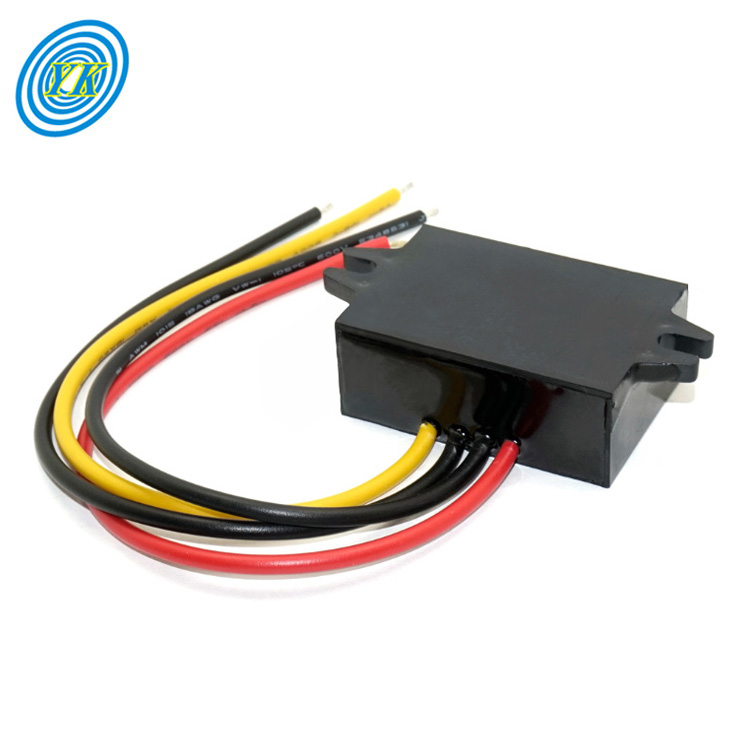
Buck Converter DC-DC 8-35V 12v to 7v 5A Step Down Module
- Topology:Synchronous Buck
- Input Range:8–35 VDC
- Output:7 VDC / 5A
Engineered for high current capability, ultra-low ripple, and IP67 resilience. From compact DIN-rail ready auxiliary converters to high-power industrial step-up units.
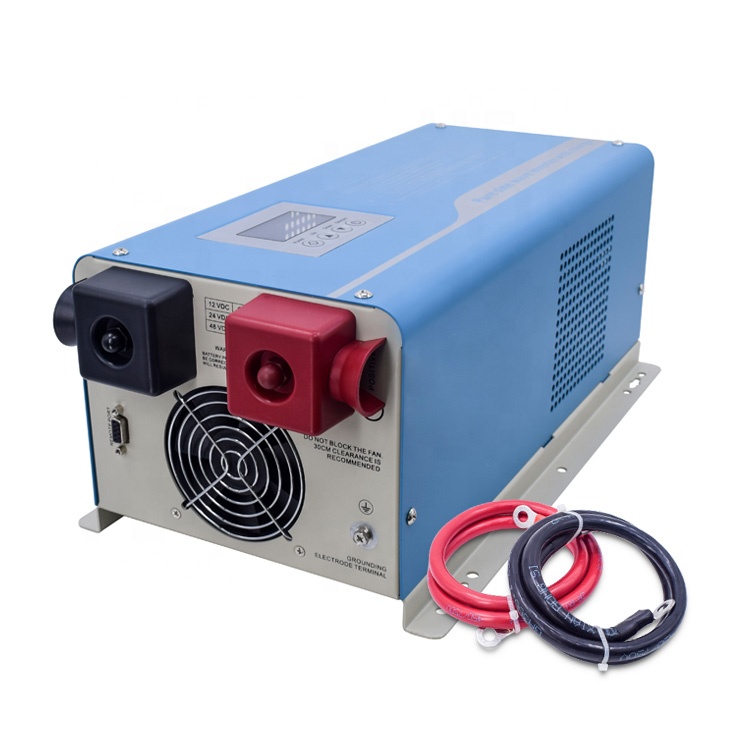
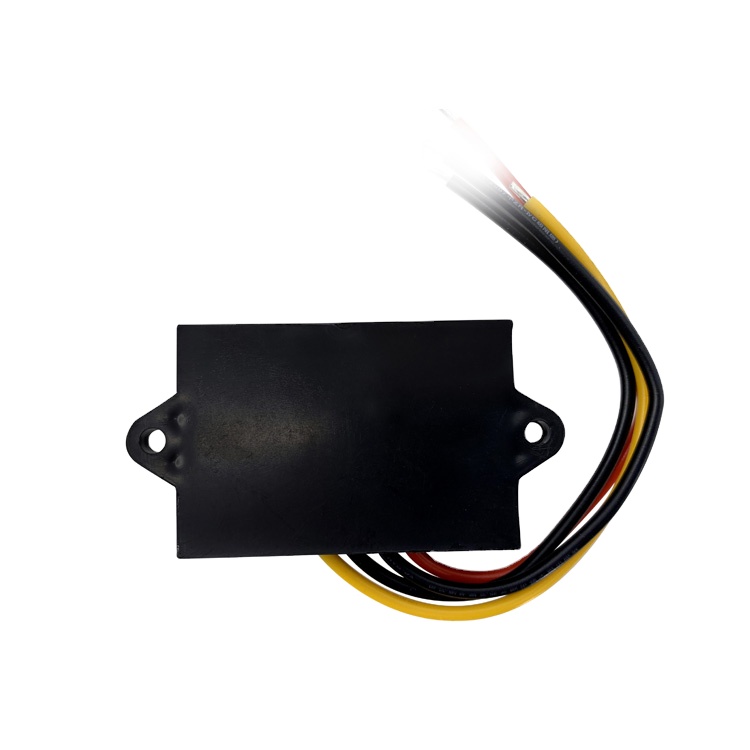
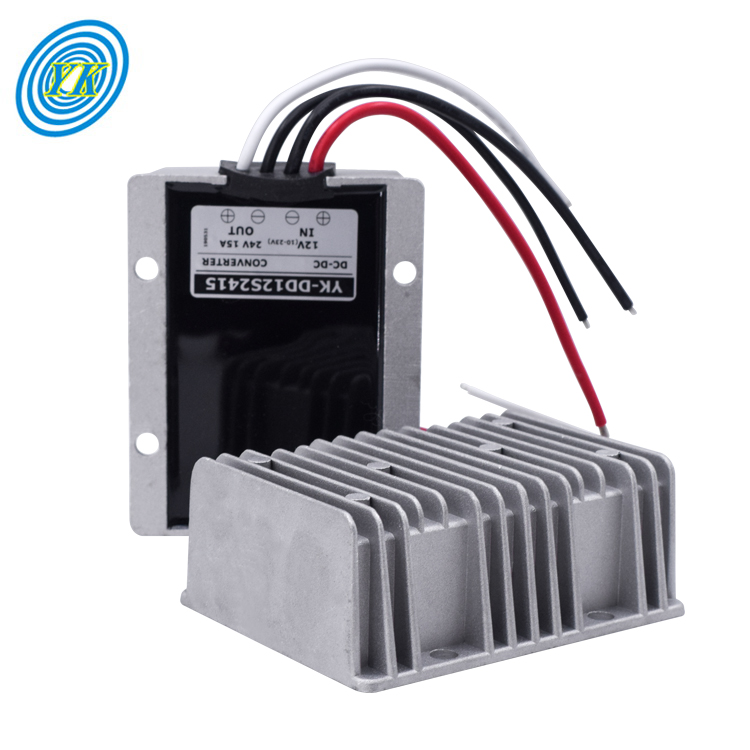
A comprehensive examination of synchronous rectification, EMI mitigation, thermal dissipation, and EU regulatory alignment for Central European systems integrators.
In conventional asynchronous boost converter circuits, the free-wheeling diode introduces continuous forward voltage drop ($V_F \approx 0.4\text{V} - 0.7\text{V}$), which creates severe thermal overhead in high-amperage industrial environments. In applications operating throughout industrial centers such as Budapest, Debrecen, and Győr, where high ambient heat can trigger thermal throttles inside enclosed sub-assemblies, conversion efficiency is non-negotiable. Our DC-DC boost converter lineup replaces the passive Schottky diode with an ultra-low $R_{DS(on)}$ N-channel MOSFET. This synchronous rectification topology limits $I^2R$ conduction losses, keeping operational efficiency consistently above 94% to 96.8% under continuous duty cycles.
Furthermore, critical switching frequencies are tuned between 100 kHz and 300 kHz, strikes an optimal balance between minimizing inductor core volume and suppressing transient switching spikes. With transient response times below 200 microseconds against a 50% step-load variation, our boost stages ensure that downstream programmable logic controllers (PLCs), high-torque servo drives, and telecommunications transceivers experience zero dropouts or logic resets.
| Technical Characteristic | Standard Commercial Grade | Varnix Industrial High-Power Series | Engineering Advantage in Field |
|---|---|---|---|
| Switching Topology | Non-Synchronous (Diode Rectified) | Active Synchronous Rectification | Thermal dissipation reduced by up to 45% |
| Peak Power Efficiency | 84% – 89% | 93% – 96.8% | Direct battery reserve runtime enhancement |
| Protection Rating | Open Frame / IP20 Enclosure | Die-Cast IP67 Fully Potted (Silicone Gel) | Complete resistance to moisture, condensation, & vibration |
| Over-Current Behavior | Hiccup mode without soft startup | Foldback Limiting + Continuous Soft Start | Prevents high inrush tripping of upstream bus fuses |
| EMC Directives Compliance | Basic CE Mark (Self-Declared) | EN 55032 Class B & EN 61000-6-2 Certified | Zero interference with sensitive radio, GPS, & telemetry |
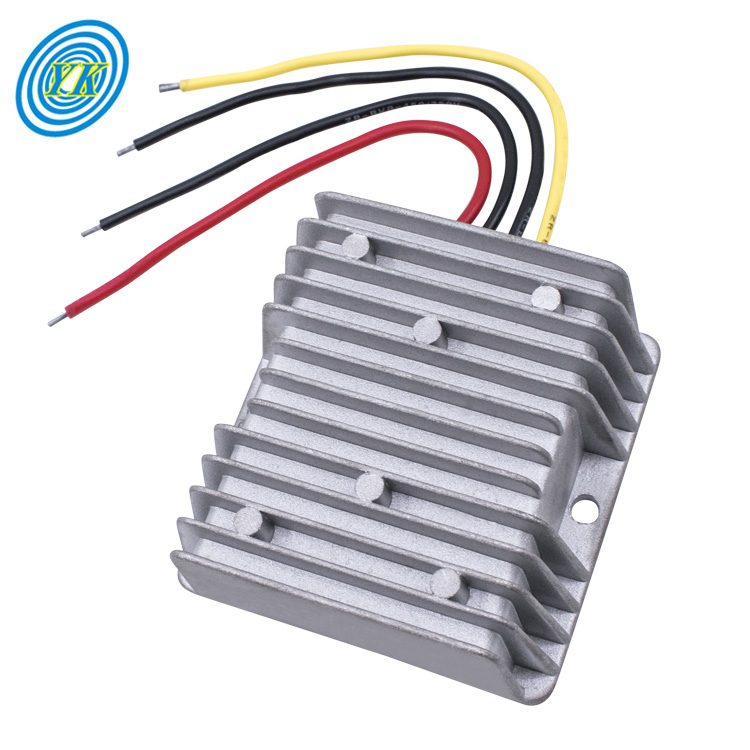
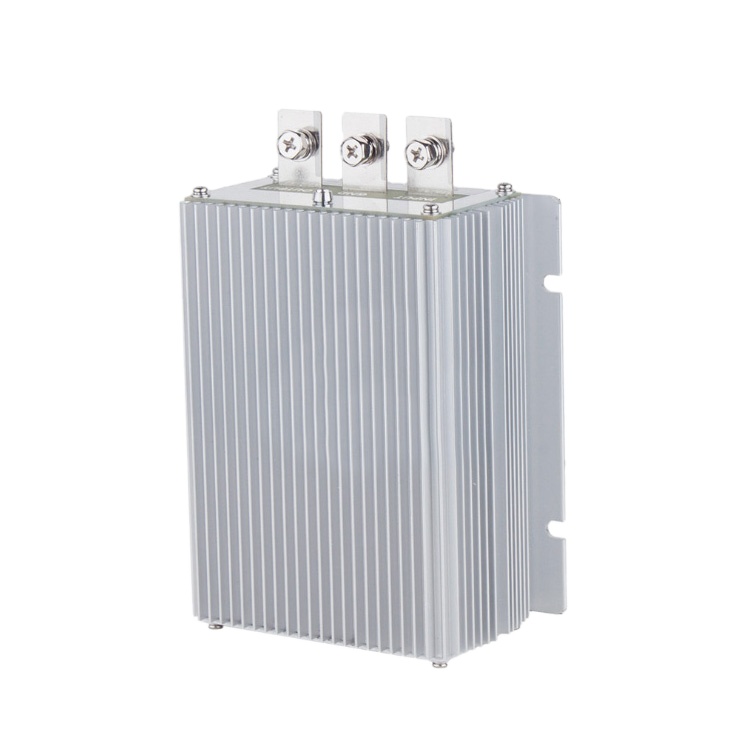
Industrial machinery deployed across Eastern European transit corridors encounters wide seasonal temperatures ranging from sub-zero winter temperatures (-30°C) to scorching summer assembly line environments reaching +65°C internal ambient temperatures. Our converters utilize ADC12 aviation-grade extruded aluminum chassis integrated with deep-groove longitudinal heat sink fins. Thermally conductive silicone gel with a thermal conductivity coefficient exceeding 2.0 W/m·K is pressurized into the module enclosure, completely evacuating air pockets. This process provides dual protection: it functions as a mechanical damper mitigating vibrational harmonic stresses (tested to 5G acceleration loads under IEC 60068-2-6) while simultaneously sealing internal SMD arrays against particulate ingestion, moisture penetration, and galvanic corrosion.
Accelerating critical infrastructure projects across Hungary with engineered DC-DC voltage conversion modules.
With Debrecen and Göd emerging as European epicenters for lithium battery manufacturing and EV drivetrain engineering, our high-power boost modules step up 12V automotive battery banks to 24V and 48V auxiliary lines. They power on-board diagnostic sensors, industrial AGVs (Automated Guided Vehicles), and battery testing fixtures reliably.
Hungary’s agricultural plains (Alföld) feature extensive installations of ground-mounted solar farms and standalone irrigation systems. When solar string voltages sag during low-irradiance periods, our wide-input boost converters bridge low-voltage photovoltaic outputs up to stable 24V or 48V DC buses, ensuring telemetry nodes and remote actuators remain active.
For rural connectivity programs, emergency communications trailers, and railway signalling across MÁV corridors, our compact converters step 12V or 24V battery systems up to 30V/48V/57V DC. This provides uninterrupted power to Starlink dishes, microwave transceivers, and cellular base station repeaters with minimal electromagnetic interference.
Hungary’s economic landscape is characterized by its integration into European production corridors. Key market drivers reshaping the power conversion specification ecosystem include:
Combining 23+ years of high-frequency power electronics manufacturing with export supply chains tailored for European procurement requirements.
Our 1,229 m² production facility in Guangdong is audited onsite by SGS Group. From automatic wave soldering to precision terminal crimping, every process adheres strictly to ISO-standard quality controls, minimizing assembly variance.
Reliability requires thorough testing. Every individual DC-DC boost converter and pure sine wave inverter undergoes a multi-hour burn-in aging cycle under peak load conditions within dedicated thermal test racks before export packaging.
Need a customized step-up ratio (e.g., 9-18V to 54V), specialized Deutsch waterproof connectors, or customized corporate silk-screening? Our in-house hardware engineering team provides rapid schematic adaptation and functional prototyping.
We provide full-service export arrangements to Budapest and regional hubs under versatile trade terms: FOB, CIF, or seamless DDP (Delivered Duty Paid), resolving customs clearing, documentation, and import duties directly.
Our engineering support operates across international business hours, ensuring technical alignment on circuit specs, thermal calculations, and layout footprints with an average response rate of 98.2%.
Every exported production run includes complete manufacturer declarations of conformity, product test reports, and component traceability records required by European technical inspection authorities.
Direct answers addressing technical parameters, import compliance, customs procedures, and custom production.
Share your target input range, required output voltage, continuous amperage, and operating conditions. Our technical team will evaluate your specifications within 24 hours.