Featured Variable & Industrial Power Solutions
Factory-direct pure sine wave inverters, DC-DC step-down/boost voltage converters, and industrial high-current rectifier modules rigorously tested for precision testing and telecommunication setups.
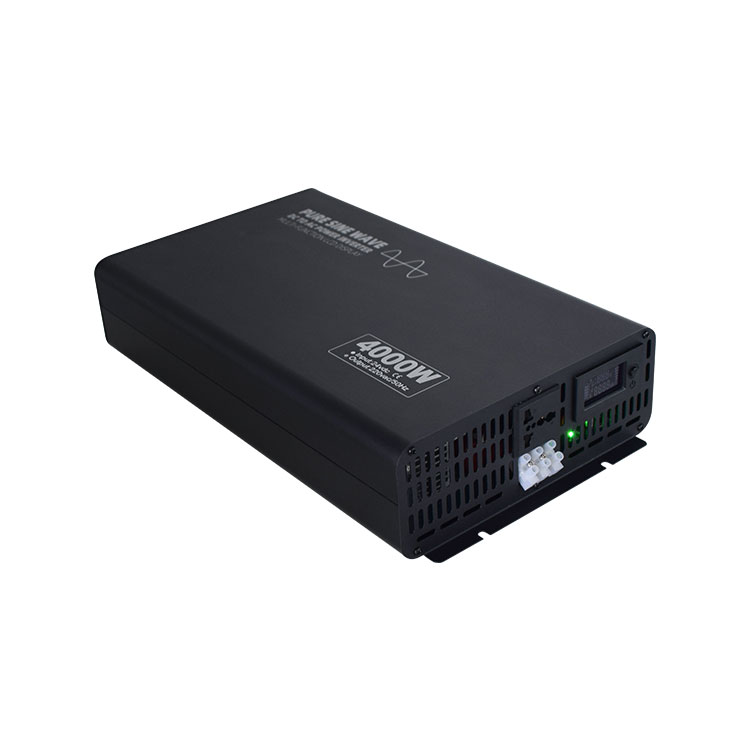
Pure Sine Wave Power Inverter 300W–5000W (12V/24V/48V to 110V/220V)
- TopologyLow Harmonic Distortion (<3%)
- Input DC12V / 24V / 48V Automatic
- Output AC110V / 220V Variable Freq
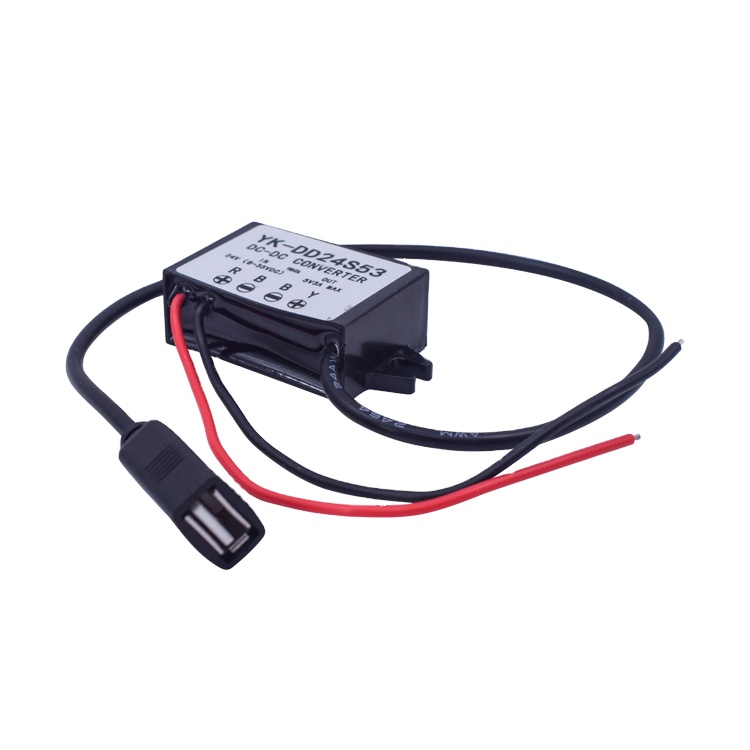
YUCOO Micro Step-Down USB IP67 24V to 12V 3A 36W Converter
- Ingress RatingIP67 Resin Encapsulated
- EfficiencyUp to 96% Synchronous
- ProtectionOver-Current / Thermal
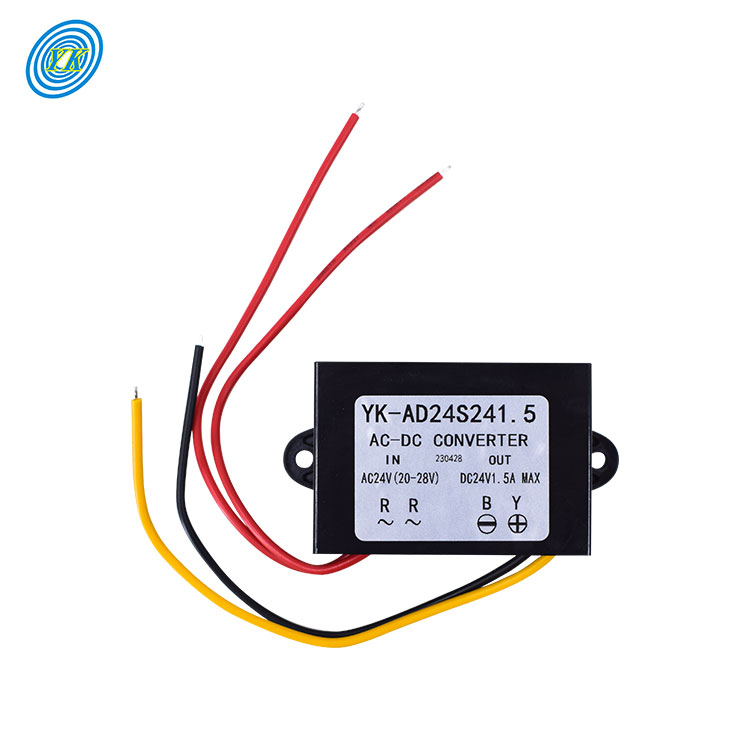
AC 24V to DC 5V 3A Buck Converter Voltage Regulator Module
- Input NominalAC 24V (16V–28V Range)
- Output V/ADC 5V @ 3.0A Constant
- ApplicationAutomotive & Security
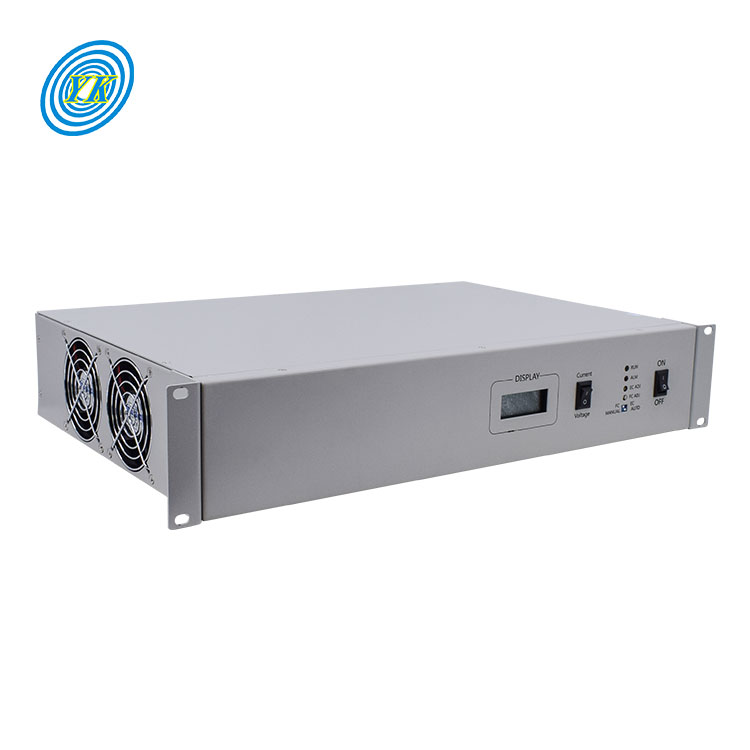
System Rectifier 110VAC to 24VDC 10A–100A Switching Supply
- Output Scaling10A to 100A Adjustable
- ArchitectureHigh-Frequency SMPS
- Integration19-Inch Rack / Standalone
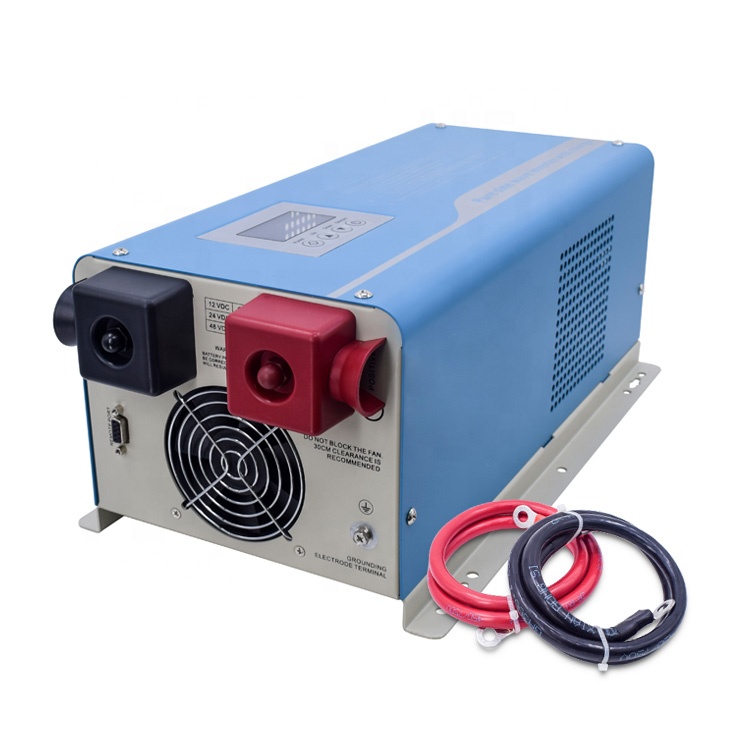
YUCOO Toroidal Pure Sine Wave Inverter 1500W 12V to 220V
- TransformerHigh-Efficiency Toroid
- Surge Peak3000W (Inductive Handling)
- Idle Current<0.6A Low-Loss Standby
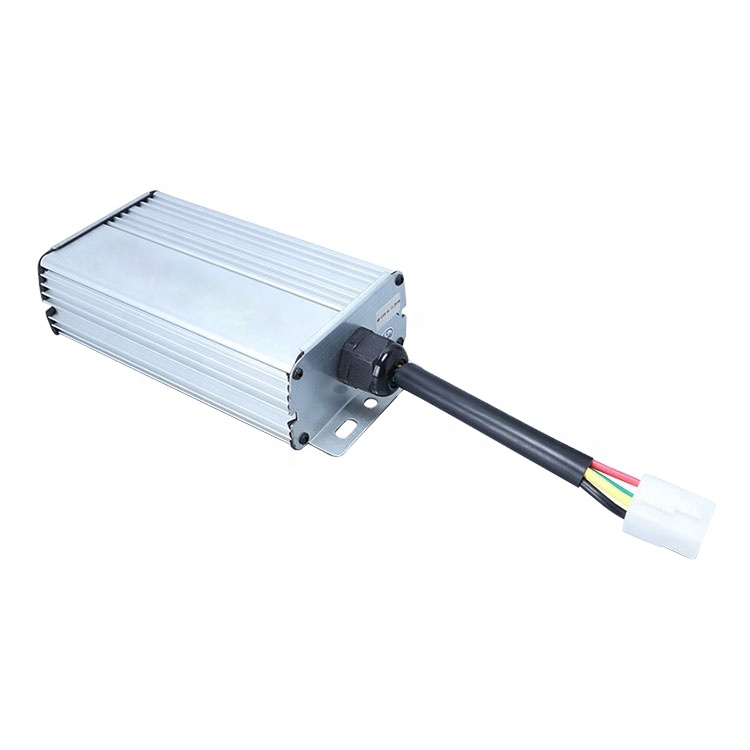
Isolated Wide Input 48V/60V/72V to 24V DC Step-Down Converter
- Isolation1500VDC Galvanic Barrier
- Wide Voltage36V–90V Dynamic Input
- ChassisExtruded Aluminum Heat-sink
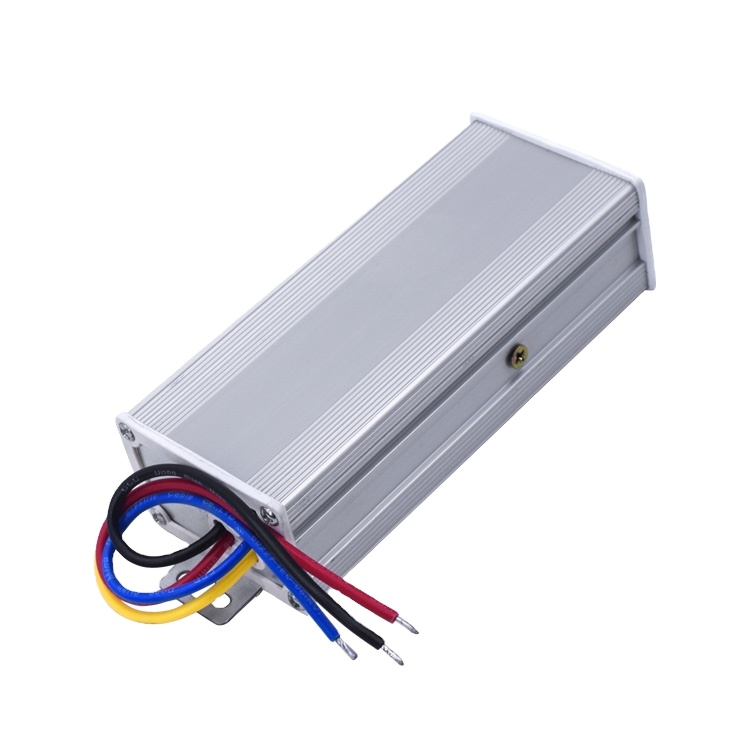
Isolated DC-DC 48V/72V/96V Input to 24V 2.5A Fleet Converter
- Surge VoltageHandles Spikes to 120V
- ComplianceECE R10, EN 50155 Ready
- CoolingPassive Free-Air Convection

YUCOO Automatic Buck-Boost 9–34V to 12V 35A/40A DC Regulator
- RegulationSeamless Buck-Boost Switch
- Power AmpsUp to 40A Continuous Drive
- EfficiencySynchronous Rectification
Top 10 Variable Power Supply Factories & Suppliers
A deep-dive technical evaluation of global leaders in programmable DC/AC power systems, laboratory bench units, and industrial conversion modules for international procurement executives.
1. Varnix Technology / YUCOO
Headquarters: Guangzhou, China | Founded: 2003
Specialized in robust high-frequency switching architectures, wide-input DC-DC industrial converters (isolated & non-isolated), custom telecommunication rectifiers, and high-wattage pure sine wave inverters. Known for outstanding OEM agility, rapid prototyping, SGS onsite verification, and overseas US warehouse distribution logistics.
2. Keysight Technologies
Headquarters: California, USA | Domain: Precision T&M
The premier global standard in ultra-low-noise programmable DC sources, high-precision semiconductor test arrays, and battery emulation hardware. Offers nano-ampere current resolution, wide dynamic range, and sophisticated graphical analysis suites tailored for R&D labs.
3. Chroma ATE
Headquarters: Taiwan | Domain: EV & Grid Simulators
World-renowned for regenerative grid simulators, high-power programmable AC/DC power supplies, and automated test systems (ATE). Chroma equipment dominates electric vehicle powertrain validation, battery pack life-cycle testing, and multi-megawatt solar inverter compliance evaluation.
4. EA Elektro-Automatik
Headquarters: Viersen, Germany | Domain: SiC Energy Recovery
Pioneers in high-density autoranging programmable DC power supplies and bidirectional regenerative electronic loads utilizing Silicon Carbide (SiC) power semiconductors. Boasts energy turnaround efficiencies exceeding 96%, substantially cutting thermal rejection costs in cleanroom installations.
5. TDK-Lambda
Headquarters: Tokyo, Japan | Domain: Industrial SMPS
Famous for the Genesys™ and Z+ series of ultra-compact programmable DC supplies. Renowned for mission-critical industrial durability, low-ripple rack mounts, medical safety compliance (IEC 60601), and consistent mean-time-between-failures (MTBF) rates across decades of continuous operation.
6. Rohde & Schwarz
Headquarters: Munich, Germany | Domain: RF Power Instrumentation
Benchmark producer of specialized power supply units optimized for wireless communication, RF semiconductor evaluation, and ultra-fast transient current measurement. Features linear regulation stages with minimal electromagnetic interference (EMI) and micro-ampere precision readouts.
7. GW Instek
Headquarters: New Taipei, Taiwan | Domain: Benchtop Instrumentation
A staple in educational institutions, engineering prototyping labs, and electronic manufacturing services (EMS) testing cells. Offers broad lineups spanning linear, switching, multi-channel, and programmable AC/DC power platforms with exceptional cost-to-performance metrics.
8. ITECH Electronic
Headquarters: Nanjing, China | Domain: High-Density Automated Systems
Rapidly expanding provider of high-density bidirectional programmable DC sources, matrix test frames, and grid emulators. Widely specified in Asian battery manufacturing hubs and aerospace component test chambers due to rugged packaging and versatile programming APIs.
9. B&K Precision
Headquarters: California, USA | Domain: Production Quality Control
A stalwart in dependable analog and digital variable bench power supplies. Features versatile linear and switching topologies, high current output options, and intuitive hardware knob interfaces for hands-on production rework benches and educational institutions.
10. Mean Well Enterprises
Headquarters: New Taipei, Taiwan | Domain: Standard Power Modules
The volume juggernaut of standard industrial din-rail, open-frame, and variable rack-mount power modules. Provides global availability, extensive regulatory certificates, and highly reliable baseline DC supplies widely chosen for turnkey automation projects.
Variable Power Supply Architecture Comparison
Understand the structural differences between Linear, Switching, and Wide-Bandgap (SiC/GaN) topologies to align converter selection with electrical stress parameters.
| Topological Classification | Typical Efficiency | Ripple & Noise (mVp-p) | Dynamic Transient Response | Power Density (W/in³) | Primary Industrial Use-Case |
|---|---|---|---|---|---|
| Linear Regulated (Series Pass) | 35% – 50% | < 0.5 mVp-p (Ultra-Clean) | < 20 µs (Instantaneous) | 0.5 – 1.2 | Audio circuitry, RF transceivers, ultra-sensitive analog R&D |
| High-Freq Switching (Standard PWM) | 85% – 92% | 10 – 50 mVp-p (Filters Req.) | 150 – 500 µs | 5.0 – 12.0 | Telecom rectifiers, heavy automotive test, plating, fleet DC-DC |
| SiC / GaN Wide-Bandgap Switching | 95% – 98.5% | 5 – 25 mVp-p (High Bandwidth) | 50 – 100 µs | 25.0 – 40.0+ | EV battery emulation, bidirectional energy recovery, aero systems |
| Toroidal Magnetic Inverters | 88% – 94% | THD < 3% (True Sine) | Self-Regulating Inertia | High Thermal Mass | Off-grid motors, inductive pumps, telecom remote base stations |
| Resin-Encapsulated DC-DC (IP67) | 92% – 96% | < 30 mVp-p | 100 – 200 µs | High Shock Ruggedness | Marine vessels, electric trucks, outdoor solar lighting, Starlink |
Key Technological Trends Shaping Variable Power Systems
Power conversion engineering is experiencing fundamental paradigm shifts driven by wide-bandgap semiconductors, software-defined telemetry, and high-efficiency bidirectional topologies.
Wide-Bandgap (SiC & GaN) Integration
Silicon Carbide (SiC) and Gallium Nitride (GaN) switching components have drastically lowered conduction and switching losses. Modern variable power supplies operate at switching frequencies 5 to 10 times higher than older silicon MOSFET designs, allowing magnetics to shrink by over 60% while elevating thermal limits.
Bidirectional & Regenerative Topologies
Traditional variable power supplies dissipated excess absorbed power as resistive heat. Contemporary suppliers have shifted to four-quadrant bidirectional systems that invert power back into the local AC grid at >94% efficiency, drastically lowering cooling expenditures during life-cycle battery cycling and motor burn-in tests.
Software-Defined Control & Remote Telemetry
Purely analog potentiometer control has given way to ARM Cortex-based digital signal processors (DSP). Real-time operating firmware supports multi-bus telemetry including CANopen, Modbus-RTU, SCPI over Ethernet, and USB-C programmability, allowing integration into automated cloud-monitored manufacturing cells.
Global Procurement Trends in Industrial Power Conversion
Procurement departments are moving beyond basic per-unit price tags to evaluate Total Cost of Ownership (TCO), supplier audit verifiability, and regional supply chain redundancy.
1. Dual-Sourcing & Regional Buffers
Global supply chain volatility has prompted North American and European tier-1 OEMs to partner directly with certified Chinese manufacturing facilities possessing established overseas fulfillment hubs (e.g., Varnix US warehouse) to bypass ocean freight lead-time spikes.
2. Full-Load Automated Burn-In Verification
Buyers now demand verifiable proof of 100% full-load thermal burn-in before export packaging. Screening out Infant Mortality Failures in power semiconductors before customs dispatch is now an indispensable requirement written into B2B contracts.
3. Stringent Environmental & Safety Compliance
Procurement teams require comprehensive material disclosure statements confirming ISO 9001:2015, CE (LVD/EMC), RoHS, and FCC compliance. Factory audits carried out onsite by independent verification bodies like SGS have become mandatory for preferred vendor status.
4. Custom Mechanical & Electrical Modularity
Standard off-the-shelf power supplies often fail to meet exact physical enclosure limitations. Direct factory OEM/ODM engineering teams that can customize step-down voltage profiles, specialized connectors, and proprietary housing extrusions are capturing significant market share.
Why Engineering Procurement Teams Partner with Varnix
Since 2003, Varnix Technology Co., Ltd. (YUCOO) has delivered specialized power electronics built on stringent quality management systems and verified manufacturing processes.
Our 1,229 m² production facility in Guangdong, China, has undergone complete onsite assessment by SGS Group, verifying production capacity, workshop machinery, worker headcounts, and clean assembly lines.
Every manufacturing stage follows ISO 9001:2015 standards, including strict Incoming Quality Control (IQC), in-process PCB soldering checks, oscilloscope waveform verification, and final Quality Assurance (QA) sign-off.
To eliminate overseas logistics bottlenecks for high-demand DC-DC step-down converters and Starlink-compatible power supplies, select models are stocked in our US warehouse facility for rapid domestic dispatch.
From custom voltage ratios (e.g. 72V/84V/96V down to 24V or 12V) to custom IP67 waterproof aluminum chassis, our in-house R&D engineering team produces prototypes within rapid turnaround schedules.
Zero units leave our facility without undergoing continuous full-load electrical burn-in testing on dedicated aging racks, ensuring maximum real-world reliability across demanding operating environments.
Backed by an average response rate of 98.2%, our technical sales engineers provide direct consultation regarding application schematics, pinout mapping, and international compliance documentation.
Frequently Asked Questions for B2B Sourcing
Detailed technical answers to common queries regarding variable power supplies, transient testing, galvanic isolation, and custom OEM manufacturing.
What is the practical engineering difference between linear and switching variable power supplies? +
Linear power supplies function by dropping excess voltage across a transistor operating in its active/linear region. This delivers virtually zero electromagnetic interference (EMI) and exceptionally low output ripple (often <1 mV RMS), making them indispensable for sensitive RF, medical analog circuits, and audio preamps. However, they suffer from low electrical efficiency (often 35–50%) and require heavy transformers and bulky heatsinks.
Switching power supplies (SMPS) convert power by driving semiconductors rapidly between saturation (fully ON) and cutoff (fully OFF) using pulse-width modulation (PWM) or resonant topologies at high frequencies (typically 50 kHz to >1 MHz). This achieves efficiencies between 85% and 96%, dramatically reducing weight and volume. High-frequency switching does produce switching ripple and EMI, which requires integrated input/output LC filter stages and EMI shielding.
Why is Galvanic Isolation critical in vehicle and industrial DC-DC converters? +
Galvanic isolation introduces an electrical separation between the input circuit and the output circuit, typically accomplished using a high-frequency transformer barrier. In industrial vehicles (forklifts, hybrid trucks, rail transit), high-voltage batteries (48V, 72V, 96V, or higher) regularly encounter severe inductive voltage spikes, load dumps, and electrical ground noise from traction motors.
An isolated DC-DC converter prevents hazardous high-voltage transients from crossing over into sensitive auxiliary systems (CAN-bus controllers, GPS trackers, communications gear). It also eliminates ground loops, guaranteeing personal safety and preventing return-path voltage drops across vehicle chassis.
How should engineering buyers calculate startup surge requirements for pure sine wave inverters? +
When driving inductive loads (such as refrigeration compressors, air conditioning pumps, or industrial power tools), the startup inrush current can spike to 3 to 7 times the continuous rated operating wattage for several cycles. For instance, a 500W compressor may draw 2,500W to 3,000W during initial rotor lockup.
Procurement teams should verify the inverter’s peak surge capacity (typically rated for 2 to 5 seconds) and verify whether it utilizes a toroidal transformer. Toroidal core inverters offer higher magnetic saturation limits and superior instantaneous thermal inertia compared to lighter high-frequency MOSFET stages alone.
What are the minimum order quantities (MOQ) and lead times for custom OEM/ODM orders? +
Standard catalog products (including standard 12V to 24V converters, pure sine wave inverters, and benchtop rectifiers) typically maintain an MOQ starting at 1 to 10 units for testing and verification, with standard catalog units in US warehouses dispatching within 2 to 3 business days.
Custom OEM/ODM projects involving custom voltage steps, specific ingress protection enclosures (IP67/IP68), private label branding, and custom pinouts generally require an initial trial MOQ of 50 to 200 units depending on housing extrusion tooling. Tooling and prototype fabrication typically require 15 to 25 business days, followed by scheduled volume container shipments under standard FOB/CIF/DDP incoterms.
How does Varnix prevent early semiconductor failure during mass production? +
To eliminate early failures, our SGS-audited factory subjects 100% of manufactured power units to an automated 5-step QA workflow: First, incoming component inspection (IQC) verifies semiconductors and passive capacitors. Second, automated and skilled PCB assembly lines execute verified soldering procedures. Third, initial electrical functionality testing is performed.
Fourth, every batch is transferred to dedicated thermal aging test racks where they run under 100% full electrical load for 4 to 12 hours. Finally, post-burn-in oscilloscope waveform verification, insulation hipot dielectric testing, and cosmetic QA checks are performed before packaging.
Request the 2025 Variable Power Supply Engineering White Paper & Master Catalog
Connect directly with Varnix Technology's power electronics engineering team for direct factory pricing, step-down/boost customization schematics, and comprehensive OEM/ODM trade support.