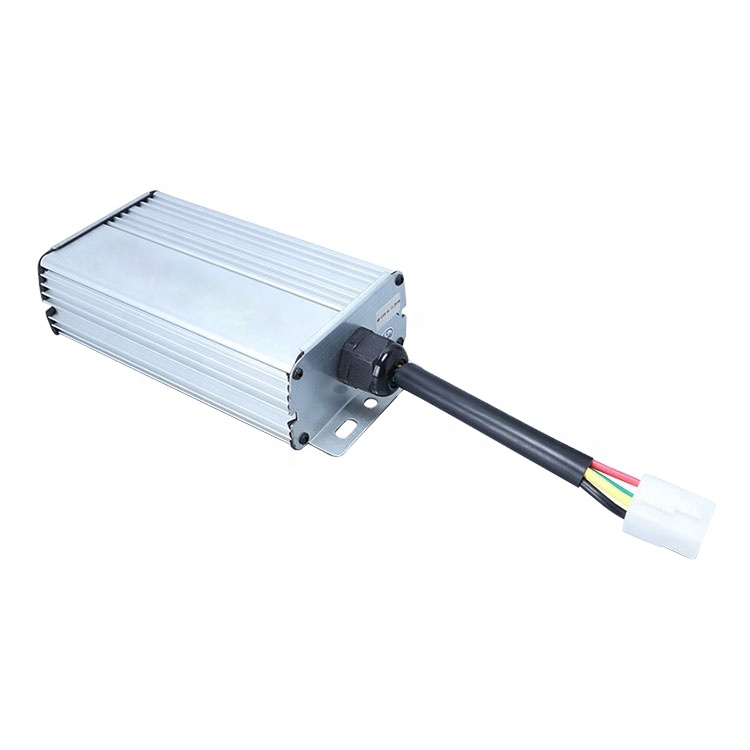
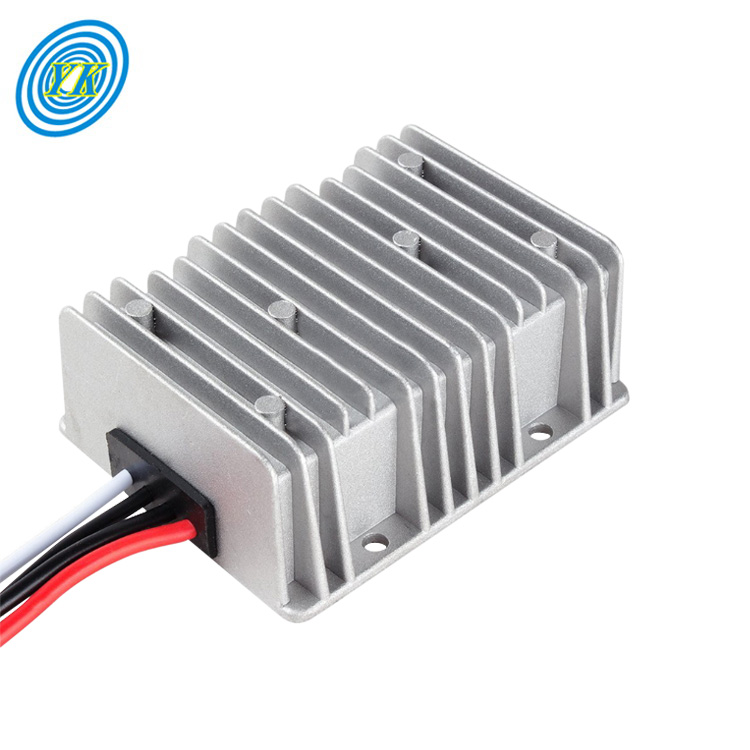
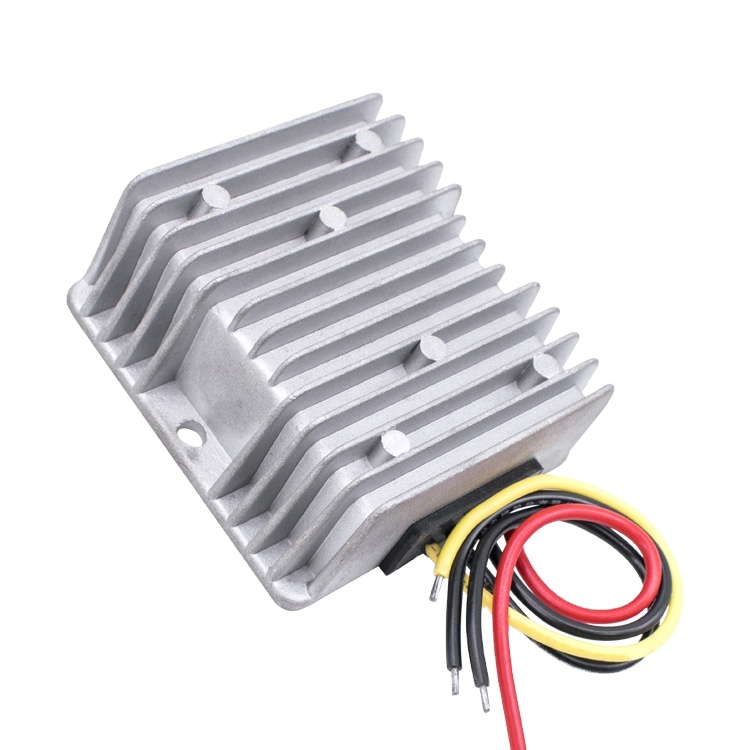
Isolated 72V 60V 48V to 24V DC Step Down Buck Converter
- Input Voltage: 36V–90VDC Wide Range
- Output Voltage: 24VDC Regulated
- Galvanic Isolation: 1500VDC Dielectric
- Protection: OVP / OCP / SCP / OTP
Engineered for low THD, ultra-wide DC input windows, and rugged thermal endurance. Select standard field-tested models or request customized PCB layout and housing configurations.
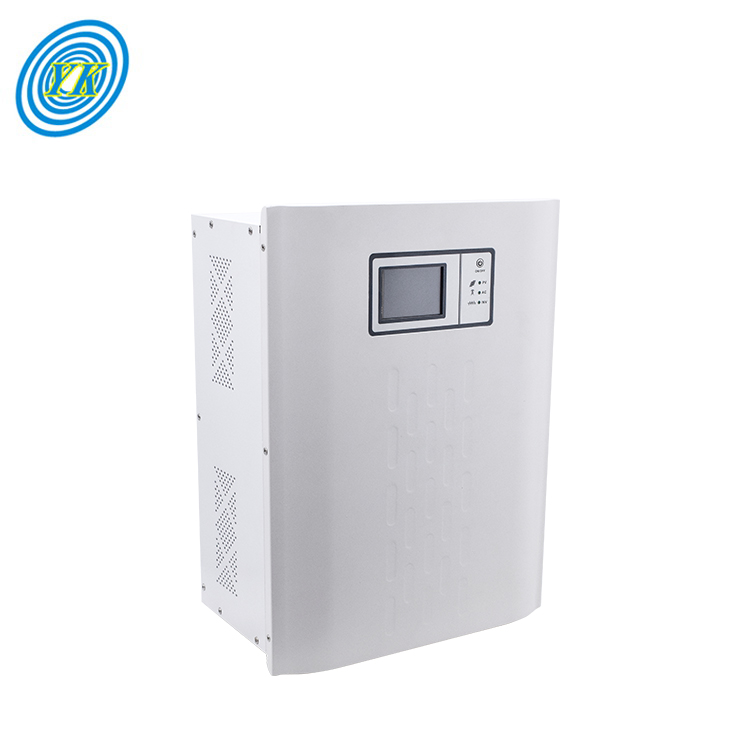
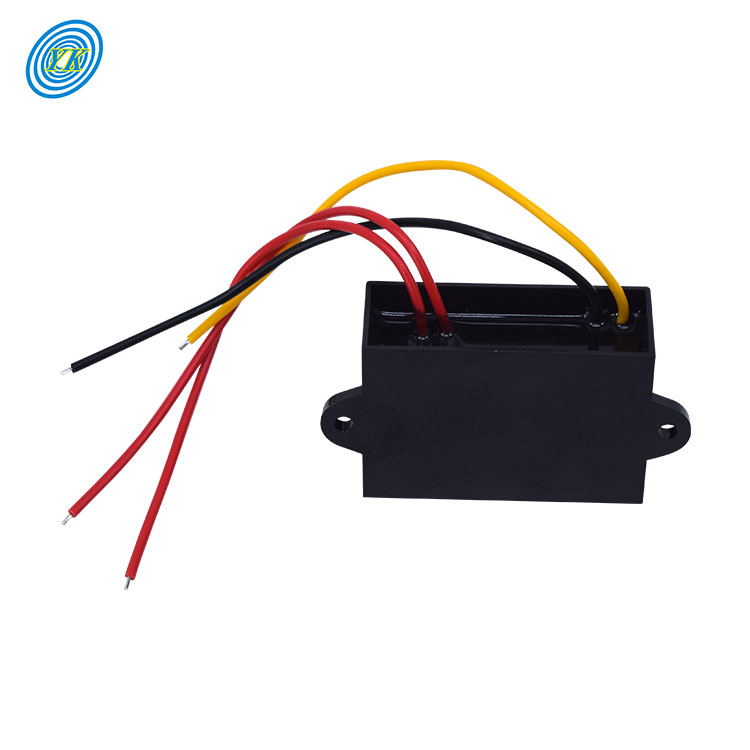
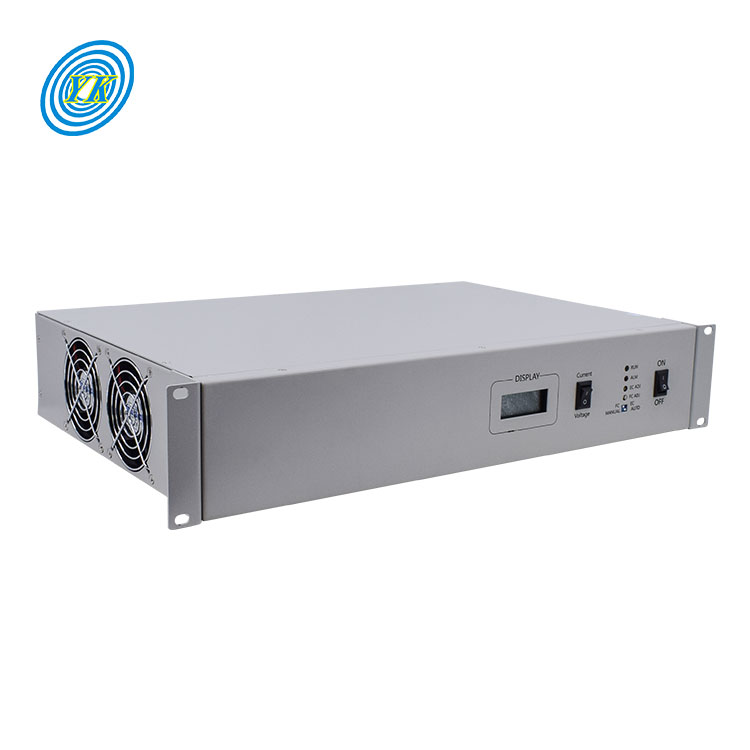
Understanding the critical shift toward distributed high-density power delivery, wide-bandgap semiconductors, and intelligent remote telemetry in 5G base stations and remote radio heads (RRH).
Modern telecom DC plants demand switching frequencies exceeding 150kHz. By adopting Gallium Nitride (GaN) and Silicon Carbide (SiC) switches, our modular rectifiers eliminate reverse-recovery losses, slashing thermal dissipation by 38% and unlocking true 96.8% ultra-peak efficiency across varying operational loads.
Telecom towers endure lightning surges, ground potential shifts, and aggressive electromagnetic interference (EMI). Incorporating 1500VDC to 3000VDC high-frequency galvanic transformers guarantees absolute ground segmentation between the sensitive optical baseband units (BBU) and raw DC bus architectures.
Zero unplanned downtime is mandatory for Tier-4 telecom hubs. Modular rectifier subracks allow hot replacement of individual 50A power cartridges without dropping bus voltage or disrupting active cellular traffic, maintaining continuous MTBF performance metrics exceeding 350,000 operational hours.
Preventing sub-voltage lockouts during peak 5G traffic requires accurate calculation of voltage drop over remote DC feeder cables. Use our field-proven equation during procurement:
Where L = one-way distance (m), I = max current draw (A), ρ = copper resistivity (0.0175 Ω·mm²/m), and A = conductor cross-section (mm²).
| Topological Dimension | Legacy Phase-Controlled Rectifiers | Standard Switch-Mode Power Supply (SMPS) | Varnix High-Density LLC Resonant Telecom PSU |
|---|---|---|---|
| Conversion Efficiency | 78% – 84% | 88% – 91% | 95.5% – 96.8% (Titanium Class Equivalent) |
| Power Factor (PFC) | 0.70 – 0.82 (High harmonics) | > 0.95 active PFC | > 0.99 Active Digital Power Factor Correction |
| Output Ripple & Noise | > 250mVp-p | < 100mVp-p | < 30mVp-p (Meets Strict ETSI Telecom Specs) |
| Telemetry Protocols | Analog Dry Contact Only | RS232 / Modbus RTU | SNMPv3, Modbus TCP/IP, CANBus, Web Interface |
| Operating Temp Range | -10°C to +45°C | -20°C to +50°C | -40°C to +75°C (Derating above 60°C) |
The convergence of 5G microcell densification, edge computing, and hybrid renewable energy plants is redefining global procurement criteria for telecom power components.
Procurement teams are shifting away from grid-dependent architectures toward multi-input plants capable of blending high-voltage solar inputs (150V–450VDC) directly with standard utility power and battery storage to slash operating costs.
Legacy float/trickle charge profiles built for valve-regulated lead-acid (VRLA) batteries are being replaced by smart BMS-integrated CAN protocol charging capable of multi-stage dynamic high-current lithium recovery.
As base stations occupy shared rooftop spaces and compact street furniture, power supplies must migrate from massive 6U enclosures down to high-power-density 1U/2U rack packages delivering up to 30W/inch³ power density.
B2B tenders now mandate life-cycle TCO evaluations over 10-year spans. A 2% uptick in converter conversion efficiency yields massive energy savings, covering the capital equipment expense within the first 18 months of continuous field runtime.
Direct manufacturer capabilities verified onsite by SGS. We combine comprehensive internal component manufacturing with strict ISO 9001:2015 quality control processes.
Established in 2003 in Guangdong, China, we operate 10+ dedicated modern assembly lines spanning over 1,229 m² of verified production space. Our veteran engineering staff oversees every phase from magnetic transformer winding to SMT PCB placement.
We eliminate early-stage component infant mortality by subjecting every single production unit to severe aging cycles under elevated temperature and full electrical load. All waveform characteristics and thermal parameters are verified using calibrated digital oscilloscopes.
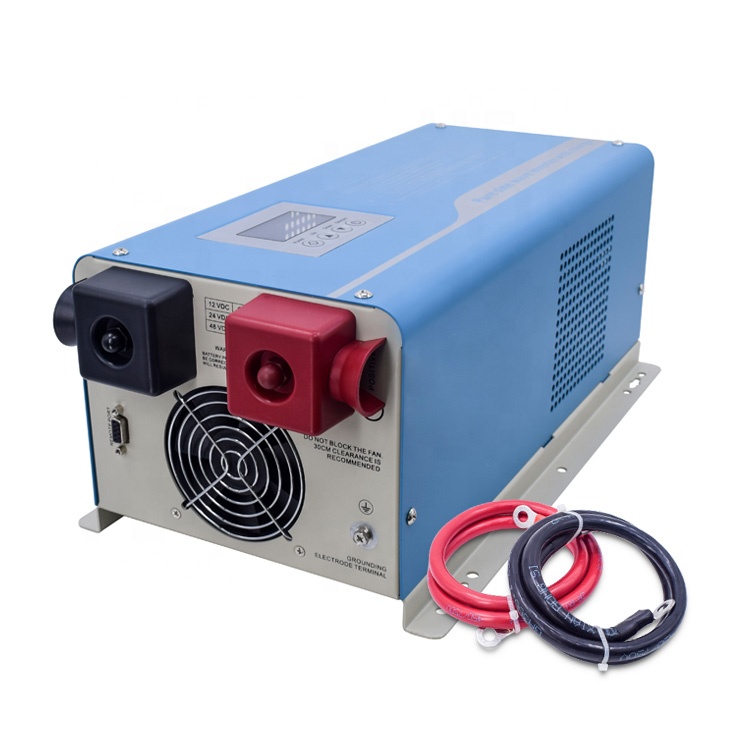
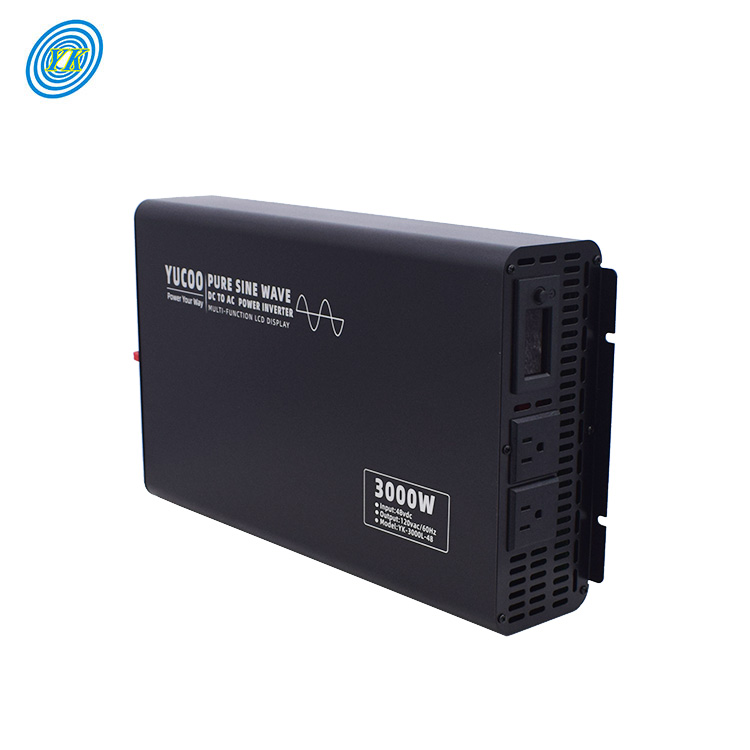
To eliminate overseas supply chain friction, we maintain localized buffer inventories of popular DC-DC converters and inverters in our dedicated United States overseas warehouse, enabling rapid domestic order dispatch alongside international FOB, CIF, DDP, and EXW shipments.
From custom DC voltage rails (such as negative -48VDC to regulated 13.8VDC or 30VDC Starlink arrays) to unique mechanical rack-mount housings, customized front plates, and custom firmware control loops, our R&D team turns CAD sketches into verified prototypes within weeks.
Every commercial power conversion series is engineered in strict compliance with international EMC/safety directives, carrying authenticated CE, RoHS, and FCC test documentation issued by accredited test laboratories for hassle-free customs clearance and deployment.
Our dedicated technical account engineering team maintains an audited 98.2% rapid response rate. We back all commercial manufacturing contracts with definitive warranties, clear traceability, and transparent multi-currency transactional integrity.
Clear, direct technical answers addressing input isolation, efficiency, OEM specifications, and international logistics.
Isolated DC-DC converters utilize a high-frequency transformer to physically separate the electrical input circuit from the output rail, preventing direct electrical conduction (providing 1500VDC+ galvanic isolation). This configuration is critical in negative 48VDC telecom plants to suppress ground loops, prevent common-mode electrical noise from reaching sensitive digital logic circuits, and eliminate lightning surge propagation. Non-isolated converters share a common negative ground, offering higher efficiency and compact footprints, but are only recommended for onboard auxiliary circuits where ground potential differences cannot occur.
-48VDC was historically established to mitigate electrochemical galvanic corrosion on underground copper transmission lines and metal grounding structures. With the positive (+) terminal grounded, negative potential preserves conductors from accelerated oxidation caused by moisture and stray earth currents. Furthermore, 48VDC falls comfortably below the 60VDC safety ceiling defined by international safety standards (SELV - Safety Extra Low Voltage), safeguarding installation crews from electrocution risks without sacrificing power transmission efficiency over long cable runs.
Yes. Our in-house hardware engineering team provides comprehensive OEM/ODM design services. Whether your network requires step-up conversions for high-draw Starlink remote satellite terminals (12V/24V to 30V or 57V), specialized 13.8VDC land mobile radio communications repeaters, or wide-input 36V–90VDC custom industrial modules, we can customize input ranges, circuit layouts, dynamic current limits, and custom conformal coatings for extreme environments.
Our quality assurance protocol follows five rigorous validation phases: (1) Incoming component screening against pre-approved vendor databases, (2) In-process automated SMT and precision manual assembly checks, (3) Initial electrical function and safety parameter verification, (4) 100% full-load thermal burn-in aging in controlled ovens to eliminate infant component failure risks, and (5) Final precision multimeter, high-voltage isolation (Hi-Pot), and oscilloscope waveform distortion checks before export crating.
For standard catalog converters, inverters, and power supplies, our sample MOQ starts at 1 to 5 units, allowing engineers to conduct lab qualification before volume deployment. Volume OEM production runs featuring custom silkscreen branding, tailored voltage thresholds, and specialized wire harnesses typically maintain an initial MOQ of 50 to 100 units, with typical factory manufacturing lead times ranging from 15 to 25 business days. Quick-ship stocks are also dispatched directly from our US warehouse.
We work under all major international commercial terms including EXW, FOB, CFR, CIF, FCA, and full door-to-door DDP (Delivered Duty Paid). We accommodate payments in 8 global reserve currencies through secure bank wire transfers (T/T), Letters of Credit (L/C), or escrow frameworks. All manufacturing agreements feature legally binding defect warranties, complete component lot traceability, and comprehensive spare unit allowances for enterprise rollouts.
Connect directly with our senior power electronics engineering group to discuss electrical tolerances, thermal management constraints, custom enclosure design, and factory-direct volume pricing.
Contact Us