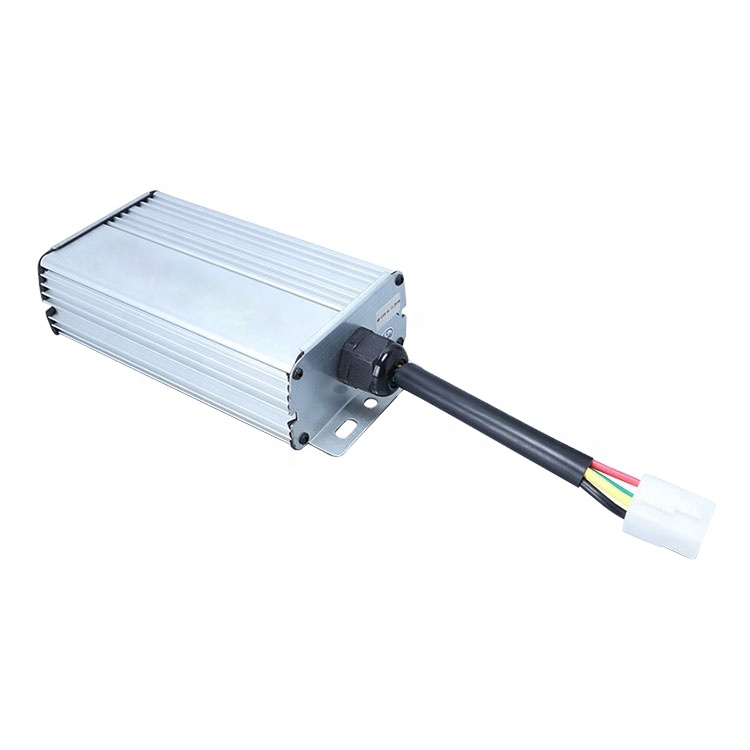
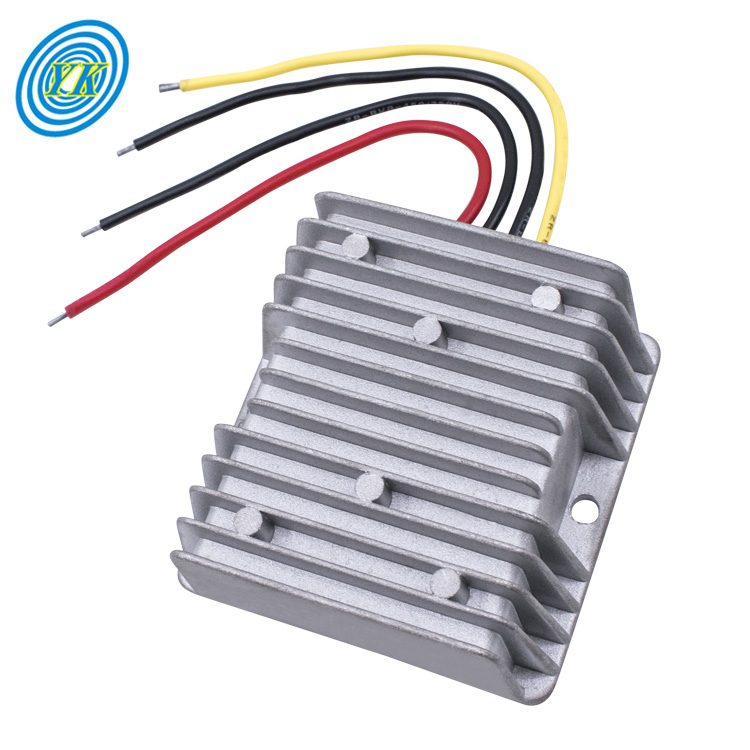
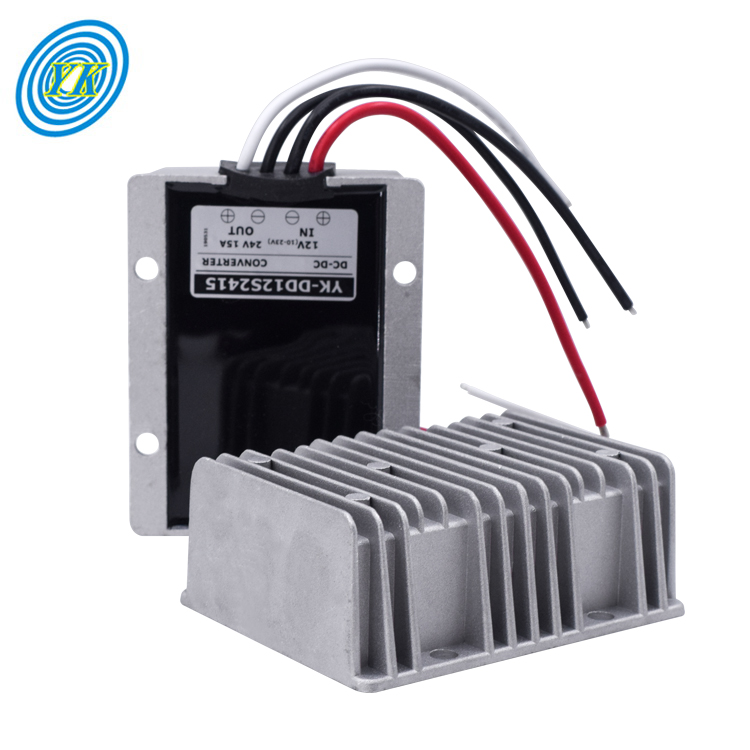
Isolated 72V/60V/48V to 24V Buck Converter
- TopologyGalvanic Isolation
- Input Range36V–90V DC Wide Range
- EfficiencyUp to 94.5%
- EnclosureAnodized Aluminum
A technical overview for systems architects, industrial buyers, and global distribution procurement officers navigating the energy transition.
Modern electrical deployments increasingly demand uncompromising power fidelity across variable load dynamics. From high-capacity telecommunication base transceiver stations (BTS) to sensitive marine navigation instrumentation, utility-grade photovoltaic plants, and modern automated vehicle fleets, the performance ceiling of voltage conversion hardware determines system longevity. As a verified ISO 9001:2015 accredited manufacturer founded in 2003, we design and produce galvanically isolated step-down buck regulators, dynamic buck-boost topologies, pure sine wave hybrid inverters, and high-density industrial rectifier systems engineered to eliminate harmonic distortion, manage thermal runaways, and sustain continuous MTBF exceeding 100,000 hours.
Procuring industrial-tier power electronics requires granular evaluation beyond nominal nameplate wattage. Sourcing teams must prioritize galvanic safety margins (often ≥1500V DC breakdown ratings), transient voltage spike absorption, ripple and noise attenuation (<30mVp-p), synchronous rectification architectures, and ingress protection (IP67/IP68 die-cast aluminum encapsulation). In an industry fragmented by low-tier re-assemblers, establishing direct partnerships with an asset-verified manufacturer ensures traceably certified semiconductors (including high-reliability MOSFETs and SiC diodes), custom coil winding, compliant EMC filtering, and exhaustive life-cycle burn-in verification.
Certified, application-tested hardware engineered for mission-critical deployments across harsh industrial, automotive, and off-grid conditions.
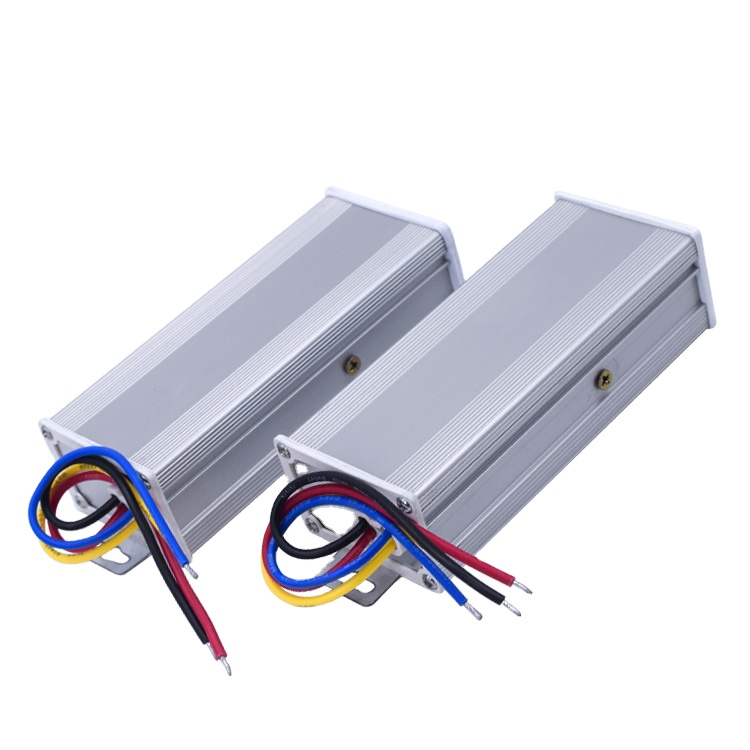
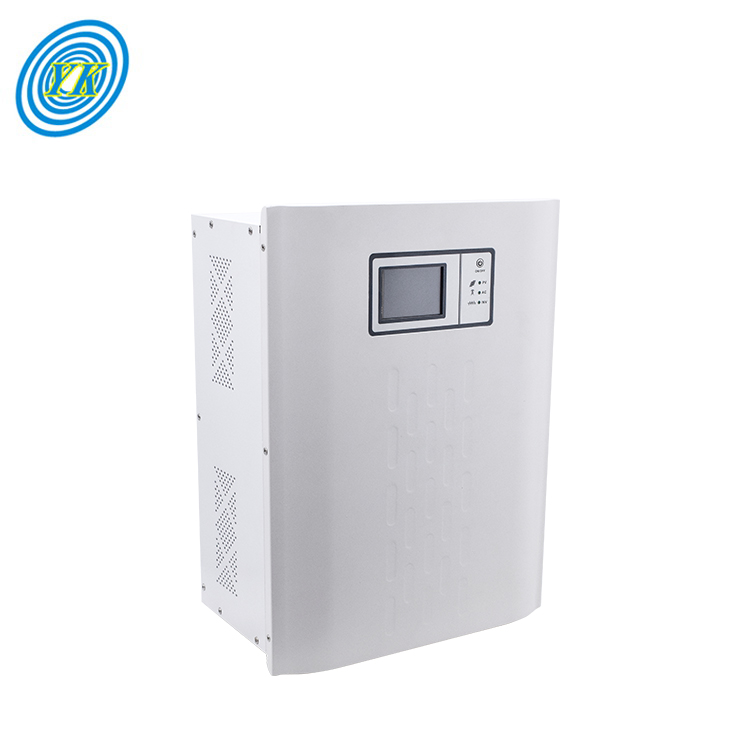
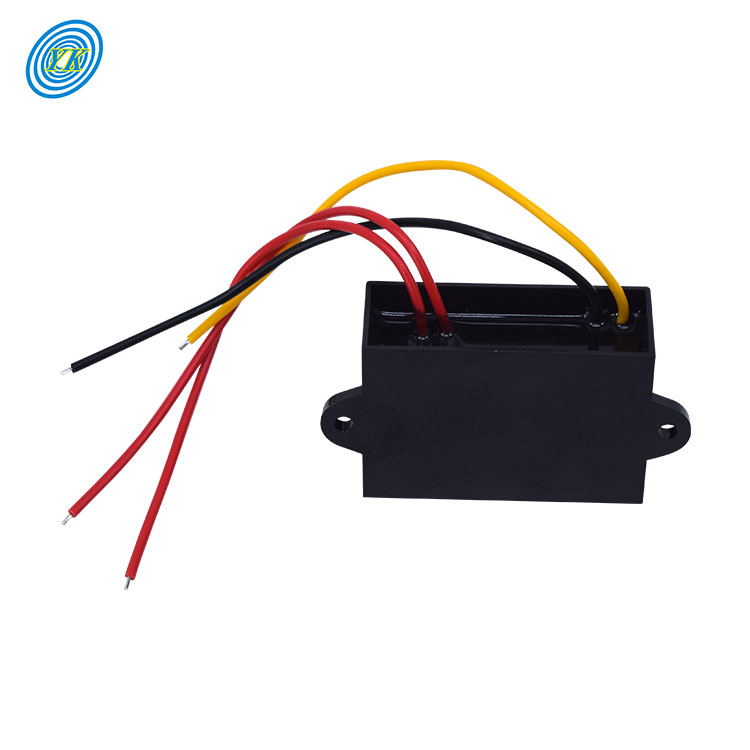

Combining vertically integrated manufacturing with verified export protocols to secure your global supply chain reliability.
Founded in 2003, our production infrastructure spans 1,229 m² of verified assembly facilities, comprising 10+ operational lines, precision PCB wave-soldering units, aging burn-in racks, and complete traceability under accredited quality systems.
We provide full design customization encompassing custom input/output voltage boundaries (down to 3.3V or up to 600V DC), custom current profiles, proprietary die-cast aluminum heatsink shells, unique CANbus/RS485 interfaces, and private-label packaging.
Accelerate fulfillment timelines via our US-based stocking distribution warehouse. Our export division expertly manages FOB, CIF, EXW, FCA, and DDP turnkey shipments with established customs clearance conduits across North America, Europe, and Oceania.
Field failures cost reputation and warranty capital. Every power conversion module undergoing our five-stage QA journey must withstand automated computerized function assessments followed by continuous thermal aging under maximum real-world load conditions.
Our converters, pure sine wave power inverters, and high-frequency charging platforms hold accredited CE, RoHS, and FCC certifications. Test documentation, dielectric breakdown certificates, and EMC chamber logs are provided transparently upon contract execution.
Maintain project timelines without friction. With an independently verified 98.2% responsiveness index, our technical team works in close synchrony with external systems integrators to quickly solve ground loops, EMI resonance, or bespoke terminal wiring needs.
Understanding shifting technical paradigms to future-proof procurement strategies across 2025–2030 industrial horizons.
The global power electronics industry is undergoing its most pivotal technological transformation in three decades, propelled by widespread electrification, renewable integration, and high-compute mobile field assets. Engineering and procurement teams must recognize several macro-level trends that distinguish legacy topologies from next-generation systems:
Traditional silicon MOSFET topologies face inherent physical ceilings concerning thermal saturation and switching frequencies (typically capped under 150kHz). The industrial transition to Gallium Nitride (GaN) and Silicon Carbide (SiC) semiconductors allows switching frequencies to surpass 500kHz–1MHz. For B2B procurement managers, this represents a transformative shift: magnetic passive components (transformers and inductors) shrink in physical footprint by up to 60%, conversion efficiencies routinely exceed 97%, and waste heat decreases proportionately. In high-density vehicle and telecom installations, this minimizes structural weight while significantly improving enclosure longevity.
Across data centers, modern commercial vehicle architectures, maritime systems, and mobile satellite terminals (e.g., Starlink constellation ground units), systems are aggressively discarding legacy 12V bus distributions in favor of standardized 48V DC systems. According to Ohm's Law (P = I²R), transmitting equivalent wattage at 48V instead of 12V reduces system amperage by 75%, resulting in a 93.75% reduction in resistive line loss. Consequently, high-efficiency 48V-to-12V, 48V-to-24V, and 48V-to-56V synchronous buck converters represent the fastest-expanding procurement line-item for global commercial infrastructure projects.
Passive convection cooling is displacing maintenance-heavy cooling fans across industrial automation and transportation segments. Exposed mechanical fans introduce vulnerability through airborne particulates, salt spray, moisture condensation, and bearing degradation. Enterprise buyers increasingly demand hermetically vacuum-potted topologies utilizing thermally conductive polyurethane or silicone elastomer compounds encapsulated in monolithic die-cast finned aluminum enclosures. This structural configuration delivers simultaneous benefits: complete moisture and dust exclusion (IP67/IP68), military-standard shock/vibration tolerance (MIL-STD-810H standards), and uniform heat spreading to outer convection surfaces.
| Converter Category | Primary Architecture | Peak Efficiency | Isolation Level | Ideal Field Application |
|---|---|---|---|---|
| Synchronous Buck (Step-Down) | Non-Isolated Synchronous Switch | 95% – 97.2% | Common Ground (Non-Iso) | Heavy Equipment (24V Truck to 12V Radios, In-Cab Telematics) |
| Galvanic Isolated Buck/Boost | Flyback / Forward Converter Transformer | 89% – 94.5% | >1500V DC Dielectric Barrier | Telecom Central Offices, Marine Systems, Mining High-Voltage Rails |
| Dynamic Four-Switch Buck-Boost | H-Bridge Seamless Transition | 93% – 96.0% | Non-Isolated Common Reference | Unstable Battery Buses, Automotive Cranking, Solar Float Charging |
| All-in-One Solar Hybrid Inverter | Pure Sine DC-AC + MPPT Stage | 92% – 95.0% | Full High-Frequency Isolation | Remote Off-Grid Stations, Border Security Posts, Telemetry Kiosks |
| Industrial Plating Rectifier | High-Frequency Switched SMPS | 90% – 93.5% | Secondary Galvanic Isolation | Heavy Electroplating, Electrolysis, Cathodic Protection, Anodizing |
Comprehensive answers addressing common questions regarding engineering margins, certification validation, and OEM batch contracting.