Featured Industrial Battery Chargers, Inverters & Converters
Tested for extreme maritime humidity, fluctuating tropical grids, and harsh sub-equatorial industrial ambient conditions. Directly manufactured in our ISO 9001:2015 accredited production facility.
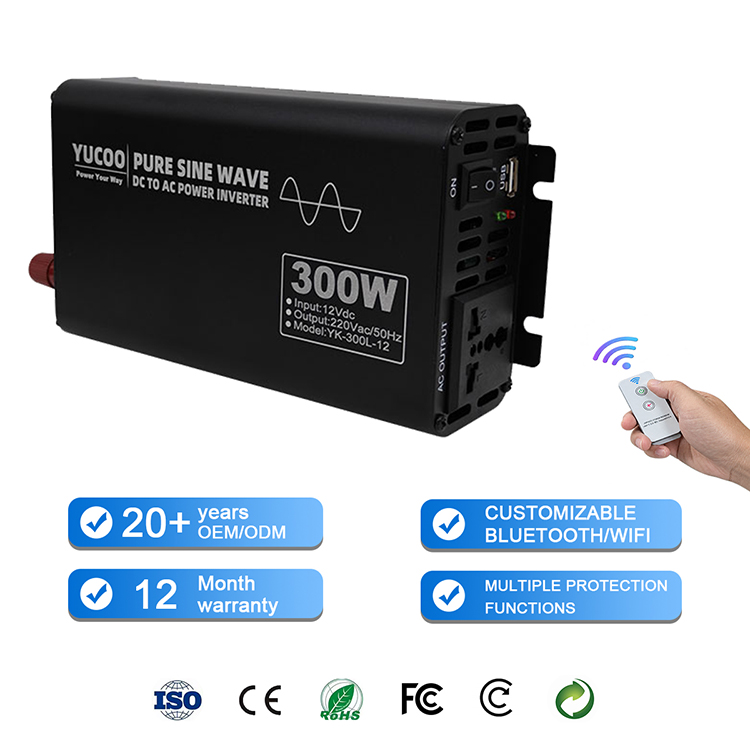
Portable Inverter 300W 12V/24V/48V Pure Sine Wave
- DC Input12V / 24V / 48V
- AC Output110V / 220V True Sine
- Efficiency> 91% Peak
- CoolingIntelligent PWM Fan
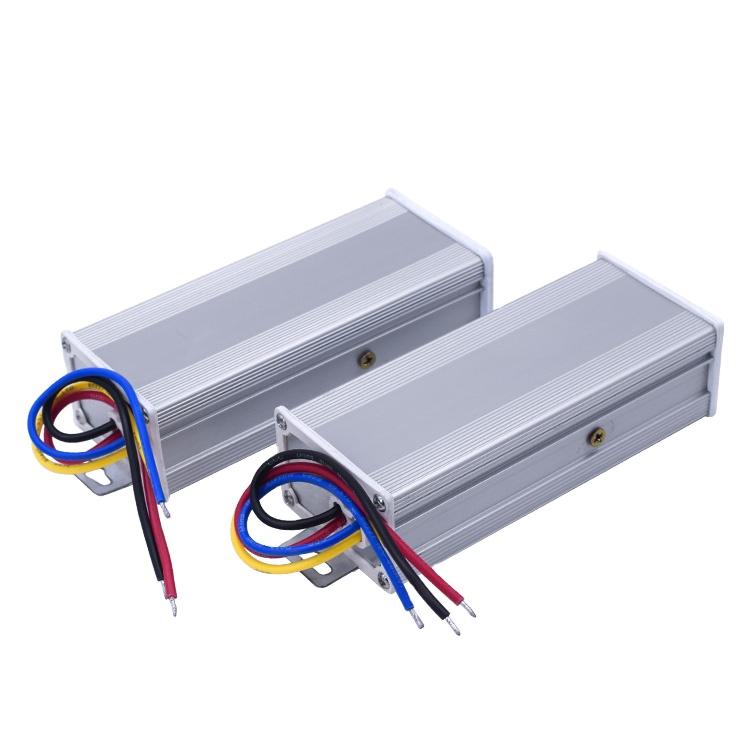
Isolated DC-DC 48V–96V to 12V 5A Step-Down Module
- Input Span48V / 60V / 72V / 96V
- Output Current12V @ 5A (60W)
- Dielectric1500VDC Isolation
- HousingSealed Cast Aluminum
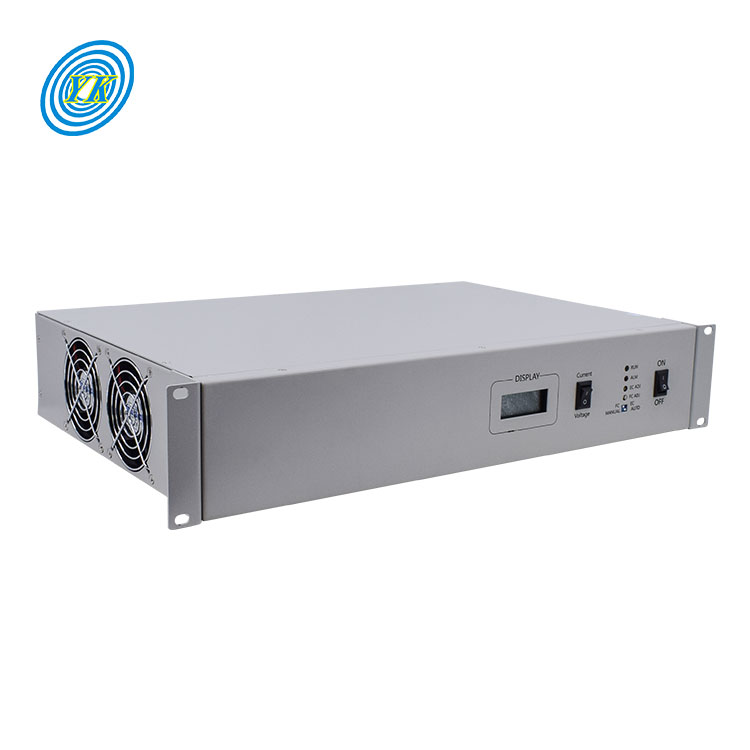
System Rectifier 110VAC/220VAC to 24VDC 10A–100A
- TopologyHigh-Frequency SMPS
- DC Output24VDC (10A–100A Adj.)
- FunctionFloat / Boost Auto Charge
- ProtectionOVP, OCP, OTP, Short
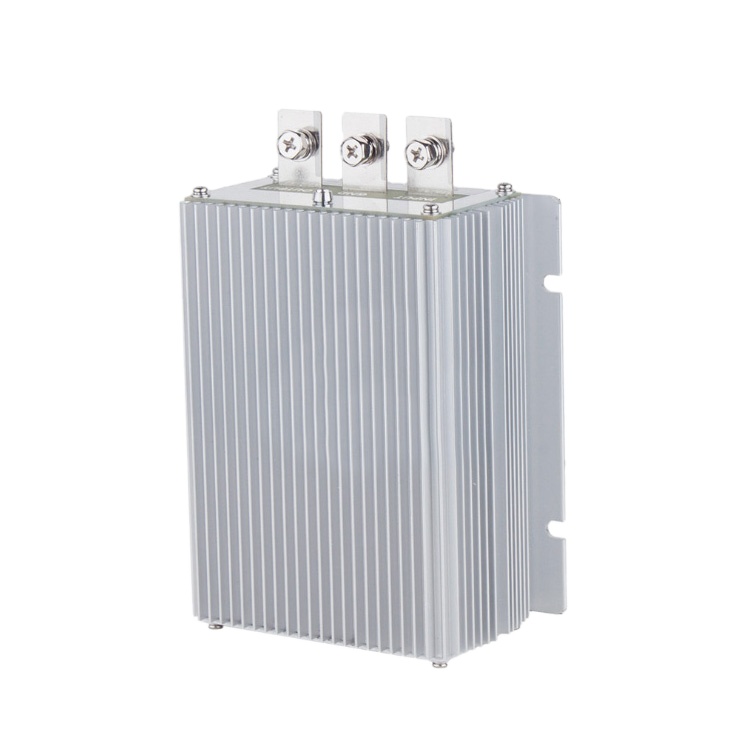
Waterproof 1440W 36V to 48V 30A Step-Up Converter
- Input / Output36VDC to 48VDC
- Max Current30A Continuous
- Ingress ClassIP67 Fully Potted
- Thermal Range-40°C to +85°C
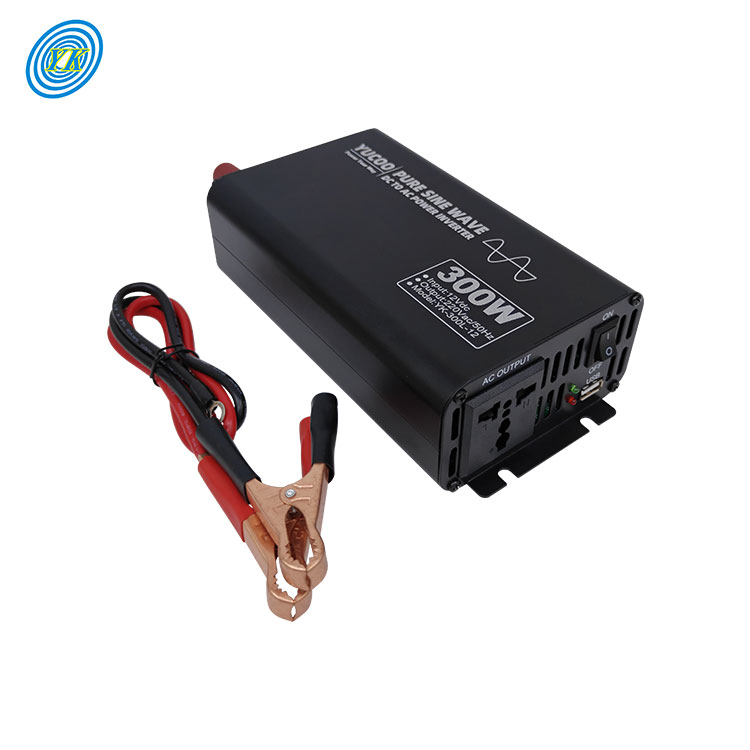
Pure Sine Wave Inverter 300W DC12V–72V to 220V
- DC Range12V / 24V / 48V / 60V / 72V
- AC Voltage220VAC / 240VAC 50Hz
- THD< 3% Linear Load
- RegulationMicrocontroller PWM
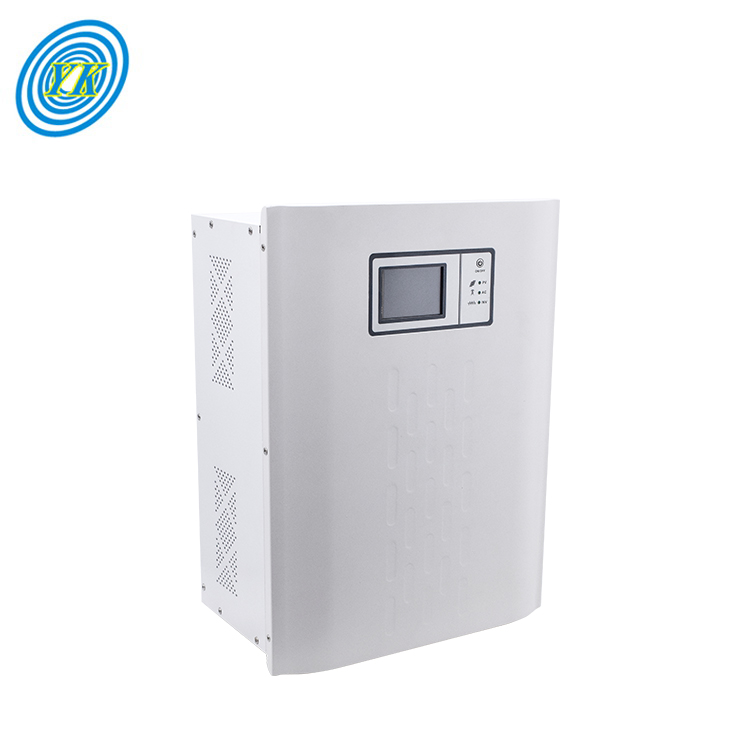
All-in-One Hybrid Solar Inverter & Charger 3KW 48V
- Output Power3000W Pure Sine
- Battery Bank48VDC (Lead / LiFePO4)
- Solar ChargeIntegrated 40A MPPT
- InterfaceLCD Multi-Data Console

Step-Down Buck Module 12V to 5V USB Bus Adapter
- Input Nom.12VDC (8V–22V)
- Output Bus5V USB Regulated
- EfficiencyUp to 96%
- ApplicationTelemetry & Cabin Aux
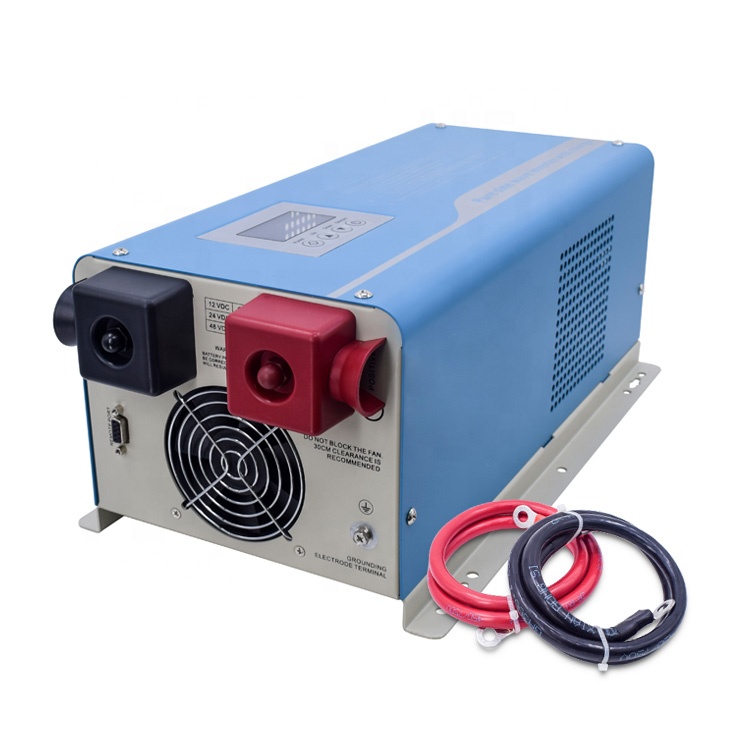
Toroidal Pure Sine Wave Heavy Inverter 1500W 12V
- Continuous1500W (Surge 4500W)
- TransformerLow-Loss Toroidal Core
- Inrush CapacityInductive Motor Load Ready
- Charge SupportAux AC Transfer Sync
Engineering Overview: Industrial Battery Charging Dynamics in Brunei Darussalam
Brunei Darussalam occupies a pivotal geographic and economic position along the northwest coast of Borneo. Anchored by world-scale offshore hydrocarbon production in the Belait district (Seria and Kuala Belait), heavy petrochemical refining at Pulau Muara Besar, and modern maritime corridors branching from Muara Port, the nation demands exceptionally reliable secondary DC power systems. An automatic battery charger manufacturer serving the Bruneian market must not merely supply standard rectifiers; it must engineer heavy-duty power electronics capable of handling demanding electrical duty cycles in severe equatorial coastal environments.
Industrial backup battery banks across Brunei—powering switchgear tripping circuits, emergency telecommunications towers, SCADA remote terminal units (RTUs), and offshore navigation aids—depend on continuous, precisely controlled electrochemical energy replenishing. Improper voltage regulation, excessive ripple, or inaccurate thermal compensation can shorten battery service life by 40% to 60%, particularly when ambient temperatures inside plant battery rooms or non-air-conditioned outdoor enclosures exceed 35°C with relative humidity constantly fluctuating between 80% and 98%.
As an established power conversion specialist established in 2003, Varnix Technology Co., Ltd. builds industrial-grade, fully automatic battery chargers and rectifier stations. By integrating high-frequency switch-mode power supply (SMPS) architectures, digital signal processor (DSP) closed-loop control, and galvanic isolation, our charging platforms protect critical lead-acid (flooded, AGM, Gel), Nickel-Cadmium (Ni-Cd), and modern Lithium Iron Phosphate (LiFePO4) energy storage arrays against thermal runaway, grid voltage transients, and irreversible sulfation.
Brunei's Equatorial Operating Realities & Thermal Physics
Operating power electronics within Brunei requires strict adherence to thermal management physics. Under the British Standard electrical framework adopted in Brunei (regulated by the Department of Electrical Services - DES, and safety monitored by SHENA), mains electricity operates at a nominal 240V single-phase / 415V three-phase 50Hz. However, industrial infrastructure situated near offshore supply bases or remote booster stations frequently encounters significant line-voltage sags, high-frequency harmonic feedback, and severe lightning-induced surges during the tropical monsoon seasons.
Our automatic industrial battery chargers employ ultra-wide AC input tolerances (typically 180V–275VAC for single phase, or 320V–460VAC for three-phase systems) and comprehensive Metal Oxide Varistor (MOV) surge suppression stages certified to IEC 61000-4-5 Class 4 standards. Furthermore, all internal printed circuit board assemblies (PCBAs) undergo automated conformal coating (MIL-I-46058C Class H compliant) to eliminate electrochemical corrosion, dendrite growth, and insulation breakdown caused by conductive airborne moisture and marine salt spray along the coastline.
Multi-Stage Microprocessor Control vs. Legacy Thyristor Charging Systems
For decades, traditional plants in Brunei relied on heavy, line-frequency 50Hz thyristor (SCR-based) battery chargers. While historically resilient, legacy thyristor chargers exhibit significant drawbacks: an intrinsically poor power factor (often 0.65 to 0.75), high total harmonic distortion (THD > 30%), slow dynamic step-response times (> 150ms), and high output voltage ripple that directly degrades battery plate chemistry and heats VRLA internal cells.
Varnix automatic battery chargers utilize a high-frequency full-bridge resonant converter topology operating at 50kHz to 150kHz. This design transition delivers substantial operational and financial advantages for Bruneian industrial buyers:
Active Power Factor Correction
Integrated APFC stages elevate system power factor to > 0.98, lowering apparent power draw from utility grids or captive diesel generator sets on offshore platforms.
Ultra-Low Ripple Architecture
DC output voltage ripple is maintained strictly below 0.5% RMS, preventing micro-cycling of battery internal cells and maximizing calendar life up to the rated 10–15 years.
Autonomous Multi-Stage Logic
Dynamic firmware switches automatically between Bulk (constant current), Absorption (constant voltage), Float, and Equalization modes with negative thermal coefficient tracking.
Dynamic Thermal Compensation Logic
Battery electrochemistry is fundamentally temperature-sensitive. The standard float voltage specified by battery cell manufacturers (such as 2.25V to 2.27V per cell for AGM at 25°C) must be dynamically adjusted when ambient temperatures rise. In Brunei's unconditioned telecommunication shelters or skid-mounted genset enclosures where temperatures regularly climb above 38°C, a static charger will chronically overcharge the cells, accelerating positive grid corrosion, electrolyte dry-out, and eventual thermal runaway.
Varnix automatic chargers feature real-time external temperature sensor inputs that continuously apply an active compensation gradient (typically -3mV to -5mV/°C/cell for lead-acid formulations). When ambient temperatures surge, the microcontroller lowers the terminal float voltage, keeping the float current within safe milliampere windows. Conversely, if temperature drops during rainstorms, voltage increases slightly to prevent incomplete recharge.
Engineering Matrix: Industrial Charger Series Parameter Comparison
To assist procurement engineers and electrical plant supervisors across Brunei Darussalam in selecting the optimal configuration, the following comparative matrix outlines key engineering parameters across our primary automatic charging and DC rectification platforms:
| Series Architecture | Nominal DC Voltages | Output Current Range | Conversion Topology | Target Battery Chemistries | Enclosure / Cooling |
|---|---|---|---|---|---|
| Compact Mobile Smart Charger | 12V / 24V / 36V / 48V | 10A – 30A | Resonant SMPS Flyback/Buck | AGM, GEL, Flooded, LiFePO4 | IP54 Aluminum / Convection |
| Industrial System Rectifier 24V/48V | 24VDC / 48VDC Bus | 20A – 100A Modular | Full-Bridge LLC Resonant | VRLA, OPzS, OPzV, LiFePO4 | 19-inch 2U Rack / Forced Fan |
| High-Power Industrial Rectifier | 110VDC / 220VDC Substation | 50A – 500A Parallel | Phase-Shift Full-Bridge (PSFB) | Industrial Ni-Cd, Flooded Lead-Acid | IP42/IP55 Floor Cabinet / Filtered |
| Submersible Heavy DC Converter | 12V, 24V, 48V Step-Up/Down | 30A – 60A Continuous | Synchronous Boost/Buck | Direct Bus Buffering | IP67 Anodized Potted Casing |
| Hybrid Solar MPPT Charger/Inverter | 24V / 48V Bank (220VAC In/Out) | 40A – 80A Solar + AC Dual | Bi-Directional High-Frequency | Deep-Cycle Solar Gel, Lithium LFP | IP31 Wall-Mount / Smart Aerodynamics |
*Note: All systems can be custom engineered for bespoke input voltages (e.g. 110VAC marine generators, 415VAC 3-phase industrial grids) and equipped with RS485 Modbus-RTU, CANbus, or SNMP network monitoring interfaces upon request.
Strategic Localization Trends in Brunei: Wawasan Brunei 2035 & Industrial Decarbonization
Under the national transformation roadmap of Wawasan Brunei 2035 (Brunei Vision 2035) and the operational mandates of the Brunei National Climate Change Policy (BNCCP), Brunei Darussalam is pursuing substantial operational efficiency, industrial automation, and low-carbon energy integration. These strategic macro-trends have directly reshaped procurement requirements for battery charging equipment across all four districts: Brunei-Muara, Belait, Tutong, and Temburong.
1. Transition to Lithium Iron Phosphate (LiFePO4)
Government infrastructure and offshore operators are actively replacing heavy lead-acid battery banks with high-energy-density LiFePO4 cells. Automatic battery chargers must feature digital CANbus/RS485 communications to handshake directly with external Battery Management Systems (BMS), ensuring cell-level over-voltage cutoff and balanced charging.
2. Hybrid Solar & Microgrid Battery Integration
In eco-sensitive regions like Temburong ("The Green Jewel of Brunei") and remote border monitoring stations, diesel consumption is being curtailed via hybrid solar microgrids. Dual-input MPPT solar chargers with grid/generator automatic synchronization guarantee 24/7 power autonomy with zero black-start failures.
3. Unmanned Substation SCADA Connectivity
DES electrical substations and Brunei Shell Petroleum (BSP) flow stations are increasingly unmanned. Chargers must supply predictive health telematics—such as internal DC bus impedance changes, AC mains failure logs, and battery discharge performance curves—relayed instantly via SNMP/Modbus to central control desks.
Stringent Offshore Oil & Gas Standards
In Brunei's offshore operations—including deepwater platforms, wellhead jackets, and floating production, storage, and offloading (FPSO) units situated in the South China Sea—electrical reliability is non-negotiable. Black-start diesel generators require dedicated, high-rate discharge starting battery banks charged by fully redundant, dual-charger rectifier systems. If Charger A trips due to an internal fault, Charger B must assume 100% of the auxiliary DC load within 5 milliseconds via zero-break static transfer diodes, completely eliminating the risk of blackouts in emergency situations.
Technical Application Scenarios Across Brunei Darussalam
Varnix power systems are precision-tailored to solve localized engineering challenges across diverse sectors of the Bruneian economy:
Marine & Offshore Support Vessels (OSV)
Moored at Muara Port and Kuala Belait wharf, OSVs, crew boats, and anchor handling tugs operate on 24VDC dual-bank battery architectures. Our chargers provide galvanically isolated, dual-output banks to charge starter batteries and service house banks simultaneously without cross-bleeding.
Telecommunications & Remote Microwave Repeaters
Unifi/DST telecom base transceiver stations (BTS) situated deep within Tutong's secondary jungles require -48VDC embedded rectifier systems. Our rack-mounted chargers feature intelligent low-voltage disconnect (LVD) contactors to preserve critical radio transmission equipment during extended utility grid outages.
Petrochemical Refineries & Utilities
At massive process industrial complexes such as Pulau Muara Besar (PMB), 110VDC and 220VDC switchgear tripping battery banks operate in hazardous industrial environments. Our heavy rectifiers feature filtered air intakes, IP55 enclosure seals, and fail-safe dry alarm contacts for comprehensive SCADA integration.
Manufacturing Excellence & Quality Engineering: The Varnix Advantage
Selecting an offshore manufacturing partner for critical power equipment is a high-stakes decision. Varnix Technology Co., Ltd. (founded in 2003) offers extensive manufacturing depth, backed by over two decades of dedicated R&D in high-frequency switching conversion. Our operations are verified onsite by SGS and fully certified under the ISO 9001:2015 quality management system.
100% 48-Hour Burn-In
Every industrial charger undergoes continuous 100% full-load aging and elevated temperature burn-in to filter out infant component mortality before dispatch.
Full OEM/ODM Engineering
Custom DC bus voltages, unique mechanical form factors (1U to 9U, wall boxes, free-standing NEMA cabinets), and private branding tailored to local tender requirements.
Certified Compliance
Direct CE, RoHS, and FCC certified manufacturing with comprehensive factory test certificates (FAT dossiers) supplied with every production lot.
Streamlined Brunei Logistics
Flexible commercial terms (FOB, CIF Muara Port, DDP Bandar Seri Begawan) backed by export air/sea freight routing and factory-direct technical support.
The 5-Stage Precision Quality Assurance Protocol
Operating inside our verified 1,229 m² production facility in Guangdong, our manufacturing workflow is governed by strict stage-gate quality control:
- Incoming Material Verification (IQC): Automated semiconductor curve tracing for power MOSFETs/IGBTs, core loss verification for transformers, and ESR screening for long-life 105°C Japanese electrolytic capacitors.
- High-Precision Surface Mount & Automated Through-Hole Insertion: Multi-zone reflow soldering monitored via Automated Optical Inspection (AOI) to eliminate dry joints and micro-bridging.
- Automated Circuit Tuning & In-Circuit Testing (ICT): Verification of PWM switching frequencies, dead-time margins, and microcontroller analog-to-digital converter (ADC) calibration.
- Full-Load Thermal Chamber Aging: 48 hours of dynamic cycling at 100% rated current load under elevated 45°C ambient temperature.
- Final Dielectric & Functional Inspection (OQC): 2.5kVAC Hi-Pot insulation withstand testing, ground continuity checks, dynamic transient step-response recording, and packaging integrity verification.
Brunei Procurement & Engineering FAQ: Automatic Battery Chargers
Detailed technical answers addressing common procurement, compliance, and engineering inquiries from industrial contractors, oil & gas operators, and electrical system integrators across Brunei Darussalam:
Are Varnix chargers fully compatible with Brunei's 240V/415V electrical grid?
Yes. Our single-phase systems are built for 240VAC ±15% at 50Hz, fitting British Standard BS 7671 wiring regulations and BS 1363 industrial plug fittings. Three-phase industrial units accept 415VAC 50Hz natively, complete with neutral-ground monitoring and phase-reversal protection.
How do you mitigate corrosion caused by Brunei's high humidity and coastal salt mist?
Every internal PCB is coated with military-grade polyurethane/silicone conformal varnish protecting against dielectric breakdown in 98% relative humidity. Fasteners are marine-grade 304/316 stainless steel, and enclosures receive electrostatic polyester powder coating rated for 1,000 hours of continuous salt-spray testing.
Can your charging stations operate in parallel for N+1 redundancy?
Yes. Our industrial rectifier and battery charger modules feature active load-sharing bus lines. Up to 16 modules can run in parallel within a single 19-inch rack or cabinet. If one module experiences a fault, remaining units immediately take over without DC bus voltage drops or interruptions to critical loads.
How does the automatic boost-to-float switching mechanism operate?
Following a utility outage and battery discharge, the charger enters constant-current Bulk mode. As cell voltage approaches the absorption setpoint, it transitions to Boost mode. Once charging current naturally tapers to a programmed threshold (typically 2% of battery capacity in Ah) or after a safe maximum timer expires, the unit seamlessly drops to the temperature-compensated Float level.
Can we reconfigure existing lead-acid chargers to charge LiFePO4 batteries?
Unlike basic analogue chargers, Varnix microprocessor-controlled units allow field firmware updates and parameter reprogramming via digital LCD interface or RS485 communication. Charging curves can be calibrated to custom bulk and float ceilings required by lithium chemistries, disabling desulfation pulses that would otherwise trigger BMS cutoffs.
What documentation and shipping terms are offered for Brunei delivery?
We supply complete Factory Acceptance Test (FAT) dossiers, circuit schematics, Certificate of Origin (Form E for duty privileges under ASEAN-China FTA), and CE/RoHS compliance files. Shipments are handled via CIF Muara Port (ocean container/LCL) or expedited air freight to Brunei International Airport (BWN) in Bandar Seri Begawan.